.png?width=150&height=60&name=2026%20LSC%20Logo%20(2).png)
Back Pain

The thought of spinal surgery is enough to make anyone anxious. The risks, the recovery—it's a heavy weight to carry. But what if you could find relief without going under the knife? Non-surgical spinal decompression is a powerful alternative that addresses the root cause of pain from conditions like herniated discs and sciatica. This treatment gently stretches your spine, relieving pressure on your nerves and discs. It creates the perfect space for your body to heal itself. If you're looking for non-surgical spinal decompression in Canton, you're in the right place. We'll walk you through exactly how it works and what to expect.
If you’re dealing with persistent back or neck pain, you’ve likely tried a lot of different solutions. Non-surgical spinal decompression is a specialized, drug-free treatment designed to offer relief, especially for pain caused by spinal disc issues. Think of it as a way to gently create space in your spine, allowing bulging or herniated discs to return to their proper place.
Unlike invasive procedures, this approach works with your body’s natural healing processes. It directly addresses the mechanical problem in your spine, rather than just masking the symptoms. For many people living with chronic discomfort, it’s a path toward finding real, lasting relief without resorting to surgery or long-term medication. It’s one of the advanced techniques we use to help our patients get back to living a full life.
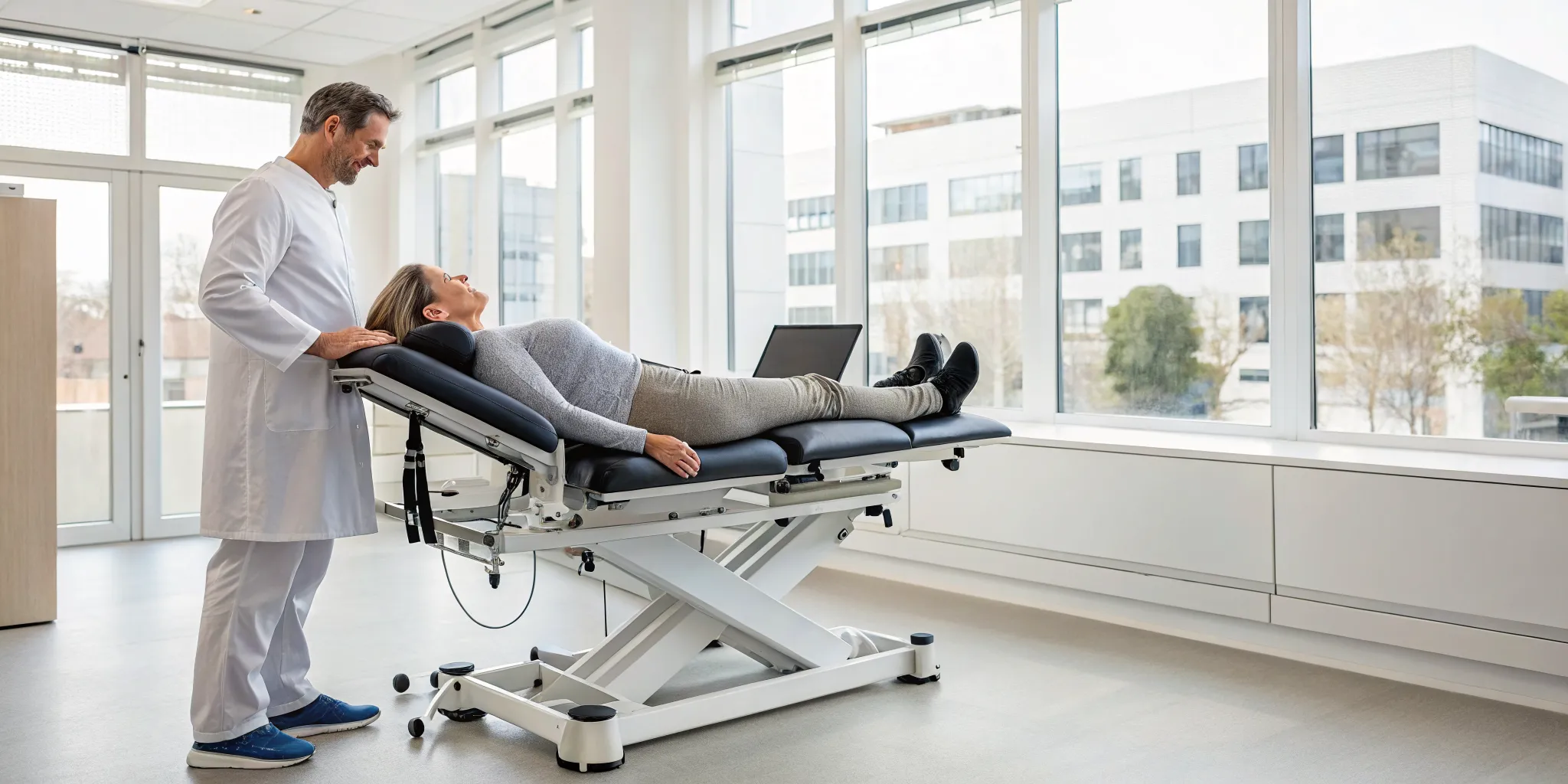
The process is quite gentle and controlled. You’ll lie down on a computer-controlled table that is programmed to apply a specific amount of traction to your spine. The table slowly and carefully stretches and then relaxes your spine in precise cycles. This gentle pulling action creates a vacuum effect, or negative pressure, inside the affected discs. This negative pressure helps draw the bulging or herniated disc material back into its normal position, taking pressure off the surrounding nerves. This process also encourages the flow of water, oxygen, and nutrient-rich fluids into the discs so they can heal.
Spinal decompression is effective for a variety of issues that stem from pressure on your spinal discs and nerves. It’s a targeted treatment that can provide significant relief if you’re experiencing pain from a specific mechanical problem in your spine. Our team can determine if it’s the right fit for you.
This therapy can help with many of the conditions we treat, including:
Non-surgical spinal decompression is particularly effective for conditions where pressure on your spinal discs and nerves is the main culprit. Think of issues like bulging or herniated discs—this therapy creates a gentle negative pressure that helps the disc material return to its proper place, which can provide incredible relief. If you're struggling with the sharp, radiating pain of sciatica, the treatment works to take pressure off that compressed nerve. It's also a great option for degenerative disc disease, as the process helps rehydrate the discs and restore their function. The Cleveland Clinic highlights how this approach directly addresses the mechanical cause of pain, offering a path to healing that goes far beyond just masking symptoms.
Facet joint syndrome is another condition that often responds well to this therapy. Your facet joints are the small, stabilizing joints connecting your vertebrae that allow your spine to bend and twist. When they get inflamed or worn down, they can cause a lot of pain and stiffness. Non-surgical spinal decompression helps by gently stretching the spine to relieve pressure on these irritated joints, which in turn reduces inflammation and gives them the space they need to heal. This approach is so effective because it targets the underlying structural problem instead of just covering up the pain. It’s one of the many advanced techniques we use to help our patients find true, lasting wellness.
Spinal decompression can be a game-changer for many people, but it isn't a one-size-fits-all solution. The best way to know for sure is to have a detailed conversation with a specialist who understands your specific health situation. However, you can get a good idea of whether it’s a path worth exploring by understanding who typically benefits the most from this therapy.
Think of this as a starting point. If you find yourself nodding along and recognizing your own symptoms in the descriptions below, your next step should be scheduling a consultation. A proper diagnosis is key to creating a treatment plan that gets to the root of the problem. At Lazar Spinal Care, our first visit is designed to determine if your problem is something we can fix, giving you a clear and honest path forward.
Before starting any treatment, the first and most important step is a comprehensive diagnosis. It’s how we move from simply guessing what’s wrong to knowing exactly what’s happening inside your body. This isn't about a quick look and a standardized plan; it's about taking the time to understand the unique mechanics of your spine to ensure the therapy is perfectly suited to your needs. A proper evaluation is the foundation of a successful outcome, ensuring that every session is safe, targeted, and effective. It’s what puts you on the fastest and most direct path to recovery, avoiding detours and focusing on what will truly help you heal.
Spinal decompression therapy is a highly specific treatment, which means a thorough assessment is essential to confirm you’re a good candidate. A qualified provider will conduct a detailed evaluation to pinpoint the exact source of your pain. This process often includes a physical examination and a review of your health history, and may involve imaging tests like X-rays or an MRI. These tools give us a clear picture of what’s going on with your spinal discs and nerves, allowing us to see issues like bulging or herniated discs that could be causing your discomfort. This isn't just about checking boxes; it's about creating a safe, effective treatment plan tailored just for you.
At Lazar Spinal Care, we begin with a deep dive into your body’s unique structure and function. Our diagnostic process goes beyond just looking at your symptoms; we use advanced techniques to uncover the root cause of your health challenges. We utilize a NeuroBioStructural Analysis, which includes advanced assessments like PostureIQ™ and Insight™ neurological scans, to get a precise understanding of your spinal alignment and nervous system health. This detailed information allows us to see if a structural issue is at the heart of your problem. By taking this comprehensive approach, we can confidently determine if non-surgical spinal decompression is the right path and design a treatment plan that promotes true, long-term healing.
If you're dealing with persistent pain that hasn't responded to other treatments, spinal decompression might be the answer you've been looking for. This gentle, non-surgical approach is especially effective for people experiencing specific types of discomfort.
You might be a good candidate if you have:
Your safety is always the top priority, and some conditions make spinal decompression therapy unsuitable. It’s crucial to be completely open about your medical history with your provider to ensure you receive the right care.
Spinal decompression is generally not recommended if you have:
A thorough evaluation is essential to confirm that you are a suitable candidate. This is why we start with a comprehensive assessment, including advanced diagnostics, to get a complete picture of your spinal health. This ensures that any treatment we recommend is tailored specifically to your body and will provide the safest, most effective results.
Making an informed decision about your health means understanding every aspect of a potential treatment, including the safety considerations. While non-surgical spinal decompression is a very safe and effective therapy for many, it’s important to have a clear picture of the potential risks and what to expect during your recovery. A transparent conversation with your provider is the best way to ensure you feel confident and comfortable with your care plan. This is why we prioritize a thorough evaluation and open communication from your very first visit, making sure you understand the process and feel empowered in your healing journey.
Because spinal decompression creates meaningful change within your spine, it’s normal for your body to take some time to adjust. Although the process itself is gentle, it works to relieve long-standing pressure and encourage discs to return to their proper position. As your body adapts to this new, healthier alignment, you might experience some temporary muscle spasms or mild soreness after your first few sessions. Think of this as your body waking up and responding to the healing process. It’s a positive sign that the therapy is working and your spine is shifting away from the patterns that were causing you pain.
This is where open communication with your provider becomes so important. Sharing exactly how you feel after each session allows us to tailor the treatment specifically for you. We can adjust the angle and intensity of the decompression to ensure you remain comfortable while still achieving the best possible results. Your feedback is a crucial part of the process and helps us create a truly personalized care plan. This collaborative approach begins during your first visit and continues throughout your entire journey to recovery, ensuring your treatment is always perfectly aligned with your body’s needs.
After a spinal decompression session, many people report feeling a sense of relief and increased mobility right away. It’s also common to feel a bit of soreness, similar to how you might feel after a good workout. This happens because the therapy is gently stretching and mobilizing muscles and ligaments that may have been tight or inactive for a long time. This sensation is a normal part of the healing process and usually fades quickly. As part of a complete recovery plan, your provider will likely recommend specific exercises to help strengthen your core and support your spine. This is one of the supportive techniques we use to help stabilize the progress you make and reduce post-treatment soreness over time.
It’s understandable to have questions about the less common risks. While extremely rare, there have been isolated cases where spinal decompression worsened a pre-existing issue. This is precisely why a comprehensive initial assessment is not just important—it's essential. A qualified provider will never recommend this therapy without first conducting a thorough evaluation, including advanced diagnostics, to confirm it is the right fit for your specific condition. This careful screening process is your best safeguard, ensuring that the treatment is appropriate for you. If you're ready to see if you're a candidate, the first step is to schedule a consultation for a professional and honest evaluation.
The idea of trying a new therapy can feel a little intimidating, but non-surgical spinal decompression is designed to be a comfortable and relaxing experience. From the moment you arrive, our goal is to make you feel at ease. We’ll walk you through every step, ensuring you know exactly what’s happening and why. Think of it as a dedicated time for your body to get the gentle, targeted relief it needs. You’ll be in a controlled, calm environment with our team right there to support you.
So, what actually happens during a session? You’ll start by lying down on a specialized, computer-controlled table. You’ll be fully clothed and made comfortable, usually with a harness placed around your hips. Once the treatment begins, the table will gently and slowly stretch your spine. This creates a vacuum effect within your spinal discs, which helps draw bulging or herniated material back into place and allows healing nutrients to flow in. The entire process is automated and precisely controlled, applying the exact right amount of gentle force to bring you relief. Our new patients are often surprised by how simple and smooth the process is.
One of the best parts about spinal decompression therapy is that it fits easily into a busy schedule. Each session typically lasts about 20 minutes. It’s a quick and effective treatment you can often schedule on a lunch break or on your way home from work. While a single session is short, the healing effects are cumulative. The total number of treatments you’ll need depends entirely on your specific condition and health goals, which we will outline in your personalized care plan. Ready to see if it's right for you? You can request an appointment to get started.
Most people find spinal decompression to be painless and even pleasant. The sensation is often described as a gentle, intermittent stretching in your back or neck. You’ll feel the table slowly elongating your spine and then releasing, which is how it works to relieve pressure on your nerves and discs. Many patients find the treatment so relaxing that they doze off during the session. Your comfort is our top priority, and the system is designed to be incredibly gentle. You can read our patient reviews to hear directly from others about their positive experiences with our care.
Spinal decompression isn’t a one-and-done fix; it’s a process that allows your body to heal over time. A typical treatment plan involves a series of sessions, usually spread out over several weeks. The exact number and frequency really depend on you—your specific condition, how long you've been dealing with it, and your personal health goals. This is why a personalized approach is so important. After our initial comprehensive assessment, we'll create a care plan that outlines exactly what you can expect, ensuring your treatment is tailored to give you the best possible results and get you back to feeling your best.
To make sure your results last, what you do after your sessions is just as important as the treatment itself. We focus on giving you the tools to support your long-term spinal health. This often includes specific exercises to strengthen your core and stabilize your spine, which helps maintain the progress you've made. The goal is to address the root cause of your pain and prevent it from coming back, not just provide a temporary patch. By combining advanced therapies with supportive care, we help you build a foundation for lasting wellness and improved quality of life.
When you're dealing with persistent back or neck pain, the path to relief can feel overwhelming. Many people think their only options are managing symptoms with medication or considering invasive surgery. But there's another way. Non-surgical spinal decompression offers a gentle, effective approach that addresses the underlying cause of your pain, helping your body heal itself from the inside out. It’s a treatment designed not just to make you feel better for a little while, but to create lasting change so you can get back to living your life fully.
The core idea behind this therapy is simple: to relieve pressure on your spinal discs and nerves. By creating negative pressure within the disc, it can help retract bulging or herniated discs, taking pressure off pinched nerves. This process also encourages the flow of water, oxygen, and nutrient-rich fluids into the discs, which is essential for healing. Think of it as giving your spine the space and resources it needs to repair itself. This approach can be incredibly effective for a wide range of conditions we help with, from sciatica and herniated discs to chronic neck and lower back pain. It’s a way to find real relief and restore your body’s natural function.
One of the most significant advantages of non-surgical spinal decompression is that it provides a powerful alternative to surgery. For many people, the thought of a surgical procedure, with its associated risks and lengthy recovery, is a major source of anxiety. This therapy offers a way to target the root cause of your discomfort, such as a herniated disc or sciatica, without a single incision. By gently stretching the spine, we can alleviate the pressure that’s causing your pain. This non-invasive method has proven highly effective, allowing your body to begin its natural healing process and providing relief that lasts. It’s a solution that works with your body, not against it.
Compared to surgery, the recovery process for non-surgical spinal decompression is worlds apart. Because the treatment is gentle and non-invasive, there’s no downtime required. You can typically return to your daily activities right after your session. This approach also carries a significantly lower risk of complications. Surgical procedures, while sometimes necessary, always come with potential risks like infection and anesthesia reactions. With spinal decompression, you can avoid those concerns entirely. This makes it a safer, more convenient, and often more cost-effective option for finding lasting pain relief. You can start your journey toward feeling better by requesting an appointment for an initial consultation.
While immediate pain relief is a huge plus, the long-term benefits of spinal decompression are just as important. This therapy isn't just a quick fix; it's about restoring your spinal health for the future. By decompressing the spine and promoting healing within the discs, the treatment can improve your overall mobility and flexibility. This means you can move more freely and with less stiffness. It addresses the immediate discomfort while also contributing to the long-term health of your spine, helping you maintain an active and vibrant lifestyle. It’s one of the many advanced techniques we use to help our patients achieve lasting wellness.
When you’re exploring options for back and neck pain, it’s helpful to see how they stack up. Spinal decompression stands out because it addresses the structural cause of your pain, offering a path to lasting relief that differs greatly from more conventional treatments like surgery or medication. It’s a gentle, non-invasive therapy designed to work with your body’s natural healing processes. By creating negative pressure within the spinal discs, it helps retract bulging or herniated discs, taking pressure off nerves and other spinal structures. This process not only alleviates pain but also encourages the flow of water, oxygen, and nutrient-rich fluids into the discs so they can heal. Let's look at how this approach compares directly to other common choices.
When exploring non-surgical options, you'll often encounter physical therapy, traditional chiropractic care, and epidural injections. While these can be effective, spinal decompression works on a different principle. Physical therapy focuses on strengthening the muscles that support your spine, and injections aim to reduce inflammation to temporarily ease pain. Spinal decompression, however, directly targets the problem disc. By gently stretching the spine, it creates negative pressure that helps pull a bulging or herniated disc back into place, taking pressure off your nerves. This unique mechanism addresses the root cause of the pain, rather than just managing the symptoms or supporting structures, making it a highly focused approach for specific disc-related conditions.
The thought of spinal surgery can be intimidating, and for good reason. It’s an invasive procedure that often comes with significant risks and a long, challenging recovery period. Spinal decompression offers a powerful alternative, providing relief without a single incision. This non-surgical treatment works by gently stretching the spine, which takes pressure off your spinal discs and nerves. It’s a common misconception that decompression is only for severe issues like herniated discs. In reality, it can be incredibly effective for a wide range of conditions we help with, even those in earlier stages. It’s a proactive approach to healing that supports your body’s ability to repair itself naturally.
Let's be clear: surgery is usually considered a last resort. A doctor will typically recommend surgery only after conservative treatments like physical therapy, medication, and chiropractic care have failed to provide lasting relief. If you're dealing with constant, radiating pain that doesn't improve, or if you're experiencing significant neurological symptoms like progressive muscle weakness or loss of bladder control, that’s when the conversation about surgery often begins. It’s reserved for situations where the structural problem is severe and isn't responding to less invasive methods. This is why exploring powerful, non-surgical options first is so important—it can help you avoid this more drastic step altogether.
When surgery is on the table, there are a few common procedures you might hear about. A discectomy involves removing the herniated portion of a disc to relieve pressure on a nerve. Another option is a laminectomy, where a small piece of the vertebral bone is removed to create more space in the spinal canal. For issues related to instability, surgeons might perform a spinal fusion, a procedure that permanently connects two or more vertebrae to eliminate painful motion. Each of these is a major medical procedure that requires significant recovery time and carries inherent risks, which is why they are never the first choice for treating back or neck pain.
Pain medication can feel like a quick fix, but it often just masks the symptoms instead of addressing the real problem. Over time, you might find you need more medication to get the same effect, without ever getting to the root of your discomfort. Spinal decompression is a safe way to manage pain without relying on medicine. By relieving the pressure that causes issues like shooting sciatic pain, this therapy targets the source of your discomfort. Patients often find it’s a valuable investment in their health, as it can significantly reduce pain, improve movement, and help them return to daily activities. It’s a treatment focused on long-term wellness, which is a core part of our approach to patient care.
Finding the right partner for your health journey is just as important as the treatment itself. When you’re looking for a provider for non-surgical spinal decompression, you want a team that not only has the right equipment but also shares your goal of achieving long-term wellness. The best clinics focus on uncovering the root cause of your pain instead of just temporarily relieving symptoms.
Your search should lead you to a provider who sees you as a whole person. Look for a clinic that uses advanced diagnostic tools to get a clear picture of your condition before starting any treatment. This ensures the care plan is tailored specifically to you. A provider who offers a gentle, non-surgical approach is key, as this therapy is designed to be a comfortable and effective path to relief. You deserve a team committed to helping you find a lasting solution.
When you’re evaluating different clinics, start by looking at their overall approach to care. Do they prioritize finding the source of your problem? A great provider will conduct a thorough initial assessment, which may include advanced imaging or neurological scans, to confirm a diagnosis. This step is crucial because it ensures spinal decompression is the right fit for your specific needs.
Also, consider the range of services and techniques they offer. A clinic with expertise in multiple non-invasive therapies can create a more comprehensive and effective care plan. Finally, read patient reviews. Hearing from others who have walked a similar path can give you confidence that you’re choosing a compassionate and skilled team.
Your initial consultation is the perfect time to ask questions and make sure you feel comfortable. Don’t hesitate to come prepared with a list. Start with the basics: "Based on my condition, am I a good candidate for spinal decompression?" and "What is your experience with treating cases like mine?"
Be sure to ask about their diagnostic process. You can say, "What kind of examination will you perform to confirm my diagnosis?" A quality provider will have a clear, data-driven answer. It’s also practical to ask about the logistics of treatment, such as, "How many sessions do you think I will need?" and "How do you handle insurance and payment?" Getting clear answers will help you confidently request an appointment and start your journey to feeling better.
Thinking about the financial side of treatment is a practical and important step. When you’re dealing with pain, the last thing you want is the added stress of confusing costs and insurance details. Let’s clear things up so you can focus on what truly matters: feeling better. Understanding the investment in your health and how insurance might play a role can help you make a confident decision about your care. At Lazar Spinal Care, we prioritize transparency and are here to help you understand your options every step of the way.
One of the biggest questions people have about any treatment is, "What will it cost?" When it comes to non-surgical spinal decompression, it's often a more affordable path than surgery. For many, this gentle approach not only brings relief but also helps them sidestep the significant expenses and recovery time tied to surgical procedures. By addressing the root cause of the pain without invasive measures, you're investing in a solution that can save you money in the long run. We believe in transparent care, and you can learn more about what to expect on your first visit on our new patients page.
The cost for a single session of non-surgical spinal decompression typically falls somewhere between $50 and $200. This range can vary based on your location, the specific clinic, and the complexity of your personalized treatment plan. While it's an investment, it's helpful to view it in the context of other options. When you consider the high costs, potential risks, and lengthy recovery time associated with spinal surgery, this gentle therapy often presents a much more manageable path to relief. The focus is on addressing the root cause of your pain for lasting results, making it a valuable investment in your long-term health and mobility. We create a tailored plan for each person, ensuring the care you receive is precisely what your body needs to heal.
Figuring out insurance can feel complicated, and coverage for spinal decompression isn't always a straightforward "yes" or "no." It really depends on your individual insurance plan, the provider's policies, and your specific diagnosis. Coverage is more likely when the therapy is considered "medically necessary" to treat a diagnosed spinal condition like a herniated disc or sciatica. If your plan has a high deductible or doesn't cover the treatment, don't worry. Many clinics, including ours, offer flexible payment options to make care accessible. The best first step is to request an appointment so we can help you understand your options.
The term "medically necessary" is what insurance companies use to decide if a treatment will be covered. It means the service is required to diagnose or treat a specific illness, injury, or condition—it’s not just something that might make you feel better. This is why a precise diagnosis is so important. Without clear, documented proof of a condition like a herniated disc or sciatica, an insurance provider might view spinal decompression as an elective therapy rather than an essential one. A thorough evaluation is the first step to building a strong case for why this treatment is necessary for your health, which is a core part of our approach with new patients.
This is where a detailed assessment becomes your best asset. To get coverage, your provider needs to demonstrate that spinal decompression is the right solution for your specific structural problem. By using advanced diagnostics to get a clear picture of your spinal health, we can show that the therapy is targeting the direct cause of your pain. This documentation helps prove to your insurance company that the treatment is a necessary intervention for your recovery. It shifts the conversation from a general wellness treatment to a targeted medical procedure, which is one of the many advanced techniques we use to get you back on your feet.
It’s completely normal to have questions when you’re exploring a new treatment. You want to know if it’s the right choice for you, what it involves, and if it truly works. Let’s clear up some of the common questions about non-surgical spinal decompression so you can feel confident in your path to feeling better.
Yes, absolutely. Spinal decompression is a safe, non-invasive, and gentle therapy. Unlike surgery, it involves no incisions or lengthy recovery times. The treatment works by carefully stretching your spine, which creates negative pressure within your discs. This process helps retract bulging or herniated discs, taking pressure off your nerves and allowing more water, oxygen, and nutrients to flow into the discs so they can heal.
Many people find significant relief from chronic pain caused by conditions like sciatica, herniated discs, and degenerative disc disease. Clinical studies have shown that non-surgical spinal decompression can effectively reduce pain and improve function, making it a reliable option for lasting wellness. Our goal is to address the root cause of your discomfort, and this therapy is one of the key techniques we use to achieve that.
It’s important to be transparent about the research behind any treatment. Non-surgical spinal decompression is a more modern therapy, and as with many newer approaches, the body of large-scale scientific research is still growing. Some early studies have limitations, which is common for innovative treatments. While the scientific literature continues to develop, the therapy itself is grounded in a well-understood biomechanical principle: reducing pressure on the spine allows the body to heal. By gently creating negative pressure in the discs, we can help them retract and relieve pressure on nerves. This straightforward, logical approach is why so many people find it effective for their pain.
While the formal research is still catching up, the results seen in clinical practice are incredibly encouraging. Some reports indicate that up to 71% to 80% of patients experience substantial relief from their symptoms after completing a spinal decompression treatment plan. This high success rate highlights how transformative this therapy can be for the right person. It also underscores why a thorough initial evaluation is so important. By ensuring you are a good candidate, we can create a targeted plan that gives you the best possible chance for success. The positive outcomes we see every day are reflected in our patient reviews, which speak to the life-changing potential of this treatment.
There are a few myths floating around about spinal decompression, so let’s set the record straight. One of the biggest misconceptions is that the treatment is painful. In reality, it’s designed to be quite comfortable and relaxing. Most patients feel a gentle stretching sensation in their back or neck, and some even fall asleep during the session.
Another common myth is that the relief is only temporary. While some treatments simply mask symptoms, spinal decompression aims for a long-term solution. By decompressing the spine and promoting natural healing in the discs, it addresses the underlying structural problem. This approach helps you find lasting relief so you can get back to living your life without being held back by pain. We focus on conditions that benefit from true, corrective care.
Does the treatment hurt? I'm already in a lot of pain. Not at all. This is one of the most common concerns we hear, and it's completely understandable. Non-surgical spinal decompression is designed to be incredibly gentle. The technology uses a precise, computer-controlled system to apply a slow, mild stretching force to your spine. Most people describe the sensation as a light pull or a gentle stretch, and many find the sessions so relaxing that they actually fall asleep. Your comfort is the priority, and the treatment is meant to relieve pressure, not create more discomfort.
How is this different from using an inversion table at home? That's a great question. While an inversion table uses gravity to stretch your entire spine, spinal decompression is a much more specific and controlled medical therapy. The system is programmed to target the exact spinal level where your disc issue is located. It applies a precise and calculated force in cycles of stretching and relaxation, which is what creates the negative pressure needed to help the disc heal. An inversion table can't isolate a specific area or create this same therapeutic effect.
How many sessions will I need before I notice a difference? The number of sessions varies for each person because every treatment plan is tailored to the individual's specific condition, the severity of their symptoms, and their overall health. While some people report feeling some relief after just a few visits, the healing process is cumulative. The goal is to create lasting change within the disc, which takes time. During your initial consultation, we will outline a personalized plan that gives you a clear idea of the recommended treatment schedule for your unique situation.
Is the relief from spinal decompression permanent? The goal of spinal decompression is to provide long-term, lasting relief by addressing the root mechanical cause of your pain. By helping the disc retract and promoting a healthier environment for healing, the treatment corrects the underlying problem rather than just masking symptoms. To maintain your results, it's important to follow the supportive care recommendations your provider gives you, which might include specific exercises or lifestyle adjustments. This helps ensure your spine stays healthy for the long haul.
Can I still go to work and exercise while undergoing treatment? Yes, for the most part. Because spinal decompression is non-invasive, there is no downtime required after a session. Most people can return to work and their normal daily activities immediately. We do, however, often recommend avoiding strenuous activities or heavy lifting, especially in the early stages of care, to give your body the best possible chance to heal. We will provide you with specific recommendations based on your condition and lifestyle.