.png?width=150&height=60&name=2026%20LSC%20Logo%20(2).png)
Back Pain

That nagging pain from a bulging disc can make you feel like your body has betrayed you. But you're not powerless. You have control, and the path to relief starts with gentle, specific movement. You're probably thinking, "enough talk, show me the exercises!" And yes, we'll get right to them. This is your guide to the right l4 l5 disc bulge treatment exercises. These aren't just random back exercises for back pain; they are your plan for building a stronger, more stable foundation to ease pressure and help your body heal from the inside out.
If you’re dealing with persistent lower back pain, you may have heard the term “L4-L5 disc bulge.” It sounds technical, but the concept is fairly straightforward. An L4-L5 disc bulge happens when the soft, cushion-like disc between the fourth and fifth vertebrae in your lower back (the lumbar spine) pushes out of its normal space. Think of it like a tire that’s starting to bulge on the side. This area of your spine is a major hub for movement and weight-bearing, so it’s a common spot for wear and tear.
When the disc bulges, it can press on the nerves exiting your spinal column. This pressure is what often causes the pain, numbness, or tingling that can travel from your back down into your leg. While a disc bulge can feel alarming, it’s a very common condition. The key is to understand what’s happening in your body so you can take the right steps toward healing. With targeted exercises and proper care, you can support your spine and find lasting relief from the conditions we help with every day.
To really get what’s going on, let’s take a quick tour of your lower back. Your lumbar spine is made up of five vertebrae, labeled L1 through L5. The L4 and L5 are the last two, sitting right at the base of your spine just before it connects to your pelvis. Because they support so much of your body’s weight, the disc between them is under a lot of pressure.
When an L4-L5 disc bulges, it often irritates the L5 spinal nerve. This specific nerve is a big deal because it controls sensation on the outside of your lower leg and the top of your foot. It also powers the muscles that let you lift your foot and big toe. If you’ve noticed weakness or a “foot drop” sensation, a compressed L5 nerve could be the culprit.
A disc bulge rarely happens overnight. It’s usually the result of cumulative stress on your lower back. One of the biggest factors is instability. Your spine is designed to be supported by a network of deep core muscles. When these muscles aren't strong enough or aren't activating correctly, the spine loses its support system. As a result, the discs are forced to absorb extra pressure with every move you make, leading to strain and irritation over time.
In response to this strain, your body might try to protect itself by causing the surrounding muscles to tighten up. This is called muscle guarding, and it’s why you might feel incredibly stiff. While your first instinct might be to stretch that tightness away, aggressive stretching can sometimes make the problem worse. Addressing the root cause of the instability is the most effective way to find long-term relief.
Figuring out the source of your back pain can feel like solving a mystery. Is it just a muscle strain, or is something more going on? An L4-L5 disc bulge is a common culprit behind persistent lower back issues, and learning to recognize its specific signs is the first step toward finding relief. Your body sends clear signals when this particular disc is in trouble, and they often go beyond a simple backache. Understanding these symptoms can help you connect the dots and decide on your next steps.
First, let's talk about what an L4-L5 disc bulge actually is. Your spine is made of bones called vertebrae, and between them are soft, gel-filled discs that act as cushions. A disc bulge happens when the soft center of the disc between your fourth and fifth lumbar vertebrae (the L4-L5) pushes outward, a bit like a jelly doughnut getting squished. This can cause a distinct, localized pain right in your lower back. It might feel like a constant, dull ache or a sharp pain that gets worse with certain movements. This isn't just random discomfort; it's a specific signal that a structure in your spine is under stress and needs attention.
One of the most telling signs of an L4-L5 disc bulge is when the pain doesn't stay put. Because this disc is located near the sciatic nerve root, a bulge can press on it and cause a condition many people know as sciatica. This feels like a sharp, shooting pain that travels from your lower back, through your buttock, and down the back of one or both of your legs. Along with the pain, you might also experience numbness, tingling, or a pins-and-needles sensation in your leg or foot. Some people also notice weakness in their leg muscles, making it feel like their leg might give out.
When your back hurts and pain is shooting down your leg, it’s no surprise that moving becomes a challenge. An L4-L5 disc bulge can make everyday activities feel incredibly difficult. Simple things like bending over to tie your shoes, getting out of a car, or even just standing up after sitting for a while can trigger sharp pain. You might find yourself moving stiffly to avoid certain positions or notice that your range of motion is limited. This isn't just an inconvenience; it's a sign that the underlying issue is affecting your body's ability to function. If these symptoms sound familiar, it may be time to get a clear diagnosis from a professional.
When you’re dealing with the pain of a bulging disc, the idea of exercising might seem completely counterintuitive. I get it. Your body is sending you pain signals, and the last thing you want to do is make it worse. But gentle, targeted movement is actually one of the most effective ways to manage your symptoms and support your body’s healing process. The right exercises can make a world of difference by addressing the problem from multiple angles. They work to build strength in the muscles that support your spine, create more space to relieve pressure on pinched nerves, and improve your overall spinal health and flexibility.
This isn’t about pushing through pain or doing intense workouts that could cause more harm. It’s about being strategic and using specific movements to create an internal environment that promotes recovery. Think of it as giving your body the tools it needs to fix itself. By focusing on core stability, gentle extension, and controlled mobility, you can take an active role in reducing your pain and helping your disc heal. Understanding exactly how these exercises work is the first step toward finding lasting relief and getting back to the activities you love without relying on medication or invasive procedures.
Think of your core as a natural brace for your spine. It’s not just about your six-pack muscles; it’s a whole system of deep abdominal, back, and glute muscles that wrap around your midsection. When these muscles are strong and engaged, they provide crucial stability for your lower back, taking a significant amount of pressure off your spinal discs. For an L4-L5 disc bulge, this support is essential. By safely activating your core, you help distribute forces more evenly across your spine, which reduces the strain on the injured disc and gives it a better chance to heal. This is why our chiropractic solutions often include recommendations for building this foundational strength.
A bulging disc typically pushes backward, where it can easily press on the sensitive nerve roots in your spinal canal. This pressure is often the source of sciatica and that sharp, radiating pain down your leg. Gentle extension exercises, which involve carefully bending your spine backward, can help counteract this. This simple motion encourages the bulging disc material to shift forward and away from the nerve, creating more space and relieving the compression. For many people, this helps "centralize" their symptoms, meaning the pain retreats from the leg and becomes more focused in the lower back. This is a great sign that the pressure on the nerve is decreasing.
When your back hurts, your first instinct is often to stop moving to avoid triggering more pain. While rest is important, too much stillness can lead to stiffness and reduced flexibility in your spine, which can actually put more stress on your discs in the long run. Gentle mobility exercises help your vertebrae move more freely and smoothly. This not only eases stiffness but also improves blood flow to the disc, bringing in the oxygen and nutrients it needs to repair itself. The goal is to encourage fluid, controlled motion, not to force a deep stretch. Getting a clear picture of your spinal health is a great starting point for any new patient looking to improve their mobility safely.
While your main goal is to find relief from that nagging back pain, the benefits of these gentle exercises go far beyond just your L4-L5 disc. When you commit to targeted movement, you're investing in your entire body's health. Building a strong, stable core doesn't just protect your spine; it improves your posture, enhances your balance, and makes every daily activity feel safer and more efficient. Better mobility also improves blood flow, bringing vital nutrients to the area to support healing. You're not just treating a symptom; you're creating a more resilient foundation that supports your overall well-being and helps prevent future injuries.
This proactive approach is also incredibly empowering. Chronic pain can often make you feel like you've lost control, but taking an active role in your recovery helps you reclaim that power. As you get stronger and more mobile, you'll likely notice a significant shift in your mindset. The focus moves from what you *can't* do to what you *can* do to support your body's healing process. This improvement in confidence and reduction in stress is a crucial part of recovery and contributes to the lasting wellness we see in so many of the conditions we help our patients with.
Before you jump into any new exercise routine, it’s crucial to take a step back and get a clear diagnosis. I know how tempting it can be to search for solutions and start immediately, especially when you’re in pain. But when it comes to your spine, guessing is not a good strategy. Every injury is unique, and what helps one person could potentially harm another. A professional evaluation is the only way to understand the specifics of your L4-L5 disc bulge, including its size and exact location, and to rule out any other underlying issues. This foundational step ensures that the exercises you choose are not only safe but also targeted to your body’s specific needs.
A bulging disc that presses on a spinal nerve can cause significant pain and other symptoms, and it's not something to take lightly. A thorough assessment from a specialist can determine the severity of the nerve compression and outline the best course of action for your specific situation. At Lazar Spinal Care, our first step is always a comprehensive evaluation, including advanced diagnostics, to uncover the root cause of your pain. This allows us to create a precise and effective care plan. Getting expert advice isn't just a suggestion; it's the safest and most effective way to begin your healing journey. Before you start any exercises, request an appointment to get a clear and accurate diagnosis.
Once you have a green light from a professional, how you approach your exercises matters just as much as which ones you do. Think of it like preparing for a road trip—you wouldn't just start driving without checking your tires and fuel. Your body needs a similar check-in before and after movement. Properly warming up and cooling down are non-negotiable steps that protect your spine from further strain and maximize the benefits of your efforts. These simple routines don't take much time, but they make a huge difference in preventing injury, reducing soreness, and helping your body adapt and heal more effectively. Making them a consistent part of your routine is key to long-term success.
Jumping into exercises cold, even gentle ones, can be a shock to your system, especially when your back is already sensitive. A proper warm-up is your best defense against further injury. The goal is to gently increase your heart rate and send blood flow to the muscles supporting your spine, making them more pliable and ready for movement. You don’t need anything complicated; a simple five-minute walk around your house or some gentle pelvic tilts while lying on your back can do the trick. This prepares your body for the work ahead and helps you tune into its signals before you begin the core part of your routine.
After you’ve completed your exercises, it’s important to ease your body back into a state of rest. A cool-down helps prevent the muscle stiffness and soreness that can set in later. While rest is important for recovery, too much stillness can actually make your spine feel more rigid and tight, which puts unnecessary stress on your discs. A few minutes of gentle stretching can help maintain your flexibility and calm your nervous system. Simple, safe stretches like a gentle hamstring stretch (lying on your back and using a towel to pull one leg toward you) can help lengthen the muscles that often get tight with the other conditions we help manage, like sciatica.
When you’re dealing with the pain of a bulging disc, the idea of exercise might seem daunting. But the right movements can be one of the most effective ways to find relief and support your body’s healing process. The goal isn’t to push through pain; it’s to gently strengthen your supporting muscles, create space in your spine, and improve your mobility. These exercises are designed to be safe and restorative, helping to ease pressure on the affected nerve and get you back to feeling more like yourself. Always start slowly and listen to your body’s signals.
A strong core is your spine’s best friend. When we talk about the core, we mean the deep muscles in your abdomen, back, and hips that act like a natural corset, stabilizing your lower back. Strengthening these muscles, especially the transversus abdominis and glutes, provides crucial support for your spine and can significantly reduce the strain on your L4-L5 disc. A simple and effective exercise is the bird-dog. Start on your hands and knees, keeping your back flat. Slowly extend one arm straight out in front of you while extending the opposite leg straight back. Hold for a few seconds, then return to the start and switch sides. This move builds stability without putting pressure on your back.
The McKenzie Method often uses extension exercises to help centralize pain, which means moving it from your leg or hip back to its source in the lower back. This is a good sign that the pressure on the nerve is decreasing. A classic example is the prone press-up, or cobra pose. Lie on your stomach with your hands under your shoulders. Gently press up, lifting your chest off the floor while keeping your hips down. Only go as high as you can without pain. Another great option is the standing extension. Stand up straight, place your hands on your lower back for support, and gently arch backward to relieve pressure on the discs.
Gentle stretching can help reduce pain and improve flexibility by encouraging the bulging disc to move away from the nerve root it’s irritating. The key is to be gentle and avoid any movements that cause sharp pain. The knee-to-chest stretch is a great starting point. Lie on your back with your knees bent. Slowly bring one knee toward your chest, holding it with your hands for 20-30 seconds. You should feel a comfortable stretch in your lower back and hip. The cat-camel stretch, performed on your hands and knees, is another excellent way to encourage your spine to move more freely. Gently arch your back up like a cat, then slowly let it sag down.
If your disc bulge is causing sciatica, you might feel pain, numbness, or tingling down your leg. Nerve glides, also called nerve flossing, are gentle movements designed to help the sciatic nerve slide more freely and reduce irritation. For a seated sciatic nerve glide, sit upright in a chair with your knees bent at 90 degrees. Slowly straighten one leg and gently flex your ankle, pulling your toes toward you, until you feel a mild stretch. Don’t push into pain. Hold for a moment, then release. Repeating this movement can help calm down an irritated nerve. It’s one of the many conditions we can help with at our clinic.
Building a strong, stable core is one of the most proactive steps you can take to support your lower back. Think of your deep abdominal, back, and hip muscles as a natural corset that wraps around your midsection. When these muscles are strong, they act as a stabilizing force, taking significant pressure off your spinal discs. This doesn't mean you need to start doing intense crunches or heavy lifting, which can often make a disc bulge worse. Instead, the focus is on gentle, controlled movements that activate these deep supporting muscles, creating a solid foundation for your spine and giving the injured L4-L5 disc the protected environment it needs to heal.
The glute bridge is a fantastic exercise because it strengthens your glutes and hamstrings without putting any strain on your lower back. Lie on your back with your knees bent, feet flat on the floor about hip-width apart, and your arms by your sides. Gently squeeze your glutes and lift your hips off the floor until your body forms a straight line from your shoulders to your knees. Hold for a couple of seconds, then slowly lower your hips back down. This movement helps teach your body to use your powerful glute muscles for support, taking the burden off your lumbar spine during daily activities.
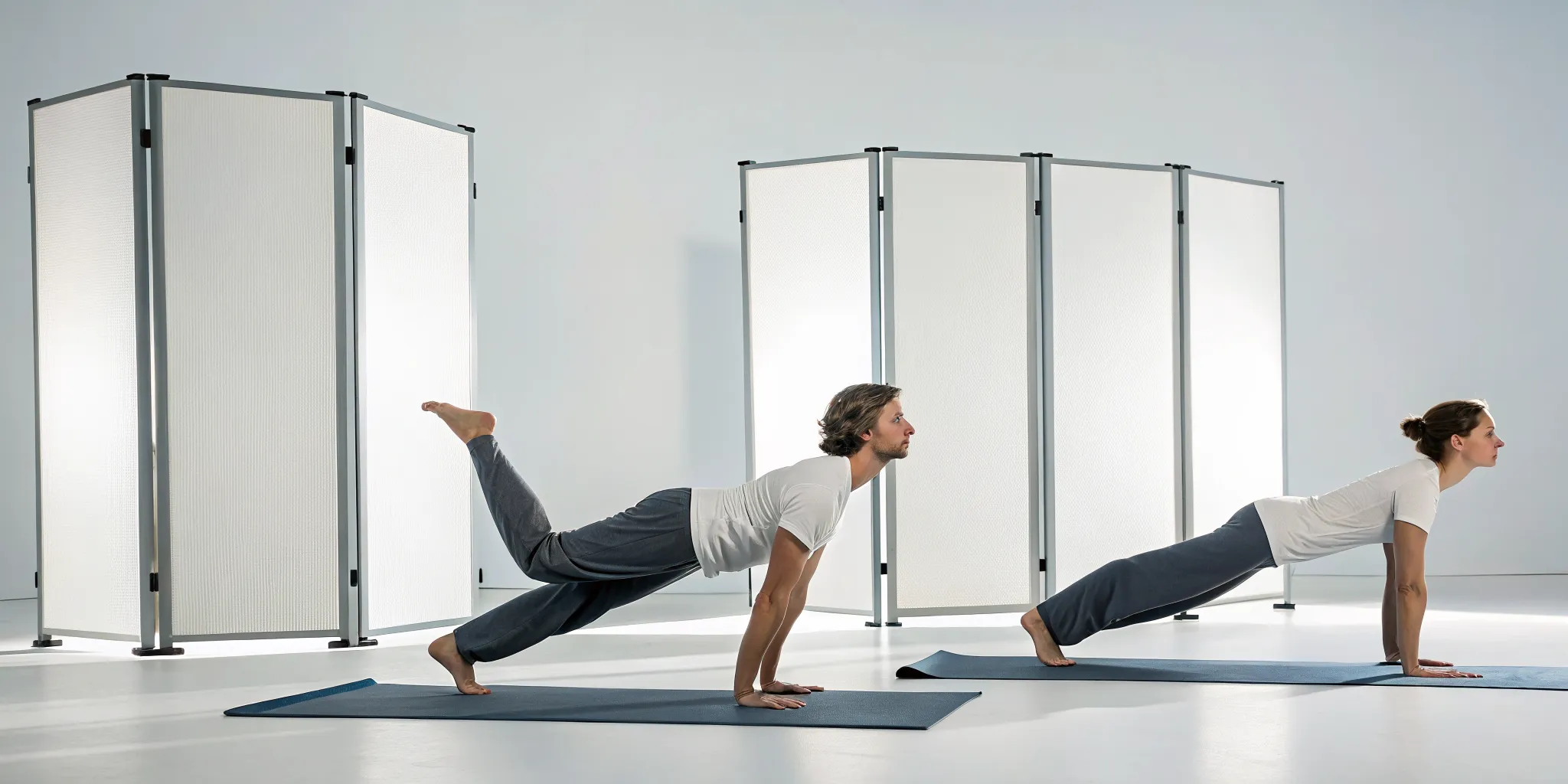
A full plank can be too demanding when your back is sensitive, but a modified version is an excellent way to build core endurance safely. Start on your hands and knees, then lower onto your forearms so your elbows are directly under your shoulders. Keeping your back flat and your core engaged, walk your knees back until your body forms a straight line from your head to your knees. Hold this position for 20-30 seconds, focusing on breathing and keeping your abdominal muscles tight. This exercise strengthens the deep core muscles that provide crucial stability for your lower back, proving that gentle, targeted movement is often the most effective path to healing.
Getting your heart rate up with some gentle aerobic activity is wonderful for your overall health and can play a key role in your recovery. Low-impact exercises like walking increase blood circulation throughout your body, including to the injured disc. This improved blood flow delivers vital oxygen and nutrients that are essential for the healing process. It also helps flush out inflammatory waste products that can contribute to pain. The key is to choose activities that don't involve jarring or high-impact movements, ensuring you get the benefits of movement without adding extra stress to your spine.
Never underestimate the power of a good walk. It's one of the simplest and most accessible exercises for a bulging disc. Walking is a gentle, weight-bearing activity that encourages your vertebrae to move more freely and helps lubricate the joints in your spine. Start with short, 10-15 minute walks on a flat surface and pay attention to your posture—stand tall with your shoulders back and your core lightly engaged. As you feel stronger, you can gradually increase the duration or pace. Listen to your body and avoid pushing through any sharp or radiating pain.
If you're looking for a low-impact way to get your heart rate up that’s a bit more dynamic than walking, step jacks are a great alternative to traditional jumping jacks. Stand with your feet together and your arms at your sides. Step your right foot out to the side while raising both arms overhead. Return to the starting position, then repeat on the left side. This movement gives you a good cardiovascular workout without the jarring impact of jumping, making it a spine-safe way to incorporate more movement into your routine and build healthy habits.
When your back is in pain, your muscles often tighten up in an attempt to protect the injured area. While this is a natural response, it can lead to stiffness and a limited range of motion, which can make the problem worse. Gentle flexibility exercises are designed to counteract this by carefully moving your spine and stretching the surrounding muscles. This not only eases stiffness but can also help create more space around the spinal nerves, reducing irritation and pain. The goal is always a gentle, soothing stretch, never forcing a movement that causes discomfort.
This exercise, often used in the McKenzie Method, can be incredibly effective for L4-L5 disc issues. Lie on your stomach with your hands placed flat on the floor under your shoulders, as if you were about to do a push-up. Keeping your hips and pelvis on the floor, gently press with your arms to lift your chest and shoulders. Only go as high as you feel a comfortable stretch in your lower back. This gentle extension can help encourage the bulging disc material to move away from the nerve root, which often helps centralize the pain from your leg back to its source.
If your disc bulge is irritating your sciatic nerve, gentle stretches can help calm it down. A simple knee-to-chest stretch is a great place to start. Lie on your back with your knees bent and feet flat on the floor. Slowly bring one knee toward your chest, grasping it with both hands, and gently pull it until you feel a comfortable stretch in your lower back and glute. Hold for 20-30 seconds, breathing deeply, and then slowly release. This movement can help reduce pain and improve flexibility by encouraging the bulging disc to shift away from the nerve it’s irritating.
Improving your stability and balance is a crucial, yet often overlooked, part of protecting your lower back. When your balance is off, you're more susceptible to sudden stumbles or awkward movements that can jolt your spine and aggravate your disc bulge. By practicing exercises that challenge your stability in a controlled way, you strengthen the connection between your brain and your muscles. This improves your body's ability to react quickly and maintain control, reducing the risk of unexpected movements that could lead to a setback in your recovery.
This exercise is a fantastic two-for-one: it strengthens your core and challenges your balance at the same time, all without putting stress on your back. Stand with your feet hip-width apart and place your hands behind your head. Engage your core, then lift your right knee while simultaneously bringing your left elbow to meet it in front of your body. Return to the start and repeat on the other side. The movement should be slow and controlled. This exercise reinforces the idea that a strong core is your spine’s best friend, providing the stability needed for safe movement.
This compound movement strengthens your legs, glutes, and calves while also improving your balance. Stand with your feet wider than shoulder-width apart, with your toes pointed slightly outward. Keeping your chest up and back straight, lower into a squat as if you're sitting back in a chair. Push through your heels to return to standing, and at the top of the movement, rise onto the balls of your feet for a calf raise. The goal isn’t to push through pain; it’s to gently strengthen your supporting muscles. If you're struggling with pain, it's always best to get a clear diagnosis, which is our first step for every new patient at our clinic.
When you're dealing with back pain, figuring out the right exercise routine can feel tricky. The key isn't to push yourself to the limit, but to build a consistent and gentle habit that supports your spine's healing process. Your body learns and adapts through repetition, so finding a sustainable rhythm is more effective than doing intense workouts sporadically. It’s about creating a positive feedback loop where gentle movement reduces pain, which in turn makes it easier to keep moving.
Think of these exercises as a daily check-in with your lower back. The goal is to create stability, improve mobility, and reduce pressure on the bulging disc without causing more irritation. This isn't about "no pain, no gain." Instead, it's about mindful movement that respects your body's limits. While everyone’s recovery journey is different, there are some general guidelines you can follow to get started on the right foot. Remember to listen to your body and focus on what feels supportive, not what causes strain. A personalized plan from a professional can help you find the perfect rhythm for your body, and we guide new patients through this process every day to ensure they are moving in a way that promotes true healing.
Consistency is your best friend when it comes to healing a disc bulge. Aim to perform gentle stretches and core exercises daily. This helps reduce stiffness, especially in the morning, and reinforces the muscular support your spine needs. You don’t need to spend hours; even 10 to 15 minutes of focused movement can make a significant difference over time. It can take a few weeks of regular practice to notice a real shift in your symptoms, so be patient with yourself and stick with it. Your body is building strength and resilience with every session.
Knowing which exercises to do is the first step, but how you organize them into a session is what makes them truly effective. Instead of just randomly doing a few stretches, a structured approach helps you build strength methodically without overwhelming your sensitive lower back. Think of it as a conversation with your body. The goal is to gently challenge your muscles to create more stability, not to push through pain or cause a flare-up. By organizing your movements into a thoughtful routine, you can track your progress, listen to your body’s feedback, and ensure every exercise is contributing to your healing. This mindful approach is key to building long-term resilience and getting back to your life with confidence.
When you see workout instructions, you'll often come across terms like "sets" and "reps." A "rep" (repetition) is simply one full movement of an exercise, like one bird-dog or one knee-to-chest stretch. A "set" is a group of those reps. For a bulging disc, quality trumps quantity. Start with a small number, like 1 set of 8-10 reps, focusing on slow, controlled, and completely pain-free movement. Between sets, instead of just stopping, try "active rest." This could be as simple as lying on your back and focusing on deep, diaphragmatic breathing for 30 seconds. This keeps your muscles relaxed and your mind focused, preparing you for the next set without adding strain. This structured approach is similar to the precise techniques we use to restore spinal function, where every detail matters for a successful outcome.
As you start to feel better, you might be tempted to do more, but it’s important to progress slowly and intentionally. Start with short, gentle walks and gradually increase your distance as your pain subsides. The most important rule is to listen to your body. If any exercise causes sharp or radiating pain down your leg, that’s a clear signal to stop. Pain is your body’s way of telling you that a movement is irritating the nerve. The goal is to feel a gentle stretch or muscle engagement, not pain. Understanding how to progress is a key part of healing the many conditions we help with at our clinic.
When you're dealing with the pain of a bulging disc, the last thing you want to do is make it worse. While moving your body is a key part of healing, not all exercises are created equal. In fact, some movements can put too much pressure on your lower back, slowing down your recovery or even causing more damage. Knowing which exercises to put on pause is just as important as knowing which ones to embrace. Think of it as creating a safe space for your spine to heal. By avoiding certain high-stress activities, you give your body the best possible chance to recover properly. Let's walk through the main types of exercises you should steer clear of while your L4-L5 disc is healing.
It might seem obvious, but it’s worth repeating: heavy lifting is off the table for now. Activities that involve lifting heavy weights or bending forward from the waist put a massive amount of strain on your lower back. Exercises like conventional deadlifts, weighted squats, and even simple standing toe touches can increase the pressure on your L4-L5 disc, which can exacerbate your symptoms. Instead of helping, these movements can hinder your recovery and intensify the pain. For now, focus on exercises that support your spine without compressing it. We’ll get you back to your routine, but healing has to come first.
When your lower back feels tight and painful, your first instinct might be to stretch it out with a classic toe touch. But this is one of the most counterproductive moves you can make for a bulging disc. Bending forward from your waist, an action known as forward flexion, dramatically increases the pressure directly on your L4-L5 disc. This compression can push the bulging disc material even further out, potentially pinching the nearby nerve roots more severely. Instead of providing relief, it can intensify your pain and send those sharp, shooting sensations down your leg. Protecting your spine during recovery means avoiding these high-stress positions and focusing on movements that create stability, not strain, which is a core principle for managing the conditions we help with every day.
I know it can be frustrating to skip your favorite cardio, but high-impact workouts are a no-go when you have a disc bulge. Activities like running, jumping, and high-intensity interval training (HIIT) create repetitive jarring forces that travel right up your spine. This kind of significant stress can easily irritate an already sensitive disc and make your condition worse. Instead, swap these out for low-impact alternatives that are kinder to your joints and spine. Think swimming, walking on a soft surface, using an elliptical machine, or cycling. You can still get your heart rate up without putting your recovery at risk.
While gentle spinal mobility is important, aggressive twisting movements can do more harm than good. Exercises like Russian twists, certain deep yoga twists, or even a powerful golf swing can put uneven and excessive pressure on the discs in your lower back. This kind of rotational stress can irritate the nerves around the bulging disc and make it much harder for the area to heal. It’s best to avoid these movements while you’re recovering to prevent prolonging the pain. Focus on gentle, controlled movements that don’t involve forcing your spine into a deep twist. Your back will thank you for it.
When you're trying to strengthen your core to support your back, it's easy to fall back on old-school exercises like sit-ups. But when you have a bulging disc, these movements can do more harm than good. A sit-up forces your spine into flexion—that forward crunching motion—which significantly increases pressure on the front of your L4-L5 disc. This can squeeze the bulging part of the disc further backward, right toward the sensitive nerves in your spinal canal. Instead of building support, this kind of strain can intensify your pain and slow down your recovery. It's crucial to focus on exercises that stabilize your core without this harmful compression.
Similarly, twisting exercises like Russian twists should be avoided. While building rotational strength is important for a healthy back, these aggressive movements put uneven, shearing forces on your lumbar discs. This can irritate the inflamed tissue and nerves around the bulge, making it much harder for the area to heal. The goal is to encourage gentle, controlled mobility, not to force your spine into a deep, loaded twist. Knowing which exercises to avoid is a critical step in protecting your back while it heals, allowing you to build strength safely and effectively.
Moving your body is a key part of healing a bulging disc, but it’s important to approach it with care. The right exercises can strengthen your back and relieve pressure, while the wrong ones can make the problem worse. The goal isn't to push through pain but to move with intention. Think of it as a partnership with your body. By learning to listen to its signals, focusing on your form, and knowing when to pull back, you can create a safe and effective routine that supports your spine’s recovery. These principles will help you get the most out of your exercises without risking a setback.
Your body is your best guide, so it’s crucial to pay attention to what it’s telling you. A little muscle soreness is normal when you’re strengthening your core, but sharp, shooting, or radiating pain is a clear stop sign. If an exercise causes pain to travel down your leg, that’s your cue to stop immediately. This type of pain, often associated with sciatica, indicates that a nerve is being irritated. Don’t try to be a hero and push through it. Instead, take a break and try a gentler movement. True progress comes from consistent, pain-free effort, not from forcing your body into positions that cause harm.
When you’re dealing with a disc bulge, how you perform an exercise is more important than how many reps you can do. The main goal is to safely activate your core, glutes, and deep back muscles to support your spine and reduce pressure on the disc. Poor form can do the opposite, placing more strain on your lower back. Start with slow, controlled movements. If you can, watch yourself in a mirror to check your alignment. Make sure you feel the exercise in the intended muscles, not in your lower back. Proper spinal mechanics are everything when it comes to healing, so take the time to get your form right from the start.
You don’t need a fancy home gym to create a space that supports your recovery. In fact, a few simple adjustments to your environment can make a huge difference in how effective your exercises are. By creating a comfortable and safe space, you remove potential barriers and set yourself up to be consistent. This allows you to focus completely on your movements and listen to your body, which is exactly what you need to do to heal properly.
When you’re performing exercises on the floor, like the bird-dog or gentle press-ups, the last thing you need is a hard surface digging into your knees or hips. A simple yoga mat or even a soft rug can provide the cushioning you need to move without unnecessary discomfort. When you’re already dealing with back pain, even minor distractions can make it harder to focus on the exercise itself. By making sure you have something soft underneath you, you create a more pleasant experience, which makes it much easier to stick with your routine day after day. This small step helps you focus on what really matters: gentle, healing movement.
Without a professional to guide you in person, a mirror is your best tool for a form check. Proper alignment is non-negotiable when you have a disc bulge, as even small mistakes can put unwanted stress on your lower back. Set up a mirror so you can see your entire body, especially your spine, during each movement. This allows you to visually confirm that your back is flat, your core is engaged, and your movements are controlled. Catching and correcting your form in real-time is crucial for preventing further injury and ensuring you’re targeting the right muscles. Mastering your body’s alignment is a key part of the specialized techniques we use to help patients build a strong foundation for lasting relief.
It’s just as important to know your limits as it is to stay active. Avoid any movements that make your pain worse, especially deep forward bending or aggressive twisting. If a specific exercise consistently causes discomfort, don’t be afraid to modify it or skip it altogether. There are plenty of other ways to build strength. You should also watch for red flags that signal it’s time to stop and get professional advice. If your pain gets worse, travels further down your leg, or starts to interfere with your sleep or daily activities, it’s time to request an appointment. A professional can help you figure out what’s going on and create a plan that’s right for you.
While targeted exercises are a huge part of healing an L4-L5 disc bulge, the small movements you make all day long matter just as much. Your daily habits can either support your recovery or work against it. By making a few conscious adjustments to how you sit, stand, and move, you can protect your lower back from extra stress and create an environment where your body can truly heal. These changes extend the benefits of your exercises throughout your day, helping you find lasting relief.
We all have to lift things, from groceries to laundry baskets. Doing it the right way is a critical skill for protecting your spine. When lifting heavy objects, avoid bending at your back. Instead, get close to the object, bend your knees, and use your strong leg muscles to do the work. Keep your back straight and your core tight as you lift. Hold the item close to your body to reduce strain on your lower back. If you need to turn, move your feet instead of twisting your torso. This simple technique helps manage the conditions helped by proper spinal alignment.
Your posture is the foundation of your spinal health. When you sit, adjust your chair so your hips are slightly higher than your knees, which helps maintain the natural curve in your lower back. Keep your feet flat on the floor and your core gently engaged to avoid slouching. This small change can take pressure off your L4-L5 disc. When standing, distribute your weight evenly on both feet and keep your shoulders relaxed and back. Pay attention to how you hold your head, especially when using a phone or computer, to avoid straining your neck and upper back. Many of our new patients find that improving their posture is a key step in their recovery.
Your spine loves movement, but it doesn’t like being stuck in one position for too long. Constant pressure on your discs can aggravate a bulge, so change your position frequently. Make it a habit to stand up, stretch, or walk for a minute or two every 30 to 60 minutes. Set a timer on your phone as a friendly reminder. This doesn’t have to disrupt your day. You can take a phone call while standing or do a gentle backbend stretch. These small movement breaks keep your muscles from getting stiff and improve circulation to your spinal discs. These daily habits work hand-in-hand with our techniques to support your body’s natural healing process.
While the right exercises can make a world of difference, sometimes you need a professional to help guide your recovery. Listening to your body is key, but it’s just as important to know when self-care isn’t enough. If your pain isn’t improving or you’re noticing new or worsening symptoms, it’s time to get an expert opinion. A professional can provide an accurate diagnosis and create a treatment plan tailored specifically to your body’s needs. This ensures you’re not just managing symptoms but addressing the root cause of your disc bulge, which is the fastest path to lasting relief. Don’t hesitate to request an appointment if you feel stuck or unsure; getting help is a sign of strength, not failure.
It’s important to recognize the signals your body sends when it needs professional help. Please seek medical attention if your pain gets worse, travels further down your leg, or makes it difficult to sleep or perform daily tasks. You should also see a doctor if you feel weakness in your leg or foot, have trouble standing up straight, or notice a loss of coordination. Some symptoms are more serious and warrant immediate medical care. These include severe or constant low-back pain, weakness in one or both legs, problems with bladder or bowel control, fever, or unexplained weight loss. These aren't things to "wait out," so be sure to get them checked right away.
Chiropractic care offers a gentle, non-invasive path to healing an L4-L5 disc bulge. A chiropractor will assess your movement, spinal alignment, and nerve function to understand exactly what’s causing your pain. Based on this evaluation, they can create a personal plan for you. This often involves precise adjustments, soft tissue therapy, and other specialized treatments designed to reduce pain and improve your mobility. At our clinic, we use advanced techniques to gently correct the structural misalignments that put pressure on your discs. This approach helps your body heal naturally, providing relief without medication or surgery.
Pain is a powerful signal, but it's important to remember that it's a symptom, not the problem itself. A disc bulge is often the result of cumulative stress from a spine that isn't properly supported. Think of it like a car with poor alignment that wears out its tires unevenly—a spine without proper muscular support puts excessive, uneven pressure on the discs day after day. This underlying instability is the real issue. Simply chasing the pain with medication or temporary fixes is like repeatedly patching the tire without ever fixing the alignment. To find lasting relief, you have to address the source of the instability.
This is where a professional assessment becomes so important. It's not just about confirming a disc bulge; it's about figuring out why it happened. A thorough evaluation can identify weaknesses in your core, postural imbalances, or movement patterns that are contributing to the problem. At Lazar Spinal Care, our entire approach is built on uncovering the root cause of your health challenges. We look at the whole picture to understand the source of the instability, which allows us to create a targeted plan that does more than just mask symptoms—it helps your body heal and become more resilient against future issues.
How long does it take for a bulging disc to heal? There isn't a one-size-fits-all timeline for healing, as it really depends on the severity of the bulge and how consistently you follow a supportive care plan. Some people feel significant relief within a few weeks, while for others it may take a few months. The most important thing is to focus on consistent, gentle effort rather than searching for a quick fix. Building healthy movement habits gives your body the best chance to heal for the long term.
Can a bulging disc heal completely on its own? While your body is designed to heal, a bulging disc often needs a helping hand. If the underlying causes, like core instability or poor posture, aren't addressed, the disc will remain under stress, and the problem can linger or even get worse. Taking an active role with the right exercises and daily adjustments gives your spine the support it needs to repair the damage properly and reduce the chances of it happening again.
Is walking a good exercise for an L4-L5 disc bulge? Yes, walking is usually a great low-impact option. It promotes healthy circulation to the spinal discs, which is essential for healing, and it can help reduce stiffness without putting your back through the stress of a high-impact workout. The key is to start with short, manageable walks on a level surface and focus on maintaining good posture. If you notice an increase in pain, especially pain that travels down your leg, it's a sign to shorten your distance and listen to your body.
What's the difference between a bulging disc and a herniated disc? It helps to think of your spinal disc as a small jelly doughnut. A bulging disc is when the entire doughnut gets squished and flattens out, pushing beyond its normal boundaries. A herniated disc is when the tough outer layer of the doughnut actually tears, allowing some of the jelly-like center to leak out. Both can press on nerves and cause pain, but a herniation is typically a more significant injury.
Why does my pain often feel worse in the morning? Feeling extra stiff and sore first thing in the morning is very common with a disc bulge. Overnight, your spinal discs naturally absorb fluid and swell a bit, which can increase pressure on nearby nerves. In addition, lying still for hours can cause the muscles supporting your spine to tighten up. This is why starting your day with a few gentle stretches can make a huge difference in relieving that morning stiffness and pain.