.png?width=150&height=60&name=2026%20LSC%20Logo%20(2).png)

Back Pain
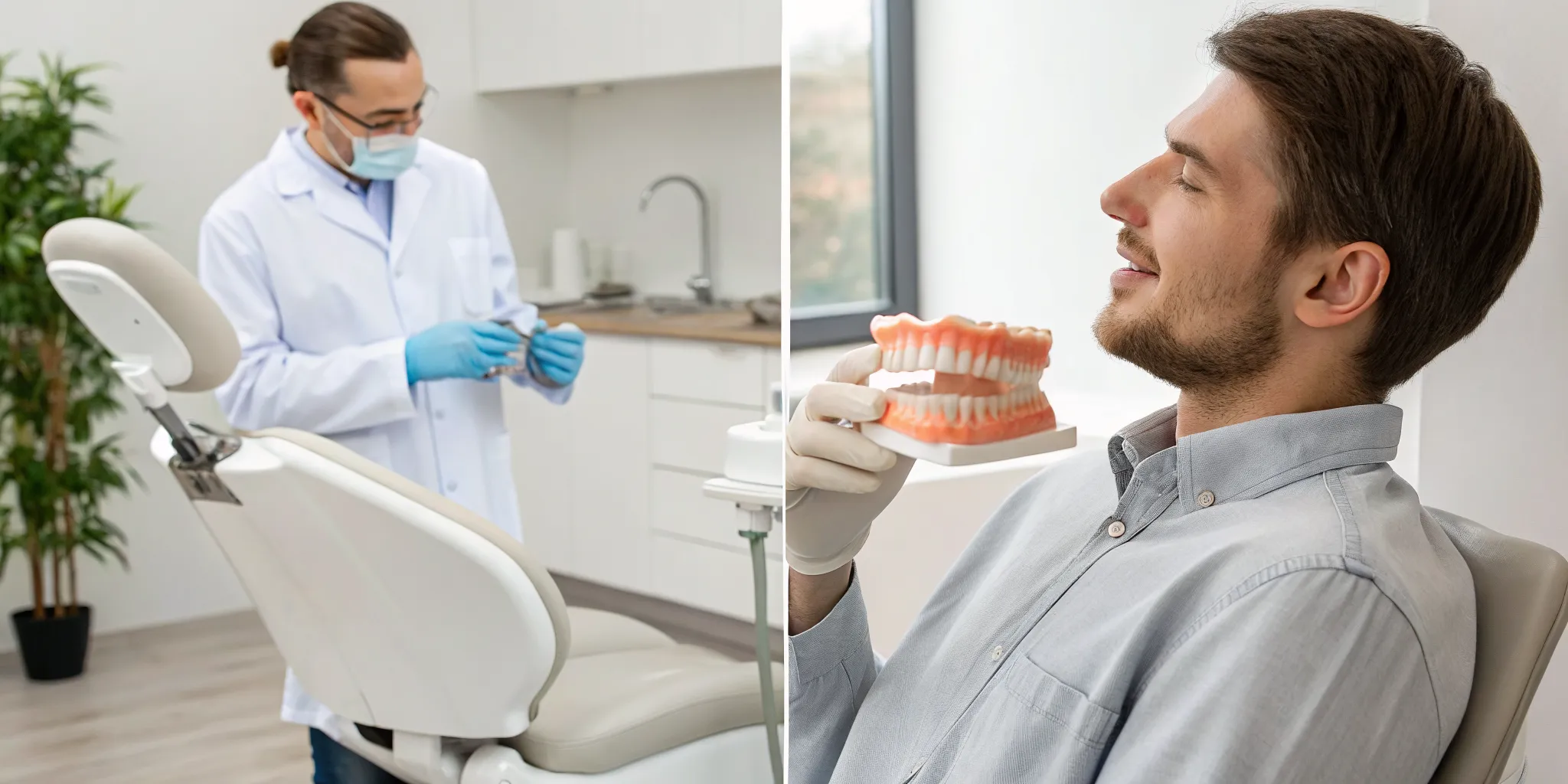

Jaw pain is rarely just about the jaw. That clicking and aching is often a signal that something else is out of balance in your body. The real question isn't just how to stop the pain, but why it started in the first place. This is where the choice between a TMJ dentist or chiropractor becomes so important. A dentist typically focuses on the mechanics of your bite. A chiropractor, however, investigates the connection between your jaw, neck, and spine. If you also deal with neck stiffness or headaches, that’s a strong clue a structural issue could be the true culprit.
That clicking or popping sound in your jaw isn’t just a weird quirk. It could be a sign of a temporomandibular disorder (TMD). You’ve probably heard it called TMJ, which is the name for the joint itself: the temporomandibular joint. It’s the complex hinge that connects your jaw to your skull, and you have one on each side of your head. When people say they "have TMJ," they usually mean they are experiencing a problem with that joint and the muscles surrounding it.
These disorders can cause more than just an annoying sound. They can lead to significant pain and discomfort that affects your daily life, from eating and talking to simply getting through the day without a headache. Because the jaw is so closely connected to the muscles in your head, neck, and shoulders, a problem in the TMJ can create a ripple effect of symptoms throughout your upper body. Understanding what to look for is the first step toward finding relief from the wide range of conditions we help our patients with every day.
If you’re dealing with jaw pain, clicking, or locking, it’s easy to feel isolated in your discomfort. But the reality is, you are far from alone. Problems with the temporomandibular joint are surprisingly common, affecting an estimated 5% to 12% of the population. These issues don't discriminate by age, showing up in both children and adults. Interestingly, studies show that women are about twice as likely as men to experience TMJ-related problems. This widespread prevalence highlights that jaw pain isn't just a minor inconvenience; it's a significant health issue for millions of people. Recognizing how many others share this experience is the first step toward understanding that effective solutions are not only possible but necessary for reclaiming your quality of life.
Let's look closer at the numbers. While the general prevalence is significant, specific groups show even higher rates. Research indicates that about 31% of adults and older adults experience some form of TMJ-related issue, while 11% of children and teens are also affected. The impact goes beyond just the jaw joint itself. For instance, TMD is a known trigger for headaches, which can affect up to one in six people at any given time. This connection is a perfect example of how a problem in one area—the jaw—can create symptoms elsewhere, like the head and neck. It underscores why a holistic approach that examines the relationship between your jaw, neck, and spine is so crucial for finding lasting relief from TMJ and related pain.
Think you might be dealing with a jaw issue? It often shows up in ways you might not expect. While some symptoms are clearly related to the jaw, others, like headaches or ear pain, can be misleading. If you’re experiencing one or more of the following, a temporomandibular disorder could be the cause:
It might seem strange that a jaw problem could cause ringing in your ears, but it's more common than you think. Your temporomandibular joint sits right next to your ear canal, and the muscles and nerves that control your jaw are intricately linked with the structures of your middle ear. When the TMJ is inflamed or misaligned, it can create pressure that leads to symptoms like tinnitus (a persistent ringing), a feeling of fullness or clogging, and even changes in your hearing. These ear-related issues are often a clear sign that the problem isn't just in your jaw but involves the complex relationship between your head, neck, and spine. This is why a chiropractic approach, which examines structural alignment, can be so effective at resolving symptoms that other treatments miss.
Your jaw joint is one of the most used joints in your body, responsible for talking, chewing, and yawning. It connects your lower jaw (the mandible) to your skull's temporal bone, right in front of your ears. A small disc of cartilage acts as a cushion between these bones, allowing for smooth, gliding movement. When this intricate system is out of balance, problems arise.
Common triggers like clenching your jaw or grinding your teeth can put a huge strain on these muscles and the joint itself. But the root cause often goes deeper, involving the alignment of your head and neck. Since the nerves and muscles of the jaw are closely tied to your upper spine, even a slight misalignment can disrupt the joint’s function and lead to chronic pain. Our specialized chiropractic techniques focus on addressing these underlying structural issues.
Understanding what’s behind your jaw pain is the first step toward finding relief. TMJ pain rarely comes from a single source. Instead, it’s often the result of several related factors that create a perfect storm of tension and misalignment in your jaw. Things like daily habits, your posture, and even your stress levels can play a significant role in triggering that familiar ache, click, or pop. By looking at the whole picture, we can start to connect the dots and identify the root causes of your discomfort. Let's explore some of the most common culprits behind TMJ pain.
If you wake up with a sore jaw or a dull headache, you might be grinding or clenching your teeth at night. This habit, known as bruxism, is a major contributor to TMJ disorders. When you clench your jaw, you’re putting an immense amount of pressure on your temporomandibular joint and the surrounding muscles. Over time, this constant strain can lead to inflammation, muscle fatigue, and damage to the joint itself. Many people don’t even realize they’re doing it, especially if it happens during sleep. This unconscious habit can make it difficult to pinpoint the source of your pain, but it’s one of the most common conditions we can help address.
You might be surprised to learn that the way you sit and stand has a direct impact on your jaw. Poor posture, especially the forward-head position common for those who work at a desk or look down at a phone, creates a chain reaction of tension. When your head juts forward, it strains the muscles in your neck and shoulders. To compensate, your jaw shifts, pulling the temporomandibular joint out of its proper alignment. This imbalance forces your jaw muscles to work overtime, leading to pain and dysfunction. Correcting your posture is a key part of lasting TMJ relief, which is why our chiropractic techniques focus on restoring your body's natural alignment from the top down.
Ever notice yourself clenching your jaw during a stressful meeting or while sitting in traffic? That’s your body’s physical response to stress. When you feel anxious or overwhelmed, your muscles tense up, and the jaw, neck, and shoulders are often the first places to feel it. Chronic stress can lead to constant, unconscious muscle tightening and jaw clenching, which puts continuous strain on your TMJ. This can create a painful cycle where stress causes jaw pain, and the pain itself becomes another source of stress. Learning to manage your body's response is crucial, and for many new patients, addressing the physical tension is the first step toward breaking that cycle.
Sometimes, the source of jaw pain is more direct. Conditions like arthritis can cause inflammation and degeneration within the temporomandibular joint itself, leading to stiffness and a grinding sensation. A physical injury is another common culprit. The trauma from a fall, a sports-related impact, or a car accident can forcefully shift the jaw, displacing the cushioning disc and leading to significant dysfunction and pain. These types of auto injuries often have delayed symptoms, with jaw pain appearing days or even weeks after the initial incident.
On the other end of the spectrum is overuse. While less dramatic than an injury, repetitive habits can be just as damaging over time. Constantly chewing gum, biting your fingernails, or even resting your chin on your hand can fatigue the jaw muscles and put consistent, low-grade stress on the joint. All of these factors—whether a disease, a sudden trauma, or a chronic habit—disrupt the delicate mechanics of your jaw, creating a cycle of pain and tension that needs to be addressed at its source.
When jaw pain strikes, your first thought might be to call your dentist. This makes sense, as dentists are experts on your mouth, teeth, and jaw. They are often the first line of defense for TMJ disorders, especially when the issue is tied to your oral health. A dental perspective focuses on the mechanics of your bite and the structure of your teeth, offering solutions that aim to correct alignment and reduce strain on the jaw joint. If your pain is rooted in dental problems, a dentist can offer several effective treatment paths.
Your dentist will start with a thorough examination of your mouth, jaw, and facial muscles. They’ll check for tenderness, listen for clicking or popping sounds, and assess your jaw’s range of motion. They may also take X-rays to get a clearer picture of the joint. A key part of this evaluation is a bite analysis, which looks at how your upper and lower teeth fit together. If your bite is misaligned, it can create uneven pressure on your jaw joint, contributing to the TMJ pain you’re feeling. This assessment helps your dentist pinpoint if dental issues are the cause.
If your dentist suspects teeth grinding or clenching (bruxism) is a factor, they will likely recommend a custom-fit mouth guard or splint. You typically wear this at night to create a protective barrier between your teeth. This not only prevents wear on your enamel but also helps relax your jaw muscles and place the joint in a more stable position, reducing strain. While over-the-counter guards are available, a custom-made one from your dentist offers a better fit and is more effective. For many people, this simple tool can significantly reduce symptoms like jaw soreness and morning headaches.
In cases where a misaligned bite is the clear culprit, your dentist might suggest orthodontic treatment. Solutions like braces or clear aligners can gradually shift your teeth into their proper positions, creating a harmonious bite that distributes pressure evenly. Correcting these structural problems can provide a long-term solution by addressing the root cause of the strain on your jaw joint. While orthodontics is a bigger commitment than a mouth guard, it can be an effective way to resolve TMJ pain for good if your jaw problems are directly related to teeth alignment. Your dentist can help you determine if this is the right path.
If a mouth guard or orthodontic work doesn't fully resolve your pain, your dentist may discuss other options to manage your symptoms. This could include recommending medications like anti-inflammatories or muscle relaxants to help reduce pain and inflammation in the short term. For severe cases where conservative treatments have failed to provide relief, your dentist might discuss surgical options as a last resort. These procedures can range from minimally invasive arthroscopy to more significant joint replacement. In these situations, your dentist would refer you to a specialist, such as an oral surgeon, for further evaluation. While these options can be necessary for some, they often focus on managing the immediate pain rather than correcting the underlying structural issues that may be contributing to the problem.
While a dentist focuses on the structures inside your mouth, a chiropractor looks at the bigger picture. They operate on the principle that your jaw doesn’t exist in a vacuum; it’s connected to your head, neck, and spine. When you visit a chiropractor for TMJ, they’re not just looking at your jaw joint. They’re investigating how your entire body’s structure and nervous system could be contributing to your pain. This whole-body approach aims to find and correct the root cause of the issue, rather than just managing the symptoms. It’s about understanding the "why" behind your jaw pain.
Your chiropractor will assess how your jaw moves, the tension in your surrounding muscles, and your overall posture. They understand that a misalignment in your neck or upper back can create a chain reaction, placing stress on the delicate temporomandibular joint and the muscles that control it. Think of it like a puppet on strings; if the strings connected to the head and neck are tangled or pulled too tight, the puppet’s jaw won’t move correctly. By addressing these underlying structural problems, chiropractic care can provide lasting relief for a wide range of conditions we help, including TMJ disorders. The goal is to restore balance to your body so your jaw can function smoothly and without pain.
Your head rests on the top two vertebrae in your neck, an area known as the upper cervical spine. This region is incredibly important because it’s ground zero for the nerves that connect your brain to the rest of your body, including the muscles that control your jaw. If these vertebrae are even slightly misaligned, they can put pressure on those critical nerves. This interference can cause the muscles in your jaw to tighten, pull, and spasm, leading directly to TMJ pain, clicking, and locking. A chiropractor specializes in identifying and correcting these misalignments, using precise adjustments to restore proper spinal position and take the pressure off your nervous system.
Once a chiropractor identifies the source of the problem, they use specific manual adjustments to restore proper movement to the joints. This can involve gentle adjustments to your neck and upper back to correct misalignments that affect your jaw. In some cases, they may also perform very gentle adjustments directly to the jaw joint itself. The goal is to improve mobility, reduce stiffness, and guide the joint back into its proper position. At Lazar Spinal Care, we use advanced, non-invasive chiropractic techniques to ensure these adjustments are both comfortable and effective, helping your body heal naturally.
TMJ pain is often a story of muscle tension. The muscles that control chewing and talking are powerful, and when they’re overworked or imbalanced, they can pull the jaw out of alignment. A chiropractor will often incorporate soft tissue work to address this. This involves applying targeted pressure to release trigger points and reduce tension in the muscles of the jaw, face, neck, and shoulders. By relaxing these tight muscles, we can decrease pain, improve your jaw’s range of motion, and help your body hold its proper alignment for longer.
Your treatment doesn’t stop when you leave the office. A key part of the chiropractic approach is empowering you with the tools to support your own healing and prevent future problems. Your chiropractor will likely recommend specific therapeutic exercises and stretches designed to strengthen weak muscles and correct postural habits, like slouching over a computer or phone. These simple, targeted movements help retrain your body to maintain proper alignment, reducing daily strain on your jaw. This proactive approach is a core part of the care plan for our new patients, ensuring you get long-term results.
If your jaw is clicking, popping, or just plain aching, you know you need help. But the big question is, where do you go first? The path to relief can feel a little confusing when both dentists and chiropractors offer solutions for TMJ pain. The truth is, the best starting point really depends on your specific symptoms. Let’s break down when to call your dentist and when a chiropractor might be the right first step.
Think of a dentist as your go-to for anything happening inside your mouth. If you suspect your TMJ pain is linked to your teeth or bite, a dentist is an excellent place to begin. They can perform a detailed exam of your mouth and jaw, take X-rays, and see if issues like a misaligned bite or teeth grinding are the culprits. For example, if your jaw started hurting after a new crown or filling, or if you clench your teeth at night, a dentist can offer solutions like custom-fit mouth guards or orthodontic adjustments. They are the experts in your oral structure and can rule out or address any dental causes of your discomfort.
Sometimes, the clearest clues for your next step are right inside your mouth. If your jaw pain started right after dental work, like getting a new crown or filling, your dentist should be your first call. As experts on your oral structure, they can check if the recent work has changed your bite. It's also a good idea to see them if you notice your teeth look worn down from grinding or if your bite suddenly feels off. A dentist can perform a detailed exam, take X-rays, and figure out if issues inside your mouth are the main source of your jaw pain, allowing them to rule out or treat any direct dental causes.
If your jaw pain feels like part of a bigger puzzle, a chiropractor should be your first call. Does your jaw clicking come with a stiff neck, tension headaches, or tightness in your upper back and shoulders? These are strong signs that the problem isn't just in your jaw. A chiropractor looks at how your whole body works together, focusing on the connection between your spine and nervous system. Misalignment in your neck, especially the upper cervical spine, can put direct pressure on the nerves and muscles that control your jaw. By addressing the root structural issue, we can often relieve the jaw pain and the other related symptoms you're experiencing.
If your jaw pain doesn't travel alone and brings friends like neck stiffness, frequent headaches, or shoulder tension, that’s a major clue. These symptoms suggest your jaw is caught in a structural chain reaction, likely starting in your neck and upper back. Poor posture or a subtle misalignment in your upper spine can throw your entire system off balance, forcing the delicate muscles and nerves controlling your jaw to work overtime. A chiropractor specializes in tracing this problem back to its source. By focusing on your body's overall alignment, we can address the root cause of the strain. Correcting these foundational issues is often the key to providing lasting relief, not just for your jaw but for the related aches and pains too. Our approach involves using specialized chiropractic techniques to restore balance and function.
Ultimately, your body will give you clues about where to start. Pay close attention to your symptoms. Is the pain isolated to your jaw, or does it radiate? Do you have other aches and pains? If you’re still unsure, don’t worry. Sometimes, the most effective TMJ treatment involves a team approach, with a dentist and chiropractor working together to address both the bite and the body’s alignment. And if you're feeling stuck, talking to your primary care doctor is always a good option. The most important thing is to take that first step. If your symptoms point toward a structural issue, we invite you to request an appointment to see how we can help.
If you’re feeling stuck between calling a dentist or a chiropractor, remember you don’t have to make the decision alone. Your primary care doctor can be an excellent starting point. Think of them as your healthcare guide; they have a comprehensive view of your health history and can help you sort through your symptoms. A visit to your doctor can help rule out other underlying medical issues that might be causing your pain and provide you with a trusted referral. They can help coordinate your care, which is especially helpful if a team approach is needed to address the complex conditions that often accompany jaw pain. Starting with a conversation with your doctor is a great way to get clarity and feel confident about your next step toward relief.
When you’re dealing with jaw pain, understanding your treatment options is key. Dentists and chiropractors approach TMJ from different but complementary perspectives. A dentist looks at the issue through the lens of your oral health, focusing on your teeth and bite. A chiropractor sees it as part of your body’s overall structural alignment, connecting jaw function to your spine and nervous system. Both aim to solve the problem at its source, but their methods are distinct.
A dentist is often the first professional people see for jaw pain. They are experts in how your teeth and jaw fit together. During an exam, they’ll check your mouth, assess your bite, and may take X-rays to get a clear picture of the joint. Their primary focus is on the mechanics inside your mouth. A chiropractor, on the other hand, looks at the bigger picture. We see the jaw as part of a complex system that includes your neck and spine. We focus on how problems with your body’s alignment can put stress on the joint, addressing structural issues that contribute to a wide range of conditions helped by our care, including TMJ.
Dental treatments for TMJ often involve oral appliances. Your dentist might recommend a custom mouthguard or splint to prevent teeth grinding or to gently reposition your jaw. If a bad bite is the culprit, they may suggest orthodontic solutions like braces. For severe cases, a dentist might refer you to an oral surgeon. Chiropractic care uses a hands-on approach to restore proper function. Your treatment plan will be created specifically for you and may include gentle adjustments to realign your jaw and relieve pressure on the joint. We also use soft tissue work to release tight muscles around your jaw, head, and neck, using a variety of our techniques.
Ultimately, the goal of any TMJ treatment is to fix the underlying cause and get your jaw working comfortably again. Most professionals start with simple, conservative treatments first, aiming for relief without medication or surgery. Recovery time depends on your specific condition and how consistently you follow your treatment plan. With the right approach, you can expect a gradual reduction in pain and improved jaw function. The focus is on creating lasting wellness, not just a temporary fix, which is a core part of the process for all our new patients.
Let's be practical for a moment and talk about cost. Figuring out insurance for TMJ can feel a bit confusing since it often straddles the line between dental and medical care. Your dental plan might cover a portion of treatments like a custom mouthguard, but you'll want to confirm the details of your policy. On the chiropractic side, many health insurance plans do offer coverage for adjustments that address the root cause of TMJ. It's always best to verify your benefits, and our team is here to help our new patients understand their options. Investing in a solution that provides lasting relief can also mean fewer costs down the road.
The short answer is a resounding yes. In fact, for many people struggling with persistent TMJ pain, a collaborative approach is the most effective path to lasting relief. Think of it this way: your jaw doesn’t operate in a vacuum. It’s a complex joint connected to the muscles in your face, neck, and shoulders, and its function is directly influenced by your bite and spinal alignment. Because TMJ disorders can have both dental and structural roots, addressing only one side of the equation often leads to temporary fixes rather than a true solution.
When a dentist and a chiropractor work together, they create a comprehensive treatment plan that covers all the bases. The dentist can focus on the mechanics inside your mouth, while the chiropractor addresses the foundational structure that supports your jaw. This partnership ensures that every contributing factor, from a misaligned bite to poor posture, is identified and corrected. By tackling the problem from multiple angles, you get a more complete and holistic form of care that targets the root cause of your discomfort, not just the symptoms.
A team approach allows each specialist to do what they do best. Your dentist is an expert in oral health, focusing on issues like your bite alignment, teeth grinding, and the fit of your jaw. They can create custom oral appliances, like night guards, to protect your teeth and position your jaw correctly. Meanwhile, a chiropractor specializes in the musculoskeletal system. They can address the postural imbalances and spinal misalignments that put stress on your jaw joint. This comprehensive strategy ensures you receive specialized care for every aspect of your TMJ disorder, leading to more effective and sustainable results.
In a collaborative care model, your dentist and chiropractor communicate to ensure their treatments are working in harmony. A chiropractor can perform gentle adjustments to your neck and upper spine to relieve pressure on the nerves connected to your jaw. They can also use soft tissue techniques to release tight facial muscles. Your progress is carefully tracked by monitoring changes in your jaw’s range of motion, pain levels, and related symptoms like headaches. This integrated approach helps ensure that any dental appliance you use is as effective as possible because the underlying structural issues are also being managed through our specialized chiropractic techniques.
Getting started is simpler than you might think. If you already have a dentist or chiropractor you trust, start by talking to them about a collaborative approach. Open communication is key, so let both providers know you are seeking complementary care. You can also begin by scheduling a comprehensive evaluation with a chiropractor who specializes in TMJ. This initial assessment can reveal underlying structural issues in your neck and spine that are contributing to your jaw pain. From there, we can help you build a complete care team. To understand the root cause of your TMJ pain, you can request an appointment for a full evaluation.
If you're picturing forceful cracking and twisting when you think of chiropractic care, it’s time for an updated view. Modern chiropractic treatment for TMJ often involves sophisticated and gentle technologies designed to address the root cause of your pain without discomfort. These advanced methods focus on precise, data-driven corrections that support your body’s natural healing process. From specialized spinal mechanics to therapies that regenerate tissue, these treatments offer a path to lasting relief by correcting the underlying structural issues that contribute to jaw pain, clicking, and locking. Let's look at a few of these innovative approaches.
One of the most effective modern techniques is Quantum Spinal Mechanics (QSM3). This method is a far cry from traditional chiropractic adjustments. Instead of twisting or cracking, QSM3 uses a gentle, precise, and non-invasive approach to realign the spine, particularly the upper cervical area, which is closely linked to jaw function. By correcting misalignments in the neck, this technique reduces the tension and structural imbalance that can lead to TMJ disorders. It’s a holistic approach that looks at how your entire posture affects your jaw, providing a foundational correction that helps your body heal and function correctly.
To support the body’s healing process, advanced chiropractic care often incorporates therapies that work at a cellular level. Laser Therapy, for example, uses specific wavelengths of light to reduce inflammation, ease pain, and accelerate tissue repair in the jaw muscles and joint. Studies have shown promising results in using low-level laser therapy to improve mouth opening for those with TMJ. Similarly, Tissue Regenerative Technology uses sound waves to stimulate healing in injured tissues, promoting regeneration and providing relief. These therapies are excellent complements to structural adjustments, helping to calm irritated tissues and speed up your recovery.
The core philosophy behind advanced TMJ treatment is to find and fix the problem with minimal force. Gentle, non-invasive strategies and hands-on correction methods help reduce TMJ pain by identifying the root causes of the disorder, rather than just masking the symptoms. By understanding the underlying issues, we can create a targeted treatment plan that provides lasting relief. This patient-first approach ensures your care is not only effective but also comfortable. It’s all about using smart technology and a deep understanding of the body’s mechanics to help you feel better without aggressive interventions.
When you’re dealing with jaw pain, clicking, and headaches, one of the first questions you’ll have is, "How long will this take to fix?" The answer isn't the same for everyone, because your recovery journey is as unique as you are. The timeline for finding relief from TMJ depends on several factors, including what’s causing the problem, how long you’ve had symptoms, and the treatment approach you choose.
While there’s no magic number, the goal is always to achieve lasting wellness by addressing the root cause of your discomfort, not just masking the symptoms. Understanding the factors that shape your recovery can help you set realistic expectations and stay focused on the path to feeling better. It’s about making steady, meaningful progress that allows your body to heal correctly and restore normal jaw function for the long term.
For most people with TMJ, relief doesn't require invasive surgery. The journey usually begins with simple, conservative treatments focused on correcting the underlying imbalances. Your timeline will depend on your body's unique response to care. Some people notice improvements within a few weeks, while others with more chronic conditions may need a few months to achieve stable, long-term results. The key is consistency. At Lazar Spinal Care, we focus on a structured treatment plan that builds on itself, allowing your body to adapt and heal gradually. We believe in a partnership, where we work together to get you back to feeling your best without unnecessary medication or procedures.
Several key factors can influence how quickly you find relief. The severity of your symptoms plays a big role; mild, recent jaw clicking will likely resolve faster than chronic, debilitating migraines. The root cause is also critical. Are you dealing with issues from a recent auto accident, long-term teeth grinding, or poor posture? Each requires a different approach and healing timeline. Your overall health and lifestyle habits, like stress levels and diet, also contribute to your body's ability to heal. The longer you've been experiencing symptoms, the more time your body may need to unwind the pattern and establish a new, healthier alignment.
Progress isn't just about the pain going away; it's about restoring function. We track your improvement in very specific ways. During your appointments, we’ll measure objective changes like how wide you can open your mouth without pain or clicking. We’ll also assess the tenderness in your jaw muscles and check for improvements in related symptoms, like headaches or ear ringing. The ultimate goal is to correct the structural issue causing your TMJ so your jaw can work as it should. By using advanced Quantum Spinal Mechanics (QSM3) techniques, we can precisely measure and correct misalignments, ensuring your progress is tangible and directed at a lasting solution.
Deciding to seek professional help for jaw pain can feel like a big step, especially when you’re not sure where to turn. Many people try to manage the discomfort on their own, hoping it will simply go away. While some minor jaw tension might resolve with rest, persistent TMJ symptoms often point to an underlying issue that needs expert attention. Knowing when to move past at-home remedies and consult a specialist is key to finding lasting relief and preventing the problem from getting worse.
If you’re experiencing any of the following symptoms, your body is sending a clear signal that it’s time to get a professional evaluation. Pay close attention if you notice jaw clicking or popping sounds, a jaw that locks in an open or closed position, or a persistent feeling that your bite is "off." Tenderness in your jaw, face, or temples is another major indicator. Because the jaw is so connected to the head and neck, TMJ issues often cause related conditions we help with, like recurring headaches, neck and shoulder discomfort, or even a sense of fullness or ringing in your ears. Don't dismiss these signs as normal; they are your cue to seek help.
While most TMJ symptoms are a call for a professional evaluation, some situations require immediate, urgent care. If you experience severe swelling around your jaw, develop a fever along with your jaw pain, or have any reason to suspect your jaw is broken or dislocated, don't wait. These are signs of a serious medical issue, like an infection or a significant injury, that needs to be addressed right away. In these cases, your first stop shouldn't be a dentist or chiropractor, but an urgent care center or the emergency room. A dislocated or broken jaw can result from trauma, such as an auto accident, and needs immediate medical intervention to ensure it heals correctly.
For mild TMJ discomfort, simple self-care strategies like eating soft foods, avoiding chewing gum, and using ice packs can sometimes provide temporary relief. These are often good first steps. However, if you’ve been trying these methods for a week or two and your pain hasn’t improved, or if it’s getting worse, your TMJ likely requires more than just at-home care. When the pain starts interfering with your daily life, affecting your ability to eat, talk, or sleep comfortably, it’s a definite sign to schedule an appointment. Waiting too long can allow the underlying problem to progress, so listening to your body and seeking help is the best path forward.
Your specific symptoms can help guide you to the right specialist. If you suspect your TMJ is caused by dental issues, like a bad bite or misaligned teeth, a dentist is a great place to start. They can assess your oral health and determine if a dental appliance is needed. However, if your jaw pain is accompanied by neck stiffness, upper back pain, or chronic headaches, a chiropractor should be your first call. This often indicates a structural or alignment issue in your spine is contributing to the problem. At Lazar Spinal Care, we use advanced techniques to address these root causes and restore proper function.
Once you’ve decided to see a chiropractor, it’s important to find the right fit. To feel confident in your choice, go to your first appointment with a few questions prepared. Ask them how they view the connection between your jaw, neck, and overall posture, and what their assessment process looks like. Inquire about the specific chiropractic techniques they use for TMJ and whether they are gentle. It's also helpful to know if their treatment plan will include soft tissue work or exercises you can do at home. A great question to ask is how they determine if your problem is structural and what you can expect in terms of a recovery plan. The right provider will be happy to explain their approach, helping you understand the path to relief.
Is the clicking sound in my jaw something I should worry about? A clicking or popping sound is a clear sign that the joint isn't moving smoothly. While it might not hurt right now, it's often an early warning sign of an underlying issue with your jaw's alignment or function. Ignoring it can sometimes lead to more serious problems down the road, like pain, inflammation, or a locked jaw. It's best to get it checked out to understand the cause before it becomes a bigger problem.
How do I know if my neck pain and headaches are connected to my jaw problem? The muscles and nerves in your jaw, head, and neck are all intricately connected. When the top of your spine is out of alignment, it can put pressure on the nerves that control your facial muscles and jaw, leading to tension that triggers both jaw pain and headaches. If you experience these symptoms together, it's very likely they share the same root cause: a structural issue that a chiropractor is uniquely equipped to identify and address.
Will chiropractic adjustments for my jaw be painful? This is a common concern, but you can put it to rest. Modern chiropractic care, especially the advanced techniques we use, is incredibly gentle and precise. We focus on restoring your body's alignment without any forceful twisting or cracking. The adjustments are designed to be comfortable and to work with your body to relieve pressure and restore proper function, not to cause more discomfort.
I already have a night guard from my dentist. Why isn't it working? A night guard is an excellent tool for protecting your teeth from the damage of grinding, but it doesn't always fix the reason you're grinding in the first place. Often, clenching and grinding are your body's response to stress, including the physical stress of a spinal misalignment. While the guard manages a symptom (the grinding), chiropractic care aims to correct the underlying structural problem that may be causing the tension.
How long will it take to feel better? The timeline for relief is different for everyone because it depends on the root cause of your TMJ, how long you've had symptoms, and your body's unique healing process. Some people feel a difference after just a few visits, while others with more chronic issues may need a bit more time. Our goal is to create lasting stability by correcting the source of the problem, so you can enjoy long-term relief, not just a temporary fix.