.png?width=150&height=60&name=2026%20LSC%20Logo%20(2).png)
Back Pain


Working out with a lower back injury can feel like a minefield. You want to get stronger and feel better, but one wrong move can leave you in more pain than when you started. If this frustrating cycle sounds familiar, you’re not alone. The problem isn’t a lack of effort; it’s a lack of specific knowledge on how to protect your spine as it heals. An L4-L5 disc bulge requires a mindful approach to movement—one that builds stability without adding compression. This guide provides that clarity, outlining the essential disc bulge exercises to avoid and explaining exactly why they’re risky for your recovery.
If you’re dealing with persistent lower back pain, you might have heard the term “L4-L5 disc bulge.” It sounds technical, but it’s a very common source of back pain. Your spine is made of bones called vertebrae, with soft, cushiony discs between them that act as shock absorbers. The L4 and L5 are the lowest vertebrae in your lumbar spine, an area that handles a lot of stress from daily movement. This makes it particularly prone to injury. Understanding what a disc bulge is, what causes it, and how to recognize it is the first step toward finding relief.
Think of your spinal discs like little jelly donuts with a tough outer layer and a soft center. A disc bulge occurs when that outer layer weakens, allowing the soft center to push outward and create a "bulge." This is different from a herniated disc, where the outer layer actually tears. With a bulge, the disc is still intact but has shifted out of its normal space. This becomes a problem when the bulging disc presses on nearby nerves, leading to pain and other uncomfortable conditions we can help with, such as sciatica.
An L4-L5 disc bulge often develops from the natural wear and tear of aging. As we get older, our spinal discs lose some of their flexibility, making them more susceptible to damage. But age isn’t the only factor. Repetitive heavy lifting, especially with poor form, puts immense pressure on the lower back. Even something as simple as sitting with poor posture for hours every day can contribute. Weak core and back muscles also play a role, as they fail to provide adequate support for your spine, leaving your discs to take on extra strain.
If you've been diagnosed with a disc bulge, you might feel a bit isolated, but the reality is you're in very good company. These issues are incredibly common, especially at the L4-L5 level. In fact, one study found that over 60% of people have a disc bulge at this specific spot in their lower back. It’s a key area for movement and bears a lot of weight, making it vulnerable. And it’s not just an issue that comes with old age; research shows that for adults between 25 and 55, the vast majority of lumbar disc problems happen right at the L4-L5 or L5-S1 levels. The presence of a bulge signals that there's an underlying structural problem, which is why addressing the root cause is so crucial for finding lasting relief from your symptoms.
Symptoms of an L4-L5 disc bulge almost always involve the lower back and legs. You might feel a dull ache or sharp pain in your lower back that worsens when you sit, bend, or stand for long periods. Because the L4-L5 disc is near the sciatic nerve, a common symptom is sciatica: pain that radiates from your lower back, through your buttocks, and down one leg. You might also experience numbness, tingling, or muscle weakness in your leg or foot. If these signs sound familiar, it’s a good idea to request an appointment for a proper diagnosis.
When you’re dealing with back pain, your first instinct might be to stretch or exercise it away. While movement is essential for healing, the wrong kind of movement can make your L4-L5 disc bulge worse. Think of this as a time for mindful, protective movement. The goal is to reduce stress on your lower back to give the disc space and time to heal. Knowing which exercises to put on hold is just as important as learning which ones can help. Certain activities can increase pressure on your lumbar spine, aggravate the nerve, and intensify the very pain you’re trying to relieve. Let’s walk through the specific types of exercises you should steer clear of while you recover.
High-impact exercises involve movements where both of your feet leave the ground at the same time, like running, jumping, or high-intensity interval training. While these are great for cardiovascular health, the repetitive jarring force can be detrimental to a bulging disc. Each step you take while running sends a shockwave up through your body that your spinal discs have to absorb. When a disc is already compromised, this repeated impact can increase inflammation and prevent the area from healing properly. For now, it’s best to swap out the pavement-pounding for gentler, low-impact activities that keep you moving without the added stress on your lower back.
This might seem obvious, but “heavy lifting” applies to more than just barbells at the gym. Any activity that involves lifting significant weight can compress your spine and worsen your disc bulge. This includes carrying heavy grocery bags, picking up a toddler, or moving furniture. When you lift something heavy, the downward force compresses your disc, potentially pushing it further out of place. It’s crucial to be mindful of your daily activities and ask for help when you need it. If you must lift something, use proper form: bend at your knees, keep your back straight, and hold the object close to your body.
Exercises that require you to bend forward at the waist, like traditional sit-ups or toe touches, place a tremendous amount of pressure on your L4-L5 disc. Picture your spinal disc as a tiny, jelly-filled cushion. When you bend forward, you squeeze the front of that cushion, which forces the jelly-like center to bulge backward, right toward your spinal nerves. This movement can directly irritate nerves and increase pain, making your symptoms flare up. Even seemingly harmless stretches that involve deep forward folds should be avoided until your disc has had a chance to heal and a professional has cleared you for such movements.
Combining rotation with pressure is particularly risky for an injured disc. Exercises like Russian twists, where you twist your torso from side to side, create a shearing force on the lumbar spine. When you twist your spine under load, you put uneven strain on the disc’s outer wall, which can worsen the bulge or even lead to a more severe herniation. Many common golf or tennis movements can also be problematic. It’s best to avoid any sharp, rotational exercises for now. Instead, focus on movements that keep your spine in a stable, neutral position to promote healing and prevent further injury.
The leg press machine might seem like a safe, seated alternative to squats, but it’s one of the most problematic pieces of gym equipment for someone with an L4-L5 disc bulge. The problem lies in the position it forces you into. As you bring your knees toward your chest, your lower back tends to round and press flat against the pad, eliminating the natural curve of your lumbar spine. When you push the weight away, this rounded position places immense compressive force directly onto your lower discs. As we've covered, any activity that involves lifting significant weight can compress your spine and worsen your disc bulge, and the leg press is a prime example of this risky movement pattern.
Instead of loading up the leg press, you can build strong, stable legs with exercises like lunges and step-ups. These movements are far safer because they allow you to maintain a neutral, upright spine, protecting your lower back from harmful compression. They also challenge your balance and engage your core muscles for stability, which is exactly what your body needs to support the healing process. This approach aligns with the core principle of recovery: focusing on low-impact cardio and core stability work, since high-impact exercises should be off the table for now. Start with just your body weight to perfect your form before considering adding light dumbbells.
When you're dealing with an L4-L5 disc bulge, your instinct might be to stick to your old workout routine. But some movements can do more harm than good. Understanding why certain exercises are off-limits is the first step toward a smarter, safer recovery. Pushing your body in the wrong way can increase pressure on the injured disc, worsen your pain, and ultimately delay your healing. Let's break down what's happening in your lower back when you perform these harmful exercises.
Think of the discs in your spine as little cushions. An L4-L5 disc bulge means one of these cushions is weakened and pushing outward, making your spine less stable. When you do exercises that involve heavy lifting or deep forward bends, you're essentially squeezing these already-vulnerable discs. This added pressure can make the bulge worse and cause it to press on nearby nerves. This is often what leads to sciatica, that sharp, radiating pain that can travel from your lower back down your leg. The goal is to reduce this pressure, not add to it.
If you feel a spike in pain during or after a workout, that’s your body’s alarm system telling you to stop. Pushing through it isn't a sign of strength; it's a sign that you're putting too much stress on the injured disc. Even if the pain fades after a few hours, the damage might already be done. The disc itself may not be strong enough to handle that activity. Continuing these exercises can lead to a frustrating cycle of re-injury, where you feel a little better, overdo it, and end up back where you started. If this sounds familiar, it's time to get a professional evaluation.
Choosing the right exercises is critical for healing a lower back disc bulge. Your movements can either help your discs become stronger or make them weaker. When you repeatedly perform exercises that strain your lower back, you're actively working against your body's healing process. This can prevent the disc from repairing itself and may lead to chronic pain. The key isn't to stop moving, but to move correctly. By avoiding harmful exercises and focusing on safe alternatives, you support your body's recovery and build the strength needed to prevent future injuries. Our specialized techniques focus on restoring proper mechanics to help you heal.
When you’re dealing with an L4-L5 disc bulge, the thought of exercise can feel intimidating. The right movements can be incredibly healing, helping to strengthen the muscles that support your spine and improve flexibility. However, the wrong exercises can increase pressure on the disc, worsen your pain, and delay your recovery. The key is to move with intention and awareness.
Choosing safe exercises isn’t about stopping all activity; it’s about being smart with your movement. Your goal is to build stability around your lower back without putting direct strain on the injured area. This means focusing on exercises that support a healthy spinal position and avoiding those that compress or twist the lumbar discs. Think of it as creating a strong, protective corset of muscle around your core. Before starting any new routine, it’s always best to get a professional assessment to understand your body’s specific needs. We can help you create a plan that supports your healing journey, starting with a clear understanding of what your body can handle.
One of the most important rules when exercising with a disc bulge is to avoid forward bending, also known as spinal flexion. Movements where you bend forward from the waist put a significant amount of pressure on your lumbar discs. This can squeeze the bulging disc material further out, potentially irritating nearby nerves and making your pain, sciatica, or numbness worse.
This means you should steer clear of exercises like traditional sit-ups, crunches, and toe touches. Even seemingly harmless stretches that involve rounding your lower back can be problematic. Instead of forcing your body into these positions, focus on movements that keep your spine straight and supported. Protecting your lower back from unnecessary strain is a critical step in allowing the disc to heal properly.
Keeping a neutral spine is your best defense against further injury. This means maintaining the natural, gentle curve of your lower back without excessive arching or rounding. This principle is crucial for foundational movements you do every day, like squatting, lunging, and hip hinging (bending over to pick something up). Mastering these basic patterns with proper form is more important than any complex exercise.
For example, when you squat, focus on sending your hips back as if you’re sitting in a chair, keeping your chest up and your lower back straight. Even if your back feels straight, going too deep into a squat can cause your lower spine to round. Our specialized chiropractic techniques can help correct underlying structural shifts that make it difficult to maintain a neutral spine, ensuring your body moves in a safe and balanced way.
The old saying "no pain, no gain" does not apply when you have a disc bulge. It’s essential to pay close attention to the signals your body sends you and never push through pain. There’s a big difference between the gentle burn of a working muscle and the sharp, warning pain of nerve irritation.
Stop exercising immediately if you feel any sharp or sudden pain. Other red flags include pain that shoots down your leg (sciatica), any new or worsening numbness or tingling, or a feeling of weakness in your legs. These are signs that an exercise is aggravating the nerve root and should be avoided. Your body is an incredible guide, and learning to listen to it is a powerful tool for recovery. If you're ever unsure, it's best to stop and get professional guidance.
While learning to listen to your body is key, some signals are more than just whispers—they’re emergency alarms. It’s crucial to know the difference between manageable discomfort and a red flag symptom that requires you to stop everything and seek immediate medical help. These aren't signs to push through or ignore. Recognizing these critical warnings can protect you from long-term damage and ensure you get the right care when you need it most. Think of this as your non-negotiable safety checklist for exercising with a disc bulge. If you experience any of the following, it's time to pause your workout and consult a professional.
The most serious red flag is any change in your bowel or bladder control. This is not a typical symptom of a disc bulge and can indicate a rare but severe condition where the nerve roots at the bottom of your spine are being compressed. If you experience this, you need to get medical help right away. Other urgent warning signs include a sudden spike in pain that doesn't subside, pain that shoots down your leg and becomes progressively worse, or new or spreading numbness and weakness in your legs or feet. These symptoms suggest an exercise is actively aggravating the nerve. Don't ignore them. It's a clear signal to stop and get a professional evaluation to understand what's happening.
When you’re dealing with a disc bulge, the thought of exercise can be intimidating. But gentle, targeted movement is one of the best things you can do for your recovery. The right exercises increase blood flow, reduce stiffness, and build strength to support your spine, helping you heal faster and prevent future flare-ups. The key is to choose activities that stabilize your lower back without putting extra pressure on the injured disc. Think of it as working with your body, not against it.
Getting your heart rate up is important for overall health, but high-impact activities are off the table for now. Low-impact cardio is the perfect solution. Activities like walking, swimming, or using a stationary bike get your blood circulating without the jarring force that can aggravate your spine. This increased blood flow delivers vital oxygen and nutrients to the injured area, which supports the healing process. Start with short sessions, maybe 10 to 15 minutes, and gradually increase the duration as you feel comfortable. Always pay attention to your body; if you feel any sharp pain, it’s a sign to stop and rest.
The buoyancy of water makes it one of the most forgiving environments for an injured back. When you're in a pool, the water supports your body weight, which dramatically reduces the compressive forces on your spinal discs. This allows you to strengthen your muscles and improve cardiovascular health without the impact of land-based exercises. Gentle strokes like the backstroke or freestyle (with careful form to avoid excessive twisting) are excellent choices. Water aerobics is another fantastic option, as it provides resistance to build strength while keeping movements fluid and controlled. The goal is to move your body and get your blood flowing, which helps relieve pressure and deliver healing nutrients to the injured disc.
A stationary bike offers a safe and effective way to get your cardio in without jarring your spine. Unlike running, biking is a smooth, cyclical motion that minimizes impact on your lower back. The key is to set up the bike correctly to maintain a neutral spine. A recumbent bike, which has a chair-like seat with back support, is often the most comfortable option as it helps you avoid hunching forward. If you use an upright bike, adjust the seat height so your knee has a slight bend at the bottom of the pedal stroke. Focus on keeping your back straight and your core engaged. This controlled environment allows you to build leg strength and endurance, which is crucial for supporting your spine during daily activities, without risking further injury. For personalized guidance on proper form, it's always best to consult a professional.
The elliptical machine is another great low-impact choice because your feet never leave the pedals, eliminating the jarring shock that comes with running or jumping. It mimics a natural walking or running motion but in a smooth, gliding pattern that is much gentler on your joints and spinal discs. This makes it an excellent tool for improving your cardiovascular fitness while protecting your lower back. To get the most out of it, focus on maintaining good posture. Stand up tall, keep your core engaged, and avoid leaning too heavily on the handlebars. Start with a lower resistance and incline, gradually increasing the intensity as your back feels stronger. This helps in restoring your body's natural alignment and building supportive strength.
Your core is more than just your abs; it’s the entire group of muscles in your midsection that wraps around your spine like a protective corset. Strengthening these muscles is one of the most effective ways to take pressure off your L4-L5 disc. When your core is strong, it provides stability and absorbs a lot of the force from your daily movements, so your spinal discs don't have to. Safe exercises like pelvic tilts, bird-dog, and modified planks (starting on your knees) are excellent for building this foundational strength without straining your back. The goal is to create a solid, stable center that supports every move you make.
Pelvic tilts are a subtle but powerful exercise for re-establishing control over your core and lower back. To do one, lie on your back with your knees bent and your feet flat on the floor. Without lifting your hips, gently tighten your abdominal muscles to press your lower back flat against the floor, as if you're trying to close the small gap that's naturally there. Hold this gentle contraction for a few seconds, then relax. This movement isn't about big motion; it's about activating the deep core muscles that stabilize your spine. It’s a foundational exercise that helps you build awareness and support for your lower back pain without putting any strain on the disc.
Your glutes are a major support system for your lower back, and keeping them strong is essential for recovery. Glute bridges are a fantastic way to do this safely. Lie on your back with your knees bent and feet flat on the floor, about hip-width apart. Squeeze your glutes and lift your hips off the ground until your body forms a straight line from your shoulders to your knees. Hold for a moment at the top, making sure you feel the work in your glutes and not your back, then slowly lower your hips back down. This exercise strengthens the muscles that help stabilize the pelvis, taking a significant amount of daily strain off your lumbar spine.
If you’re looking for a safe alternative to crunches, heel taps are your new best friend. This exercise targets your deep core muscles without any risky forward bending. Start by lying on your back with your legs in a tabletop position—knees bent at a 90-degree angle directly over your hips. Press your lower back gently into the floor and engage your core. Slowly lower one heel to tap the floor, then bring it back to the starting position. Alternate legs, moving with slow, deliberate control. The key is to keep your core tight and prevent your lower back from arching off the floor. This helps you build functional core strength that protects your spine during everyday movements.
Stiffness, especially in your hips and hamstrings, can contribute to lower back pain. When your hips are tight, your lower back often has to compensate by moving more than it should, which puts extra stress on your lumbar discs. Incorporating gentle stretches can help restore proper movement patterns and relieve this pressure. Focus on stretches that keep your hips moving well, like a gentle figure-four stretch while lying on your back or a simple cat-cow to mobilize the spine. Remember to breathe deeply and never force a stretch. The aim is to feel a light pull, not sharp pain. A personalized assessment can help determine which stretches are best for your body.
This exercise sounds intense, but it’s actually a simple and effective way to create space in your lower back. The goal of spinal decompression is to gently stretch your spine, which can help relieve pressure on the bulging disc. The easiest way to do this at home is by hanging from a sturdy pull-up bar. Let your body hang freely, relax your back muscles, and allow gravity to do the work. Hold this position for about 30 seconds, rest, and repeat it three times. You should feel a gentle stretch, not pain. This simple act of hanging can provide immediate relief by giving the compressed disc a little more room to breathe, which is a key part of the healing process.
The cobra stretch is a gentle backbend that can help guide the bulging disc material away from your spinal nerves. To perform it safely, lie on your stomach with your hands under your shoulders, as if you were about to do a push-up. Slowly press up, lifting your chest off the floor while keeping your hips anchored to the ground. You can start by propping yourself up on your elbows for a gentler stretch. Hold for 10 to 30 seconds, then slowly lower yourself back down. Repeat this up to 10 times, but only go as high as you can without pain. This movement encourages the natural curve of your lower back and can be very therapeutic when done correctly.
The cat-cow stretch is a fantastic way to improve spinal flexibility and relieve tension without putting stress on your discs. Start on your hands and knees with your spine in a neutral, flat position. As you inhale, gently arch your back, dropping your belly toward the floor and looking up (cow pose). As you exhale, round your spine toward the ceiling, tucking your chin to your chest (cat pose). Move slowly and deliberately between these two positions, coordinating the movement with your breath. Aim for about 10 repetitions for two or three sets. This dynamic stretch promotes healthy circulation around your discs and can ease the stiffness that often comes with a lower back injury.
If your disc bulge is causing sciatic pain that runs down your leg, this stretch can be a game-changer. The piriformis is a small muscle deep in your buttocks that can become tight and irritate the sciatic nerve. To stretch it, lie on your back with your knees bent. Cross the ankle of the affected leg over your opposite knee. Gently grab your thigh and pull it toward your chest until you feel a stretch in your buttock. Hold for 15 to 30 seconds and repeat three times on each side. Relieving tension in this muscle can help reduce the radiating pain associated with sciatica and improve your overall mobility.
How you move matters more than what you do. Even a simple movement done with poor form can set back your recovery. Before you think about adding weight or intensity, focus on mastering basic movements with perfect technique. Pay close attention to the squat, lunge, and hip hinge, as you perform these motions countless times throughout your day when sitting, standing, or picking something up. A proper hip hinge, for example, teaches you to bend from your hips instead of rounding your lower back, which is crucial for protecting your discs. Practice these in front of a mirror to ensure your spine stays neutral and your movements are controlled.
While safe exercises are a huge part of managing an L4-L5 disc bulge, pairing your efforts with professional care is the best way to get lasting relief. A targeted approach helps address the root cause of the problem, not just the symptoms. Working with a specialist ensures you’re doing what’s right for your body, reducing the risk of further injury and helping you heal more effectively. It takes the guesswork out of recovery so you can focus on feeling better.
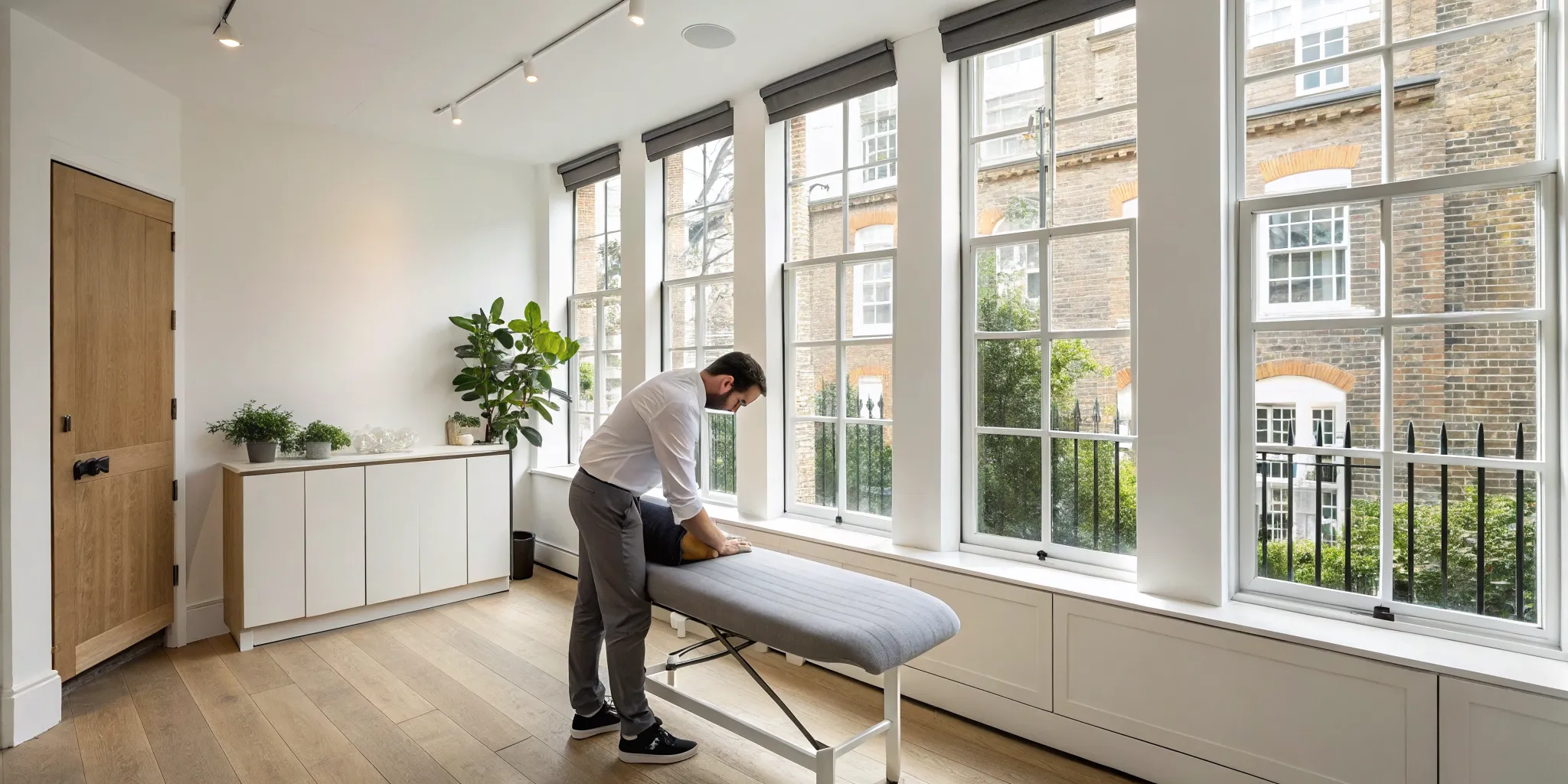
Chiropractic care is a cornerstone of treatment for L4-L5 disc bulges. The goal is to restore proper spinal alignment and function, which can take pressure off the bulging disc and the compressed nerves. Through gentle, precise adjustments, a chiropractor can help reduce pain, decrease inflammation, and improve your mobility. This hands-on approach focuses on correcting the underlying structural shifts that contribute to disc problems. By improving your spine’s overall health, regular chiropractic care not only helps you recover but also helps prevent future issues from developing.
Getting to the root of your pain starts with a clear and accurate diagnosis. We use advanced diagnostic assessments like PostureIQ™ and Insight™ neurological scans to get a complete picture of your spinal health. These tools allow us to see exactly how your body is functioning and pinpoint the source of the problem. Based on this detailed analysis, we can use specialized techniques like Quantum Spinal Mechanics (QSM3) to provide gentle and precise corrections. This targeted approach ensures your treatment is tailored specifically to what your body needs to heal.
To understand what’s happening in your lower back, doctors typically diagnose bulging discs using a combination of physical exams and imaging tests. During a physical exam, your doctor will likely check your reflexes, muscle strength, and your ability to feel different sensations. They’ll also ask you to move in certain ways to see what triggers your pain. If a disc issue is suspected, they will often order imaging tests like an X-ray, MRI, or CT scan. These tools provide a detailed look at your vertebrae and discs, helping to confirm the bulge and rule out other potential problems. This comprehensive approach allows healthcare professionals to assess the condition of your spine and determine the best course of action for treatment.
Getting to the root of your pain starts with a clear and accurate diagnosis. At Lazar Spinal Care, we use advanced diagnostic assessments like PostureIQ™ and Insight™ neurological scans to get a complete picture of your spinal health. While a standard MRI can show that a disc is bulging, these specialized scans show us how that structural issue is affecting your body’s overall function. These tools allow us to see exactly how your nervous system is performing and pinpoint the source of the problem with incredible precision. This level of detail ensures that your treatment plan is tailored to your individual needs, promoting more effective and lasting healing.
Your recovery journey is unique, and your treatment plan should be too. After a thorough assessment, we create a personalized plan that goes beyond temporary relief. This comprehensive strategy combines specific adjustments with guidance on corrective exercises and lifestyle modifications to support your long-term spinal health. We focus on giving your body what it needs to heal itself and function correctly. Our goal is to help you find a lasting solution so you can get back to living your life without pain. You can learn more about what to expect during your first visit on our website.
Recovering from an L4-L5 disc bulge is a process that requires patience and consistency. It’s not always a straight line to feeling better; some days will be better than others. The key is to focus on steady progress rather than a quick fix. Your body needs time to heal, and supporting it with the right movements, habits, and professional care will make all the difference. Understanding the general timeline and having effective strategies for managing discomfort at home can help you feel more in control of your healing journey and keep you moving in the right direction.
Everyone’s body heals at its own pace, but there are some general timelines you can keep in mind. Most people with a lower back disc bulge start to feel some relief within a few days to a few weeks of starting a targeted care plan. Significant improvement, where you feel mostly pain-free, often happens within three to four months. Remember, this is just a guideline. Factors like your overall health, the severity of the bulge, and how consistently you follow your treatment plan all play a role. The goal is to support your body’s natural healing process, not rush it. A consistent approach is your best bet for long-term success.
While professional care is essential for addressing the root cause of your disc bulge, there are things you can do at home to manage your symptoms. Simple strategies like applying a cold pack to the area for 15 minutes can help reduce inflammation and numb sharp pain. A warm pack or a warm bath can help relax tight muscles and ease stiffness. It’s also important to continue with gentle, approved movements to keep the area from getting too stiff. Pairing these at-home efforts with professional care ensures you're not just masking the pain but are actually correcting the problem. A personalized plan helps you heal effectively and build lasting spinal health.
Getting back to movement is a huge step in your recovery, but how you exercise matters just as much as what you do. Keeping a few key precautions in mind will help you build strength without causing a setback. Think of these as your personal safety guidelines for a stronger, healthier spine. These simple rules will protect your back as it heals and help you create a sustainable routine for long-term wellness.
This might be the most important rule of all: always pay attention to how you feel. It’s crucial to distinguish between the normal discomfort of a challenging workout and the sharp, telling pain of an injury. Never push through pain. If you feel a sudden, sharp ache, pain shooting down your leg (sciatica), or any new numbness, tingling, or weakness, stop immediately. These are your body’s warning signs that an activity is stressing your spine. Learning to listen to these signals is a skill that will protect you from further injury and ensure your exercise routine is helping, not hurting, your recovery from the various conditions we help.
You don’t have to figure this out on your own. In fact, you shouldn’t. Getting advice from a healthcare professional who understands spinal injuries is essential for creating a safe and effective exercise plan. A specialist can assess your specific condition and tell you exactly which movements are beneficial and when it’s safe to perform them. A generic plan from the internet can’t account for your unique body and injury. A personalized approach ensures you’re doing what’s best for your recovery, giving you confidence and peace of mind. We welcome new patients who are ready to take the first step toward a professionally guided recovery plan.
Healing is a marathon, not a sprint. It’s tempting to jump back into your old routine once you start feeling better, but it’s vital to start slowly and increase your activity level gradually. Your body needs time to adapt and build strength around the injured area. Even after the pain is gone, you need to continue with strengthening exercises to fully heal and prevent the injury from returning. Remember that progress isn’t always linear. Some days you’ll feel stronger than others, and it’s perfectly fine to modify or scale back your workout. Consistency is more important than intensity, especially when building a foundation for lasting spinal health with techniques like QSM3.
Okay, so you know which exercises to do and which to skip. But true, lasting recovery from an L4-L5 disc bulge goes beyond your time at the gym. It’s about creating a lifestyle that supports a strong, healthy spine every single day. Think of it as building a solid foundation for your well-being. The goal isn't just to get out of pain temporarily; it's to understand your body's needs and develop habits that prevent future flare-ups. This means paying attention to how you move, sit, and even sleep. It’s about making conscious choices that protect your spine from unnecessary strain.
At Lazar Spinal Care, we focus on addressing the root cause of your discomfort, not just masking the symptoms. Our approach, using techniques like Quantum Spinal Mechanics (QSM3), is designed to restore your body's natural alignment and function for the long haul. A successful recovery plan integrates this kind of professional care with your own smart daily choices. It’s a partnership between you and your body, with a little guidance from us. By being mindful of your activities, posture, and habits, you can take an active role in your healing journey and build a more resilient back. This proactive mindset is what transforms short-term relief into long-term health, allowing you to get back to the life you love without fear of re-injury.
Your body is your best guide during recovery. If an activity causes or increases lower back pain, leg pain (sciatica), numbness, or weakness, it’s a clear signal to stop and reassess. It's crucial to avoid movements that involve a lot of bending, heavy lifting, or sudden jerking, as these can put direct pressure on the affected disc. Remember, just because the pain subsides doesn't mean the disc is fully healed. Pushing yourself too hard too soon is one of the most common ways to set back your progress. Be patient and give your body the time it needs to repair itself. We can help you understand the specific conditions that contribute to your symptoms and how to manage them effectively.
You might be surprised to learn that everyday tasks can strain your back more than a workout if done with poor form. Slouching at your desk, hunching over your phone, or lifting a grocery bag the wrong way can all aggravate a disc bulge. Make a conscious effort to maintain a neutral spine throughout your day. When sitting, keep your feet flat on the floor and your back supported. When lifting, bend at your knees, not your waist, and keep the object close to your body. These small adjustments reduce the daily load on your lumbar spine, creating a better environment for healing. This holistic view of health is central to our practice; you can learn more about our patient-focused philosophy and our commitment to your well-being.
Your spine is dynamic; your daily habits can either weaken it or help it heal and grow stronger over time. The goal isn't a quick fix but rather the creation of sustainable habits that support long-term spinal health. This includes consistent, safe movement, mindful posture, and proper body mechanics. Think of each healthy choice as an investment in a pain-free future. By focusing on supporting the healing process, you empower your body to manage the condition effectively. If you're ready to build a personalized plan that works for your body and lifestyle, we're here to help. We invite you to request an appointment to get started on your path to lasting relief and a stronger back.
Beyond your exercise routine, preventing future disc problems comes down to the small choices you make every day. It’s about creating an environment for your spine that reduces stress and promotes stability, whether you’re at work, at home, or on the go. By focusing on a few key areas, you can build resilience in your lower back and significantly lower your risk of another flare-up. This proactive approach is all about supporting your body’s structure so it can function at its best, turning short-term relief into a long-term reality. Let's look at two of the most impactful habits you can build.
Every extra pound your body carries, particularly around your abdomen, adds continuous strain to the muscles and ligaments in your lower back. This constant pressure can compress your spinal discs over time, making them more vulnerable to bulging or other injuries. Maintaining a healthy weight is one of the most effective ways to lighten this load and give your spine the support it needs. It’s not about chasing a specific number on the scale, but rather about reducing the daily stress on your body’s framework. When you combine a healthy weight with regular, safe physical activity, you create a powerful defense system that helps prevent future disc bulges and supports overall spinal health.
Ergonomics is simply the practice of setting up your environment to fit your body, rather than forcing your body to fit your environment. Think about your daily routine: how many hours do you spend sitting at a desk, in a car, or on the couch? Poor posture in these positions puts unnecessary strain on your lumbar spine. Make a conscious effort to maintain a neutral spine by sitting with your back supported and feet flat on the floor, and adjusting your workstation so your computer screen is at eye level. These small, mindful adjustments to your daily habits can make a huge difference in your long-term spinal health. A professional assessment can also help identify postural imbalances that contribute to strain.
What’s the difference between a disc bulge and a herniated disc? Think of a spinal disc like a small, jelly-filled cushion. A disc bulge happens when the tough outer wall of that cushion weakens and starts to push outward, but the wall itself is still intact. A herniated disc is a more advanced stage where that outer wall actually tears, allowing some of the soft, jelly-like center to leak out. Both can press on nerves and cause pain, but a bulge is generally considered a less severe injury.
How long will it take for my L4-L5 disc bulge to heal? There isn't a single timeline for recovery, as it really depends on the severity of the bulge, your overall health, and how you manage it. For some, consistent, gentle movement and avoiding harmful activities can bring relief in a few weeks. For others, it might take several months. The most important factor is getting a proper diagnosis and a personalized treatment plan, which can significantly support your body's healing process.
Is walking a good exercise for a disc bulge? Yes, for most people, walking is one of the best activities you can do. It's a low-impact exercise that increases blood flow to your spine, which is essential for healing, without putting jarring stress on the injured disc. The key is to start slowly, stick to flat surfaces, and pay close attention to your body. If you feel any sharp pain or radiating symptoms down your leg, it's best to shorten your walk and rest.
When should I seek professional help for my back pain? You should seek professional help if your back pain is persistent, severe, or interferes with your daily life. It's especially important to get an evaluation if your pain is accompanied by symptoms that travel down your leg, such as sciatica, numbness, tingling, or muscle weakness. These are signs that the bulging disc may be compressing a nerve, and a proper diagnosis is the first step toward effective relief.
Is chiropractic care safe for a bulging disc? Yes, chiropractic care can be a very safe and effective treatment, especially when you work with a specialist who uses a gentle approach. Instead of forceful twisting or popping, our techniques focus on precise, low-force adjustments to restore proper spinal alignment. This helps take pressure off the disc and nerves, allowing your body to heal correctly without adding unnecessary stress to the injured area.