.png?width=150&height=60&name=2026%20LSC%20Logo%20(2).png)

Back Pain

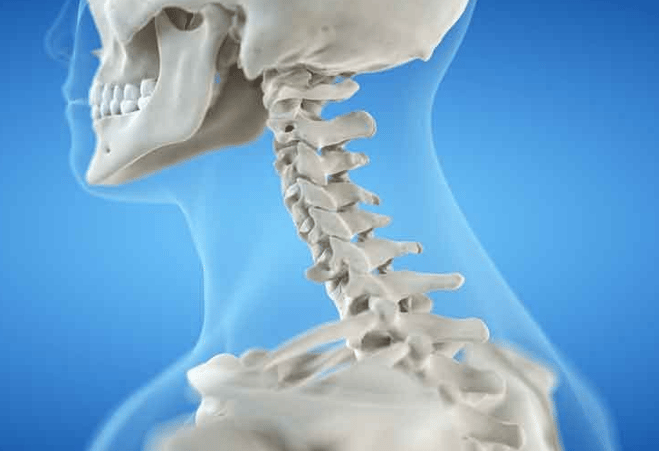
If you're struggling with a frustrating collection of symptoms—like migraines, brain fog, or POTS—you know how hard it is to get answers. What if the root cause isn't what you've been told? The problem could be structural. Craniocervical instability occurs when the connection between your skull and neck is unstable, creating neurological issues. Recognizing the craniocervical instability symptoms is a huge step forward. The best part? Lasting relief is possible with non-surgical craniocervical instability treatment. At Lazar Spinal Care, we focus on advanced, non-invasive solutions to help you get your life back.
Craniocervical instability (CCI) is a condition where the ligaments, joints, or connective tissues at the junction between the skull (cranium) and the upper cervical spine (neck) become weak or damaged. This instability can lead to excessive movement or misalignment in this critical area, potentially impacting the spinal cord, nerves, and blood vessels that pass through. CCI can occur due to trauma (such as whiplash injuries or sports impacts), connective tissue disorders (like Ehlers-Danlos Syndrome), degenerative changes, chronic inflammation, or even post-surgical complications.
Common symptoms of craniocervical instability include persistent headaches (especially at the base of the skull), neck pain, dizziness, ringing in the ears, visual disturbances, brain fog, difficulty swallowing, and even neurological symptoms like numbness or tingling in the arms. These symptoms can be debilitating and often do not resolve with standard pain management approaches, making accurate diagnosis and specialized care essential.
The symptoms of CCI can be widespread and confusing because they affect so many different body systems. Since the instability occurs at the critical junction where your brainstem connects to your spinal cord, it can disrupt everything from basic motor functions to automatic processes you don't even think about. The signs can range from a persistent headache to more complex neurological issues, often overlapping with other conditions and making a correct diagnosis challenging. Understanding this wide array of symptoms is the first step toward figuring out the root cause of your health problems and finding a path to feeling better.
One of the most common signs of CCI is a persistent, nagging headache that often starts at the base of the skull. This isn't just a typical tension headache; it can feel like a heavy, pressing sensation. Along with headaches, you might experience chronic neck pain, stiffness, and a feeling of dizziness or being off-balance. Many people also report a constant ringing in their ears, known as tinnitus. These symptoms arise because the instability puts direct pressure on the nerves and blood vessels in your upper neck, disrupting normal signals and creating a cascade of discomfort that can significantly impact your daily life.
When the brainstem is compressed due to CCI, it can interfere with the autonomic nervous system—the part of your body that controls automatic functions like heart rate, blood pressure, and digestion. This is a condition known as dysautonomia. You might experience a racing heart (tachycardia), especially when you stand up, or a sudden drop in blood pressure that makes you feel faint. These symptoms occur because the brainstem can no longer properly regulate your body's internal systems, leading to unpredictable and often frightening physical responses that seem to have no clear cause.
The neurological effects of CCI can be particularly unsettling. Many people describe a persistent "brain fog" that makes it hard to think clearly or remember things. You might feel like you're moving in slow motion, both mentally and physically. Beyond cognitive issues, CCI can cause numbness, tingling, or weakness in your arms and legs as the spinal cord and nerve roots become irritated. Problems with balance and coordination are also common, making it difficult to walk or perform simple tasks. These symptoms are a direct result of the instability affecting your central nervous system's ability to communicate with the rest of your body.
CCI can also play tricks on your eyes and ears. You might notice blurry or double vision, an increased sensitivity to light, or even involuntary eye movements that you can't control. These visual disturbances happen when the instability affects the nerves that control eye function. Similarly, the pressure in the craniocervical junction can impact your auditory system, leading to tinnitus (ringing in the ears) or, in some cases, a noticeable decrease in your hearing. These sensory issues add another layer of complexity to the condition, further disrupting your sense of stability and well-being.
Even basic functions like swallowing and digesting food can be affected by craniocervical instability. You might find it difficult to swallow or feel like you have a weak gag reflex, which can be alarming and even increase the risk of choking. The disruption to the autonomic nervous system can also slow down your digestive processes, leading to issues like nausea, stomach pain, or a feeling of fullness after eating very little. These symptoms highlight just how interconnected our bodily systems are and how instability in one critical area can have far-reaching consequences throughout the body.
Craniocervical instability doesn't just appear out of nowhere; it's typically caused by an underlying issue that weakens the ligaments and connective tissues holding your head and neck together. The causes can be grouped into three main categories: genetic conditions that affect your body's tissues, diseases that cause inflammation or degeneration, and physical trauma that directly damages the area. Sometimes, it's a combination of factors. Identifying the specific cause is a crucial part of developing an effective care plan, as it helps practitioners understand the full picture of your health.
For some people, the predisposition to CCI is written in their DNA. The most common genetic cause is Ehlers-Danlos syndrome (EDS), a group of disorders that affect connective tissues, making them weaker and more flexible than they should be. This inherent laxity means the ligaments supporting the head and neck can't do their job properly, leading to instability. Other congenital conditions, like Marfan syndrome or osteogenesis imperfecta, can also contribute to the development of CCI by affecting the body's structural integrity from birth.
Chronic diseases can also lead to CCI by gradually breaking down the structures of the upper cervical spine. Inflammatory conditions like rheumatoid arthritis can attack the joints in the neck, wearing down cartilage and weakening the surrounding ligaments over time. Similarly, degenerative disc disease can cause the supportive discs between your vertebrae to deteriorate, reducing stability. These conditions are often progressive, meaning the instability can worsen as the disease advances, making early and consistent management essential for maintaining function and quality of life, especially for seniors.
Physical trauma is a very common cause of CCI. A whiplash injury from an auto accident, a hard fall, or a sports-related impact can stretch or tear the delicate ligaments that hold the skull to the spine. But it's not just major accidents; repetitive micro-traumas can also contribute. For example, spending hours every day looking down at a phone or computer can gradually stretch out the neck ligaments, a phenomenon sometimes called "tech neck." Over time, this sustained poor posture can lead to the same kind of instability caused by a more sudden injury.
Craniocervical instability rarely exists in a vacuum. Because it affects such a vital part of the nervous system, it often co-occurs with or contributes to other complex medical conditions. Many people with CCI also find themselves diagnosed with syndromes that affect the autonomic nervous system or immune responses. Understanding these associated conditions is important because it highlights the systemic nature of the problem. Addressing the structural instability in the neck can often lead to improvements in these other seemingly unrelated health issues.
There is a strong link between CCI and Postural Orthostatic Tachycardia Syndrome (POTS), a form of dysautonomia that causes a rapid heart rate, dizziness, and fainting upon standing. The brainstem compression that occurs with CCI is thought to be a major contributing factor to POTS symptoms. When the brainstem can't properly regulate blood flow and heart rate in response to changes in posture, the classic symptoms of POTS appear. For many patients, addressing the craniocervical instability can lead to a significant reduction in their POTS symptoms.
Another condition frequently seen alongside CCI is Mast Cell Activation Syndrome (MCAS). Mast cells are part of your immune system, and in MCAS, they become overactive, releasing chemicals that cause allergic-like reactions throughout the body. This can result in symptoms like hives, flushing, digestive upset, and breathing difficulties. The chronic inflammation and nerve irritation caused by CCI are believed to be potential triggers for mast cell activation, creating a cycle of inflammation and instability that can be difficult to break without addressing the root structural problem.
CCI often comes as a package deal with other structural problems, particularly for individuals with connective tissue disorders like EDS. It's not uncommon for someone with instability in their upper neck to also have instability in other joints, such as the shoulders, hips, or lower back. Conditions like Chiari malformation, where brain tissue extends into the spinal canal, can also be present. This is why a comprehensive diagnostic approach is so important. At Lazar Spinal Care, we use advanced assessments like NeuroBioStructural Analysis to see the full picture and understand how different structural issues may be interconnected.
The long-term outlook for someone with craniocervical instability can vary greatly. It depends on several factors, including the underlying cause, the severity of the symptoms, and how quickly an accurate diagnosis is made. While the condition can be serious, especially if left unaddressed, there is hope. With the right approach to care, many people can find significant relief and regain their quality of life. Understanding both the potential for recovery and the risks of inaction is key to making informed decisions about your health.
A patient's recovery journey is unique. How well someone recovers is tied directly to the severity of their instability and the success of their treatment plan. For some, conservative, non-invasive care can provide lasting relief and restore function. For others with more severe instability, a combination of therapies may be needed. The goal is always to restore stability to the craniocervical junction, which in turn alleviates the pressure on the nervous system. This is why our process at Lazar Spinal Care is designed to determine if your problem is fixable after just one visit, so you can quickly understand your potential for recovery.
Ignoring the signs of CCI can be dangerous. If the instability is severe, it can lead to significant compression of the brainstem and spinal cord. This can result in serious and sometimes permanent neurological damage, affecting everything from your ability to walk to your body's automatic functions. The longer the nervous system is under this kind of pressure, the greater the risk of long-term problems. This is why seeking a thorough evaluation is not just about feeling better—it's about protecting your future health. If you suspect you may have CCI, it's crucial to request an appointment for a proper diagnosis.
Diagnosing CCI requires a thorough and multifaceted approach. At Lazar Spinal Care, our process begins with an in-depth consultation and history review, followed by a comprehensive physical examination. We pay close attention to posture, biomechanics, neurological function, and any signs that suggest instability at the craniocervical junction.
Because traditional imaging techniques, such as standard x-rays or MRIs, may not always reveal subtle instabilities, we employ advanced diagnostic tools. Our proprietary Posture IQ™ assessment, 3D foot scans for gait analysis, and Insight NeuroSpinal Function Index all contribute to a complete picture of your spinal health. However, the gold standard for identifying CCI is motion x-ray analysis, which allows us to observe how your spine moves in real time.
One of the most frustrating aspects of craniocervical instability is how difficult it can be to get a definitive diagnosis. Many people suffer for years with debilitating symptoms while standard imaging tests, like a conventional MRI or X-ray taken while lying down, come back as "normal." This is because the instability often only becomes apparent when your head and neck are upright and bearing weight, or when you are in motion. A static image simply can't capture the dynamic nature of the problem, leaving both patients and practitioners searching for answers that aren't visible with traditional methods.
To accurately identify CCI, we have to look at the craniocervical junction under the stresses of daily life—namely, gravity and movement. This is where specialized imaging techniques become essential. Unlike standard scans, these advanced methods are designed to provoke and reveal the instability. They provide a dynamic view of how the bones, ligaments, and tissues are functioning (or malfunctioning) in real-world conditions. This kind of detailed imaging is crucial for creating a precise and effective treatment plan tailored to your specific anatomy and degree of instability.
An upright MRI is a game-changer for diagnosing CCI. Instead of having you lie flat in a tube, this scan is performed while you are sitting or standing. This simple change allows doctors to see how gravity affects the alignment of your skull and upper neck. For many people with CCI, the instability and compression of nerves or the brainstem only occur in an upright posture. An upright MRI can reveal misalignments and soft tissue issues that would be completely missed on a traditional supine scan, providing a much more accurate picture of what’s happening as you go about your day.
Another critical diagnostic tool is a flexion-extension scan, which is a type of motion X-ray. During this test, images are taken while you gently bend your neck forward (flexion) and backward (extension). The goal is to observe the vertebrae in motion to see if there is any excessive or abnormal movement between them. This dynamic assessment directly visualizes the "instability" in craniocervical instability, showing precisely where the supportive ligaments may be failing. It helps confirm whether the connections between your skull and spine are secure through a normal range of motion.
Beyond just looking at images, diagnosing CCI involves taking highly specific measurements from these specialized scans. Radiologists and trained specialists use key radiographic markers—such as the Clivo-Axial Angle (CAA), the Grabb-Oakes measurement, and the Basion-Dens Interval (BDI)—to quantify the degree of misalignment and instability. These precise calculations remove the guesswork from the diagnosis. Interpreting these measurements requires a deep understanding of spinal biomechanics, which is why working with a team experienced in CCI is so important for getting the right answers and developing an effective care plan based on our advanced techniques.
Motion x-rays, also known as digital motion radiography or dynamic digital radiography, are a breakthrough in diagnosing craniocervical instability. Unlike static images, motion x-rays capture the spine in action—flexing, extending, and rotating—so we can pinpoint abnormal movement or instability that would otherwise go undetected.
At Lazar Spinal Care, we utilize advanced DDR (Dynamic Digital Radiography) technology to assess the alignment and function of your upper cervical spine. This allows for a highly precise, data-driven diagnosis and ensures that any treatment plan is based on objective findings. The motion x-ray is safe, non-invasive, and provides immediate feedback for both the doctor and patient, empowering you with knowledge about your condition and the most effective path forward.
Treatment of craniocervical instability at Lazar Spinal Care is always personalized and non-invasive, focused on restoring stability and function while minimizing risk. Our signature Lazar Method™ integrates the most precise upper cervical correction techniques, like QSM3 and NUCCA, to gently realign the spine without forceful manipulation. These corrections are tailored based on your unique motion x-ray analysis and comprehensive neuromechanical assessment.
In addition to advanced chiropractic adjustments, we may incorporate SoftWave TRT (Tissue Regenerative Technology), High-Intensity Laser Therapy, and BEMER Therapy to accelerate healing, reduce inflammation, and enhance circulation at the cellular level. Each treatment plan is designed to address the root cause of instability, support connective tissue health, and retrain the surrounding musculature for long-term stability. If you or a loved one are experiencing symptoms of craniocervical instability, don’t wait—schedule your advanced motion x-ray assessment with Lazar Spinal Care today and take the first step toward lasting relief and restored vitality.

When you first approach a medical doctor with symptoms of CCI, the initial treatment plan is typically conservative. For mild to moderate cases, this often involves a combination of physical therapy to strengthen the neck muscles, wearing a cervical collar to provide external stability, and pain management strategies. These can include anti-inflammatory medications or muscle relaxants to help ease discomfort and reduce inflammation in the affected area. While these methods can offer temporary relief and help manage symptoms, they may not address the underlying structural misalignment that is causing the instability in the first place.
If conservative treatments don't provide lasting relief, or if the instability is severe enough to pose a risk to the brainstem, the next step in standard medical care is often surgery. The most common procedure is an Occipito-Cervical Fusion (OCF). This is a significant operation where a surgeon permanently joins the base of the skull to the upper neck bones, typically C1 and C2. The fusion is accomplished using a combination of metal rods, screws, and bone grafts to create a solid, immovable structure. The goal is to eliminate the dangerous, excessive movement, but it comes at the cost of permanently sacrificing the natural range of motion in that part of the neck.
At Lazar Spinal Care, we believe in addressing the root cause of craniocervical instability with a non-invasive approach that avoids the need for medication or surgery. Our primary technique is Quantum Spinal Mechanics (QSM3), a highly precise and gentle method focused on restoring the body's alignment and balance. Unlike general chiropractic manipulations, QSM3 involves no forceful twisting, popping, or cracking. Instead, we use light, specific corrections to the upper cervical spine, guided by the detailed data from your motion x-ray and neuromechanical assessments. This approach helps restore proper biomechanics, allowing the body's own healing mechanisms to stabilize the craniocervical junction naturally and effectively.
Is the QSM3 adjustment painful or forceful? Not at all. One of the biggest misconceptions about this type of care is that it involves forceful twisting or cracking of the neck. The QSM3 technique is incredibly gentle and precise. We use a light, specific touch to encourage your body back into its proper alignment. The goal is to restore balance and allow your body's natural healing process to take over, not to force anything into place.
My doctor diagnosed me with POTS. How can a neck problem be the cause? Think of your brainstem, located at the top of your neck, as the control center for all your body's automatic functions, including heart rate and blood pressure. When the connection between your skull and neck is unstable, it can put pressure on this critical area, disrupting the signals. This interference can prevent your body from properly adjusting your heart rate when you stand up, leading directly to the symptoms of POTS. By correcting the structural instability, we can relieve that pressure and allow your nervous system to function correctly again.
Why can't my regular MRI or X-ray see this instability? This is a common and frustrating experience for many people. Standard MRIs and X-rays are typically taken while you are lying down and perfectly still. The problem is that craniocervical instability often only becomes apparent when your body is upright and in motion, under the stress of gravity. It’s like trying to diagnose a problem with your car’s alignment while it’s parked in the garage. We use specialized motion X-rays to see exactly how your spine moves in real-time, which allows us to spot instabilities that static images completely miss.
How long does it take to see improvement with your non-surgical approach? Every person’s body is different, so the timeline for healing varies. However, our approach is designed to address the root cause of the problem from day one. Many patients begin to notice changes relatively early in their care plan as the pressure is taken off their nervous system. Our comprehensive initial assessment gives us a clear picture of your condition, which helps us create a realistic roadmap for your recovery. The focus is on making steady, lasting progress as your body stabilizes and heals.
I've tried physical therapy and other chiropractors without success. What makes your approach different? Many other treatments focus on managing symptoms, like strengthening muscles or providing temporary pain relief, without ever correcting the underlying structural problem. Our approach is different because we start with a precise diagnosis using advanced tools like motion X-rays to identify the exact source of the instability. Then, we use the gentle and specific QSM3 technique to correct that core issue. We aren't just chasing symptoms; we are restoring the body's foundational alignment so it can function and heal the way it was designed to.