.png?width=150&height=60&name=2026%20LSC%20Logo%20(2).png)

Back Pain
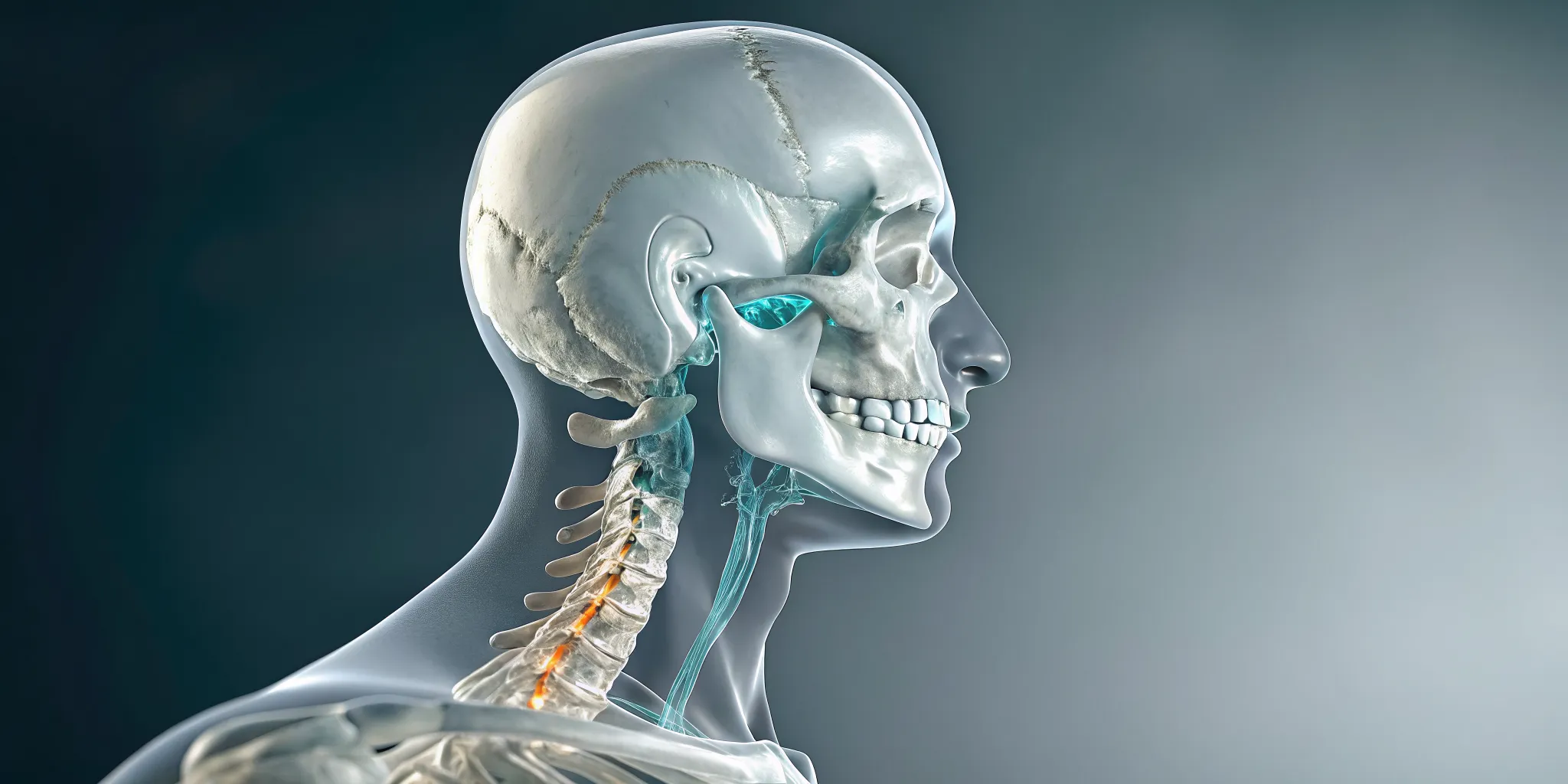

You’ve tried the mouthguard. You’ve taken the pain relievers. You’ve even tried to stop clenching your jaw, but the pain, clicking, and headaches just keep coming back. It’s a frustrating cycle, often because these common treatments miss the root of the problem. They focus on the symptom—your jaw—without looking at the underlying structural cause. The connection between TMJ and spinal misalignment is the missing piece for so many people. So, can neck misalignment cause TMJ? The answer is a definitive yes, and understanding this link is the first step toward finding a solution that actually works.
If you’ve ever dealt with persistent jaw pain, you’ve likely heard the term TMJ. But what exactly is it? TMJ stands for the temporomandibular joint, which acts as a sliding hinge connecting your jawbone to your skull. You have one on each side of your jaw, and they work hard every day, allowing you to talk, chew, and yawn. A TMJ disorder, or TMD, occurs when this intricate system of muscles, ligaments, and bone isn't working correctly.
The frustrating part about TMJ disorders is that the symptoms aren't always confined to your jaw. They can show up as headaches, neck pain, and even earaches, making it difficult to pinpoint the true source of your discomfort. Understanding what these symptoms feel like is the first step toward finding a solution that addresses the root cause, not just the pain itself.
The most common signs of a TMJ disorder are felt right in the jaw. You might notice a dull, aching pain that seems to linger around your jaw, ears, and even your temples. For many, this discomfort gets worse when chewing tough foods or opening their mouth wide. Beyond the pain, you may hear or feel strange sounds. A distinct clicking, popping, or grating noise when you open or close your mouth is a classic indicator that the joint isn't moving smoothly. In more severe cases, the jaw can even lock in an open or closed position, which can be both painful and frightening. These aren't just minor quirks; they are signals that the joint is under stress and likely misaligned.
TMJ pain rarely stays in one place. Because the muscles and nerves in your jaw are so closely connected to the rest of your head and neck, the discomfort often spreads. You might experience chronic headaches that seem to come out of nowhere, or a persistent ache in and around your ears without any sign of infection. Many people also report a feeling of fullness or ringing in their ears (tinnitus). One of the biggest clues that your TMJ is acting up is a stiff, sore neck. If you have neck tension that just won’t go away with stretching or massage, it could be a sign that your jaw is the real culprit. These related conditions we help with often stem from the same underlying structural issue.
Beyond aches and pains, a misaligned jaw and neck can create some truly unexpected and unsettling symptoms. Have you ever felt dizzy or off-balance for no apparent reason? This feeling of vertigo can be directly linked to TMJ dysfunction. Your inner ear, which is responsible for your sense of balance, is located very close to your jaw joint. When a structural shift in your upper neck puts pressure on the delicate nerves in this area, it can interfere with the signals sent to your brain. This disruption can cause dizziness, lightheadedness, and even a sense of facial tingling or pressure behind the eyes. These symptoms are often a clear sign that the problem isn't just in your jaw, but is part of a larger structural issue that affects your entire nervous system and the many conditions we help with.
Living with a TMJ disorder goes beyond physical pain; it can impact your overall quality of life. Chronic discomfort can make it hard to eat your favorite foods, get a good night's sleep, or even concentrate at work. The constant pain can also affect your mood and energy levels. Over time, your body may try to compensate for the jaw misalignment by changing your posture, often leading to a forward head position. This not only adds more strain to your neck and shoulders but can create a cycle of dysfunction that is difficult to break. Addressing the problem at its source is key to restoring balance and getting back to your life. If this sounds familiar, our team is ready to help new patients find lasting relief.
Your neck is a complex structure, and when it’s out of alignment, the effects can ripple throughout your entire body, often showing up in unexpected places like your jaw. A misalignment, also known as a subluxation, happens when one or more of your vertebrae shift out of their proper position. This can disrupt communication between your brain and body and place strain on surrounding muscles and nerves. Understanding what causes these shifts is the first step toward finding a solution that lasts. The culprits are often daily habits, old injuries, and even emotional stress that we might not connect to our physical pain.
The very top of your neck, where your head meets your spine, is called the upper cervical spine. This area is incredibly important because it supports the weight of your head and allows for most of its movement. More importantly, it protects your brainstem, the critical communication highway between your brain and the rest of your body. TMJ disorders and upper cervical misalignments are more closely connected than most people realize. Even a slight shift in these top two vertebrae can create tension that travels directly to your jaw muscles and joints. Our Quantum Spinal Mechanics (QSM3) approach focuses on this delicate area because restoring its balance is often the key to resolving issues like TMJ pain.
Your cervical spine, the seven vertebrae from C1 to C7, is a powerhouse of support and movement, but it's also surprisingly delicate. The top two vertebrae, the atlas (C1) and axis (C2), are especially critical because they dictate your head's position and protect the brainstem. When this area is out of alignment, it directly affects your jaw. Think of it like a chain reaction—research shows a strong connection between TMJ pain and problems originating in the upper neck. Because the nerves in your upper neck and jaw are so closely intertwined, a problem in your C2-C3 area can send pain signals straight to your jaw, face, and even your ears, making you think the issue is somewhere it's not.
A misalignment of the C1 vertebra is a frequent culprit. Even a tiny shift can cause your head to tilt as your body instinctively tries to keep your eyes level with the horizon. This subtle change forces your jaw muscles to work overtime to compensate, leading to strain, pain, and that familiar clicking sound. This is why a holistic view is so important; TMJ disorders are rarely just about the jaw itself. The alignment of your neck and your overall posture play a massive role in how your jaw functions. By using precise and gentle techniques to correct these foundational issues, we can relieve the pressure on your jaw and allow your body to return to its natural state of balance without the constant strain.
Neck misalignment rarely happens for just one reason. It’s usually the result of a combination of factors that accumulate over time. Poor posture is a major contributor, especially from spending hours hunched over a computer or looking down at a phone. Injuries, both big and small, can also be the source. A fall, a sports injury, or whiplash from an auto accident can easily shift the spine. Finally, stress plays a significant role. When you’re stressed, you tend to hold tension in your neck and shoulders and may even clench your jaw, which pulls on the delicate vertebrae in your neck and contributes to misalignment.
One of the most common postural problems we see is forward head posture. This is when your head drifts forward, out of line with your shoulders. For every inch your head moves forward, it effectively adds 10 pounds of strain on your neck. This extra weight forces the muscles in your neck and upper back to work constantly just to hold your head up. This chronic tension doesn't stay in your neck; it creates a chain reaction that tightens the muscles connected to your jaw. This constant pull can disrupt the jaw's alignment and function, leading to the pain, clicking, and locking associated with TMJ disorders.
Forward head posture and rounded shoulders are more than just bad habits; they are signs of a body struggling to find balance. When your head drifts forward, your shoulders often follow, rounding inward to compensate for the shift in weight. This posture forces the muscles in your upper back and neck into a state of constant tension as they fight gravity to hold your head up. This creates a domino effect of strain that travels upward, pulling on the delicate muscles that control your jaw. Over time, this relentless tension can lead to the clicking, pain, and headaches associated with TMJ disorders. The key is understanding that this posture is often a symptom of a deeper spinal misalignment. By correcting these foundational imbalances, we can relieve the strain on the entire system, allowing your body to return to a natural, pain-free alignment.
It might seem strange that a problem in your neck could cause pain in your jaw, but the two are more closely connected than you think. Your head, neck, and jaw work together as a single, complex system. When one part is out of alignment, it creates a domino effect that can lead to significant discomfort, including the clicking, popping, and pain associated with TMJ disorders. Understanding this connection is the first step toward finding a solution that lasts.
Your jaw (mandible) connects to your skull just inches away from where your spine begins. The top two vertebrae in your neck, the atlas (C1) and axis (C2), are responsible for supporting the weight of your head and allowing for most of its movement. If these vertebrae are misaligned, even slightly, it can shift your head’s center of gravity. This structural imbalance forces the muscles in your jaw to work overtime to compensate, leading to strain, inflammation, and pain in the temporomandibular joint. Our entire approach is built on understanding these intricate structural connections to find the true source of your symptoms.
Three key muscles are responsible for your jaw's movement: the masseter, temporalis, and pterygoid. Think of them as the powerhouse team that lets you chew, talk, and yawn. When your neck is misaligned and your head shifts forward, this team is thrown into disarray. They are forced to constantly contract and strain to help stabilize your head and keep your jaw in a functional position. This constant overwork leads to muscle fatigue, painful knots (trigger points), and inflammation. The masseter, which runs along your cheek, can become sore and tight, while the temporalis, a fan-shaped muscle on your temple, can contribute to tension headaches. This is why your TMJ symptoms often feel like a combination of jaw pain and headaches—it's all connected to that foundational imbalance in your neck.
Your neck and jaw don't just share a neighborhood; they also share critical nerves and muscles. The trigeminal nerve, one of the most important nerves in your head, has branches that control sensation in your face and the muscles you use for chewing. When your upper cervical spine is misaligned, it can irritate this nerve, sending pain signals throughout your face and jaw. At the same time, tension in your neck and shoulder muscles can radiate upward, causing the muscles around your jaw to tighten. This constant tension is a common reason people experience both chronic headaches and TMJ pain together.
Let's get more specific. The connection between your neck and jaw is especially strong around the second and third vertebrae (C2 and C3). These vertebrae are wired into a complex network that they share with your jaw, face, and ears. Because your neck and jaw share these nerve pathways, a problem like a misalignment in the C2-C3 area doesn't just stay in your neck. Your brain can get its signals crossed, interpreting the irritation in your neck as pain in your jaw. This is called referred pain, and it's why you might have a perfectly healthy jaw joint that still hurts. The structural shift also forces the surrounding muscles to tighten and compensate, creating a constant pull on your jaw that leads to pain, clicking, and tension. It's a clear example of how a problem in one area can create symptoms somewhere else entirely.
When your head is pushed forward due to poor posture or a spinal misalignment, it creates a significant muscle imbalance. For every inch your head moves forward, it adds about 10 extra pounds of weight for your neck and upper back muscles to support. To counteract this pull, your jaw muscles clench to try and pull your head back into a more stable position. This creates a constant state of strain on the TMJ. Over time, this chronic tension can lead to joint damage, persistent pain, and limited jaw movement. Restoring proper alignment with gentle, precise adjustments helps correct your posture and relieve this constant pressure on your jaw.
Tucked away deep in the front of your neck are a group of small but mighty muscles called the deep neck flexors (DNFs). Think of them as the core support system for your head. Their primary job is to keep your head balanced correctly over your shoulders. When these muscles become weak, often from prolonged screen time or poor posture, they can't support your head's weight effectively. This allows your head to drift forward, creating that all-too-common "tech neck" posture. This forward shift forces other muscles, especially those in your jaw, to overcompensate and clench to maintain balance. This constant strain is a direct contributor to TMJ pain, creating a cycle of dysfunction that starts with weak neck muscles. Addressing these imbalances is a key part of the holistic techniques we use to find lasting relief.
If you've been trying to solve persistent jaw pain, you might be surprised to learn that the real issue could be starting in your neck. Your jaw and neck are so closely connected that a problem in one area can easily create symptoms in the other. Understanding this relationship is the first step toward finding lasting relief. Let's look at some common signs that your neck misalignment and TMJ pain are part of the same problem.
Your jaw and upper neck share a complex network of muscles and nerves. When the top vertebrae in your spine are misaligned, they can put pressure on these shared pathways. This forces the muscles around your jaw to work overtime to compensate, leading to inflammation, tension, and pain. What feels like a problem isolated to your jaw is often a symptom of a deeper structural issue in your neck. Many of the conditions we help with, including TMJ and chronic headaches, stem from this exact connection. Recognizing that the pain is radiating from your neck is key to addressing the root cause.
The things we do every day often contribute the most to neck and jaw pain. Think about how much time you spend looking down at your phone or hunched over a laptop. This common "tech neck" posture forces your head forward, adding pounds of extra strain on your neck muscles. To compensate for this imbalance, your jaw muscles instinctively clench and tighten, trying to pull your head back into a more stable position. This creates a constant state of tension that directly impacts the TMJ. Add daily stress to the mix—which causes many of us to unconsciously clench our jaws and tense our shoulders—and you have a perfect recipe for chronic pain. These habits create a cycle of misalignment and muscle strain that won't resolve on its own, which is why specialized structural techniques are often necessary to break the pattern.
Does this sound familiar? You wake up with a stiff, aching neck and a jaw that feels tight and sore before you’ve even had your morning coffee. This is a classic sign that your posture is putting a strain on your entire upper body. Poor posture, especially the forward head position many of us adopt while looking at screens, can cause you to lose the natural curve in your neck. This misalignment puts constant tension on your neck and jaw muscles, even while you sleep. If you’re starting your day in pain, it’s a strong signal that your body’s alignment needs attention. As new patients, your first visit includes a complete analysis to see exactly how your posture is affecting you.
Pain rarely stays in one place, especially when it involves the jaw and neck. You might notice that tension from clenching your jaw seems to travel, creating a tight, burning sensation in your neck and shoulders. This happens because the muscles are all connected. When your jaw muscles are constantly tight, they pull on the muscles in your neck, which in turn pull on your shoulders. This creates a painful cycle that can be difficult to break. To find real relief, you have to address the entire system, not just the spot that hurts. Our approach with Quantum Spinal Mechanics (QSM3) focuses on restoring balance to the whole body, which can release this chronic, widespread tension.
Sometimes, the clues that your neck and jaw issues are connected are subtle. You might dismiss them as separate problems or just signs of stress. But when you know what to look for, you can start to see a clear pattern. Certain symptoms act like a bridge, showing how dysfunction in your upper cervical spine can directly impact your jaw. Let’s look at a few of the most common signs that your neck pain and TMJ are part of the same underlying issue.
That clicking or popping sound you hear when you turn your head or open your mouth wide isn’t just a harmless noise. It’s often a sign that the joints in your neck and jaw are not moving smoothly together. When the top vertebrae in your spine are misaligned, it can shift the position of your head, forcing the muscles that control your jaw to work overtime. This constant compensation can lead to the signature sounds of TMJ dysfunction. An integrated approach that corrects this misalignment is often the most effective way to find relief from both the noise and the discomfort.
Do you find it difficult to turn your head all the way to one side? Does your jaw feel constantly tight or clenched, especially when you’re stressed? This combination is a classic indicator of a neck-jaw connection. Because the temporomandibular joint and the cervical spine share muscles and nerves, tension easily travels between them. A misaligned neck can create chronic muscle tightness that radiates up into your jaw. This can lead to clenching and grinding, which in turn creates more neck pain and shoulder tension, trapping you in a painful cycle. Addressing the structural source is essential to breaking free.
Not all headaches are created equal. If your pain tends to start at the base of your skull and radiate up the back of your head, sometimes even causing pain behind your eyes, your neck is likely the culprit. This type of headache is often caused by irritation of the nerves in the upper cervical spine. This complex relationship between jaw function, cervical spine alignment, and headache patterns is frequently overlooked. The same misalignment and muscle tension that trigger these headaches can also put immense strain on your jaw joint, making it a key piece of the TMJ puzzle.
Figuring out if your neck is the real source of your jaw pain isn’t a guessing game. It requires a careful, detailed look at how your body is structured and how it functions as a whole. Instead of just focusing on your jaw, we take a step back to see the bigger picture. We use a specific process to understand the relationship between your head, neck, and jaw, so we can identify exactly where the problem is coming from. This allows us to create a care plan that addresses the root of the issue, not just the pain you feel day to day.
Before we do anything else, we start with our NeuroBioStructural Analysis. This is a deep dive into how your body’s structure, particularly your spine, is affecting your nervous system and overall health. We know that TMJ disorders and misalignments in the upper neck are often two sides of the same coin. This analysis allows us to see precisely how they are connected in your body. It helps us understand the unique patterns of stress and strain that are contributing to your jaw pain, headaches, and neck tension. This foundational step is a key part of our process for all new patients and ensures we have a complete map of what’s going on.
To get an even clearer picture, we use advanced diagnostic tools that show us exactly what’s happening beneath the surface. Our PostureIQ™ scans create a digital map of your posture, revealing subtle imbalances that could be forcing your jaw into an unnatural position. We also use Insight™ neurological scans to measure how your nervous system is functioning. Since the jaw and neck share critical nerves and muscles, these scans can show us areas of tension that radiate from one area to the other. These objective measurements help us confirm the connection between your neck and jaw, taking the guesswork out of your diagnosis and treatment.
To truly solve the puzzle of TMJ pain, we need to see how all the pieces fit together. That’s where detailed imaging becomes so important. It allows us to look beyond the symptoms and identify the specific structural issues, like a misaligned upper cervical spine, that can irritate the trigeminal nerve and send pain signals straight to your jaw. Advanced tools like our PostureIQ™ and Insight™ scans provide a comprehensive view of your posture and nervous system function, revealing subtle imbalances that could be forcing your jaw into an unnatural position. By creating this clear picture of how your neck and jaw interact, we can develop a targeted treatment plan using our techniques to address the root cause, offering a path toward lasting relief instead of just temporary fixes.
Treating TMJ, neck pain, and headaches as separate issues often leads to temporary relief at best. Our goal is to find and address the underlying cause that connects them all. By combining our detailed analysis with advanced scans, we can pinpoint the structural shifts in your upper cervical spine that are creating this chain reaction of symptoms. Instead of just recommending a mouthguard to protect your teeth, we focus on correcting the misalignment that’s causing you to clench your jaw in the first place. By addressing the root of the problem, we can help you find lasting relief from the wide range of conditions we help with every day.
If you’ve been treating your jaw pain with mouthguards or facial massages without success, it might be because the true source of the problem isn't in your jaw at all. TMJ disorders and upper cervical misalignments are more closely connected than most people realize. When the top bones in your neck are out of position, they can disrupt the delicate balance of the surrounding muscles and nerves, directly impacting your jaw's function and comfort.
Upper cervical chiropractic care focuses specifically on this relationship. Instead of looking at your jaw as an isolated issue, we examine how your entire body structure, starting with the alignment of your head and neck, contributes to the problem. By addressing the root cause in your spine, we can often provide lasting relief from TMJ symptoms. This approach is gentle, precise, and designed to restore your body’s natural balance so your jaw can finally relax.
When your head is not properly balanced over your neck, your body has to compensate. This creates a chain reaction of muscle tension that can extend all the way to your jaw. Our clinic uses a highly advanced approach called Quantum Spinal Mechanics (QSM3) to address this foundational imbalance. QSM3 is a gentle, non-invasive technique that focuses on restoring your body’s alignment against gravity.
Since the jaw and cervical spine share critical muscles and nerves, tension in your neck can easily radiate into your jaw. By correcting the misalignment in your upper spine, QSM3 helps release this built-up tension. This allows your body to return to a more neutral and relaxed posture, taking the strain off your overworked jaw muscles and providing a stable foundation for long-term relief.
Many people think of chiropractic adjustments as forceful cracking or popping, but our approach is different. The adjustments we use are incredibly gentle and precise, designed to correct misalignments in the upper neck without any twisting or sudden movements. These careful corrections help restore balance to your neck and jaw, alleviating the constant pressure that contributes to TMJ disorders.
By gently guiding the vertebrae back into their proper position, we can reduce nerve irritation and allow the surrounding muscles to relax. This process helps decrease inflammation and improves the overall function of your jaw joint. Our goal is to make subtle changes that have a significant impact, allowing your body to heal naturally and effectively. You can learn more about our techniques and how they provide relief without discomfort.
Poor posture is a major contributor to both neck pain and TMJ. A common issue we see is forward head posture, where your head drifts forward from your shoulders. For every inch your head moves forward, it adds about 10 extra pounds of weight for your neck muscles to support. This immense strain can tighten the muscles that connect to your jaw, making TMJ symptoms worse.
Correcting your posture is a crucial part of any effective TMJ treatment plan. Our care focuses on addressing the underlying spinal misalignments that cause poor posture in the first place. As we restore proper alignment, your posture naturally improves, and the chronic strain on your neck and jaw muscles disappears. This not only relieves your current pain but also helps prevent it from coming back.
Once we’ve identified that a neck misalignment is at the heart of your TMJ issues, we can create a care plan that addresses the problem from multiple angles. Instead of just managing your jaw pain, our goal is to correct the underlying structural shift so your body can heal and function properly. This often involves a combination of our gentle, precise upper cervical adjustments with other advanced therapies designed to reduce pain, calm inflammation, and support your body’s natural healing process. By combining these approaches, we can provide comprehensive care that leads to lasting relief.
This might sound a bit like science fiction, but it’s a gentle and effective way to find relief. Laser Therapy uses focused light energy to penetrate deep into the tissues around your jaw and neck. This process helps reduce inflammation, which is a major source of pain and stiffness. It also encourages healing at a cellular level, helping to repair damaged tissues and improve your mobility. The treatment is non-invasive and painless, making it a great option for calming down irritated nerves and muscles in the affected area. Think of it as giving your body’s healing abilities a helping hand, right where you need it most.
Sometimes, the tissues in your neck and jaw need extra support to recover from chronic strain. That’s where Tissue Regenerative Technology (TRT) comes in. This innovative approach uses gentle pressure waves to stimulate your body’s own healing mechanisms. It helps increase blood flow to the area, which is essential for repairing damaged tissues and restoring normal function. For anyone dealing with the interconnected symptoms of TMJ and neck pain, TRT can be a key part of the healing process. It’s another non-invasive tool we use to help your body repair itself from the inside out, addressing the damage caused by long-term misalignment and muscle tension.
Treating your jaw without looking at your neck is like trying to fix a leaky pipe by only mopping the floor. You’re not getting to the source of the problem. The jaw and the upper part of your spine are intricately connected, sharing critical muscles and nerves. When your neck is out of alignment, it creates a chain reaction of tension that travels directly to your jaw. This is why our comprehensive techniques always involve assessing and treating both areas. By restoring balance to your cervical spine, we can relieve the chronic strain on your jaw muscles. This integrated approach is the key to breaking the cycle of pain and achieving genuine, long-term relief.
While we focus on correcting the underlying structural issues that cause TMJ pain, there are several things you can do at home to manage your symptoms and support your body’s healing process. These strategies can provide temporary relief and help reduce strain on your jaw while we work on a long-term solution. Think of them as helpful tools in your recovery toolkit. They won't fix the root cause—the spinal misalignment—but they can make your day-to-day life more comfortable. Combining these habits with targeted upper cervical care gives you the best chance at finding lasting relief from jaw pain and tension.
When your jaw is aching, finding quick relief is a top priority. Simple, at-home remedies can be surprisingly effective at calming down an irritated jaw joint and tight muscles. The goal is to reduce inflammation and give your jaw a break from the constant strain. Applying a warm compress to the side of your face for 10-15 minutes can help relax tense muscles and ease discomfort. You can also try some gentle jaw stretches, like slowly opening and closing your mouth, to improve mobility. These small actions can make a big difference in managing flare-ups and reducing daily pain levels.
Applying warmth is a simple yet powerful way to soothe sore jaw muscles. A warm compress increases blood flow to the area, which can help relax tightness and reduce pain. You can use a warm, damp washcloth or a heating pad on a low setting. While you’re relaxing with the compress, you can also practice some gentle stretches. Try placing your tongue on the roof of your mouth and slowly opening your jaw until you feel a slight stretch, but no pain. Hold for a few seconds, then relax. These simple at-home strategies can help alleviate tension and provide immediate, temporary relief.
What you eat can have a direct impact on your jaw pain. Chewing tough, crunchy, or chewy foods forces your jaw muscles to work overtime, which can aggravate an already sensitive TMJ. To give your jaw a rest, try sticking to softer foods, especially during a flare-up. Think smoothies, soups, yogurt, and mashed potatoes. It’s best to avoid hard foods like nuts and raw carrots, as well as chewy things like steak or bagels. Cutting your food into smaller pieces can also help reduce the amount of work your jaw has to do, minimizing strain and preventing further discomfort.
You might not think about it, but the way you hold your jaw and tongue throughout the day matters. Many of us have a habit of clenching our teeth or resting our tongue in the wrong position, which adds to jaw strain. The ideal resting position for your mouth is with your teeth slightly apart, your lips gently closed, and your tongue resting lightly on the roof of your mouth, just behind your front teeth. This simple change can help relax your jaw muscles. This is closely tied to your overall posture, as a forward head position often leads to jaw clenching. Correcting your posture is a key part of our care, as it helps prevent the very strain that contributes to TMJ pain.
When you're dealing with TMJ pain, you'll likely come across a variety of treatment suggestions. From physiotherapy to injections, there are many ways to approach symptom management. It's helpful to understand what these options entail and what they're designed to do. While many of these treatments can be effective for providing temporary relief, they often don't address the foundational structural issues that may be causing the problem in the first place. At our clinic, we believe in finding and fixing the root cause, but knowing about all the available tools can help you make informed decisions about your health and well-being.
Physiotherapy can be a valuable part of a TMJ recovery plan, especially for addressing muscle imbalances and improving movement. A physiotherapist will typically assess your jaw movement, bite, and posture to create a personalized exercise program. Their goal is to strengthen weak muscles, stretch tight ones, and improve the coordination of your jaw. This approach focuses heavily on the muscular component of TMJ. While helpful, it’s important to remember that if a spinal misalignment is forcing those muscles to work incorrectly, physiotherapy alone may not provide a permanent solution. It often works best when combined with care that corrects the underlying structural alignment.
For those experiencing severe, debilitating jaw pain, medical injections may be suggested as a way to get immediate relief. Corticosteroid injections can help reduce inflammation directly in the joint, while Botox injections can be used to temporarily relax the powerful chewing muscles that contribute to clenching and grinding. While these injections can be effective for managing acute pain, they are not a long-term cure. They act as a temporary fix by masking the symptoms without addressing what’s causing the inflammation or muscle tension. Our philosophy is to find a solution that allows your body to heal naturally, without relying on medication to get through the day.
The relationship between orthodontics and TMJ is complex. For some, a misaligned bite is the primary cause of their jaw pain, and orthodontic treatment like braces can be the solution. However, it's not always that straightforward. It's crucial for an orthodontist to check for TMJ issues before beginning treatment, as shifting the teeth can sometimes worsen symptoms if the root cause is actually a neck misalignment. If your jaw pain is stemming from your cervical spine, changing your bite won't fix the problem and could potentially create more strain. This is why a comprehensive diagnosis that looks at the whole picture is so important before committing to any major treatment.
If you've been dealing with TMJ pain, you've probably tried a few different treatments, like mouthguards, pain relievers, or even jaw exercises. While these can offer some temporary comfort, they often don't provide a permanent solution. Why? Because they focus solely on the jaw, treating it as an isolated problem. The truth is, your jaw doesn't operate in a vacuum. Lasting relief requires looking at the bigger picture, starting with your spine.
The critical mistake many conventional treatments make is overlooking the spine's role in your jaw function. Your jaw and neck are intricately connected. Since the TMJ and cervical spine share muscles and nerves, tension in one area can easily radiate to the other. A common issue like forward head posture can significantly increase tension in your neck and shoulders, making your TMJ symptoms even worse. Simply put, if your treatment isn't considering your neck alignment, it's missing a huge piece of the puzzle and can't provide the lasting results you deserve.
Ignoring TMJ pain is more than just enduring the discomfort; it allows the underlying structural problem in your neck to become more entrenched. Your body is incredibly adaptive and will try to compensate for a misaligned jaw, often by altering your posture. This can lead to a forward head position, which only adds more strain to your neck and shoulders, creating a vicious cycle of dysfunction. Over time, this constant tension can lead to more significant issues like chronic joint damage, persistent pain, and severely limited jaw movement. As long as the foundational misalignment goes unaddressed, the strain on your jaw will continue, and the symptoms are likely to intensify, impacting many aspects of your health. This is why finding and correcting the root cause is so critical for the conditions we help with every day.
True relief comes from looking beyond the symptoms and addressing the underlying cause of your pain. For many people suffering from TMJ disorders, that root cause is a misalignment in the upper cervical spine. In fact, a significant number of people with head pain have lost some of the natural, healthy curve in their upper neck, which puts constant strain on the surrounding structures, including the jaw.
By correcting this misalignment, we can help restore balance to both your neck and jaw. This isn't a quick fix; it's a foundational correction that allows your body to heal and function properly. Our goal is to provide a lasting solution by focusing on the source of the problem, which is why our NeuroBioStructural approach is so effective for TMJ relief.
My dentist recommended a mouthguard for my TMJ. Why would I need chiropractic care? A mouthguard is a great tool for protecting your teeth from the damage of clenching and grinding, but it doesn't address the reason why you're clenching in the first place. Our approach focuses on the root cause, which is often a structural misalignment in your upper neck. This misalignment creates chronic tension in the muscles that connect to your jaw. By correcting the source of the tension, we can help your jaw relax naturally, providing a more lasting solution.
Are the chiropractic adjustments for TMJ painful? Not at all. We use a technique called Quantum Spinal Mechanics (QSM3), which is incredibly gentle and precise. There is no twisting, popping, or cracking involved. The adjustments are designed to make subtle corrections to the alignment of your head and neck, which restores balance to your entire body. The goal is to relieve pressure on your nervous system and jaw muscles with minimal force, making the experience comfortable and effective.
What if I only have jaw pain but my neck doesn't hurt? Could it still be a neck problem? Yes, absolutely. The body is excellent at compensating for underlying issues. A misalignment in your upper neck can exist for a long time without causing noticeable neck pain. Instead, the strain can show up elsewhere, creating symptoms like jaw pain, headaches, or even ringing in the ears. Your jaw pain could be the primary signal your body is sending that its foundational structure is off balance.
How long will it take to feel relief from my TMJ symptoms? Every person's body and situation is unique, so the timeline for healing varies. Some people notice improvements in their pain and jaw function relatively quickly as the pressure is taken off the system. For others, it can be a more gradual process, especially if the misalignment has been present for many years. Our focus is on making a foundational correction that provides long-term stability, not just temporary relief.
Is there anything I can do at home to support my treatment? Definitely. One of the most helpful things you can do is become more aware of your posture. Try to avoid looking down at your phone for long periods and ensure your computer screen is at eye level. Taking short breaks throughout the day to gently stretch your neck and shoulders can also help release tension. These simple habits support the corrections we make in the office and help prevent the problem from returning.