.png?width=150&height=60&name=2026%20LSC%20Logo%20(2).png)
Back Pain

It often starts as a familiar ache, but then something changes. The pain intensifies, a strange numbness appears, or you feel a weakness that wasn't there before. In that moment, it’s easy to second-guess yourself: Is this just a bad flare-up, or something more? This guide provides the clarity you need. We’ll explain what authorities like the AANS and NHS classify as critical herniated disc emergency symptoms—specifically, issues with bowel or bladder control and progressive weakness. You'll learn to confidently distinguish typical pain from a true emergency and know exactly what to do next.
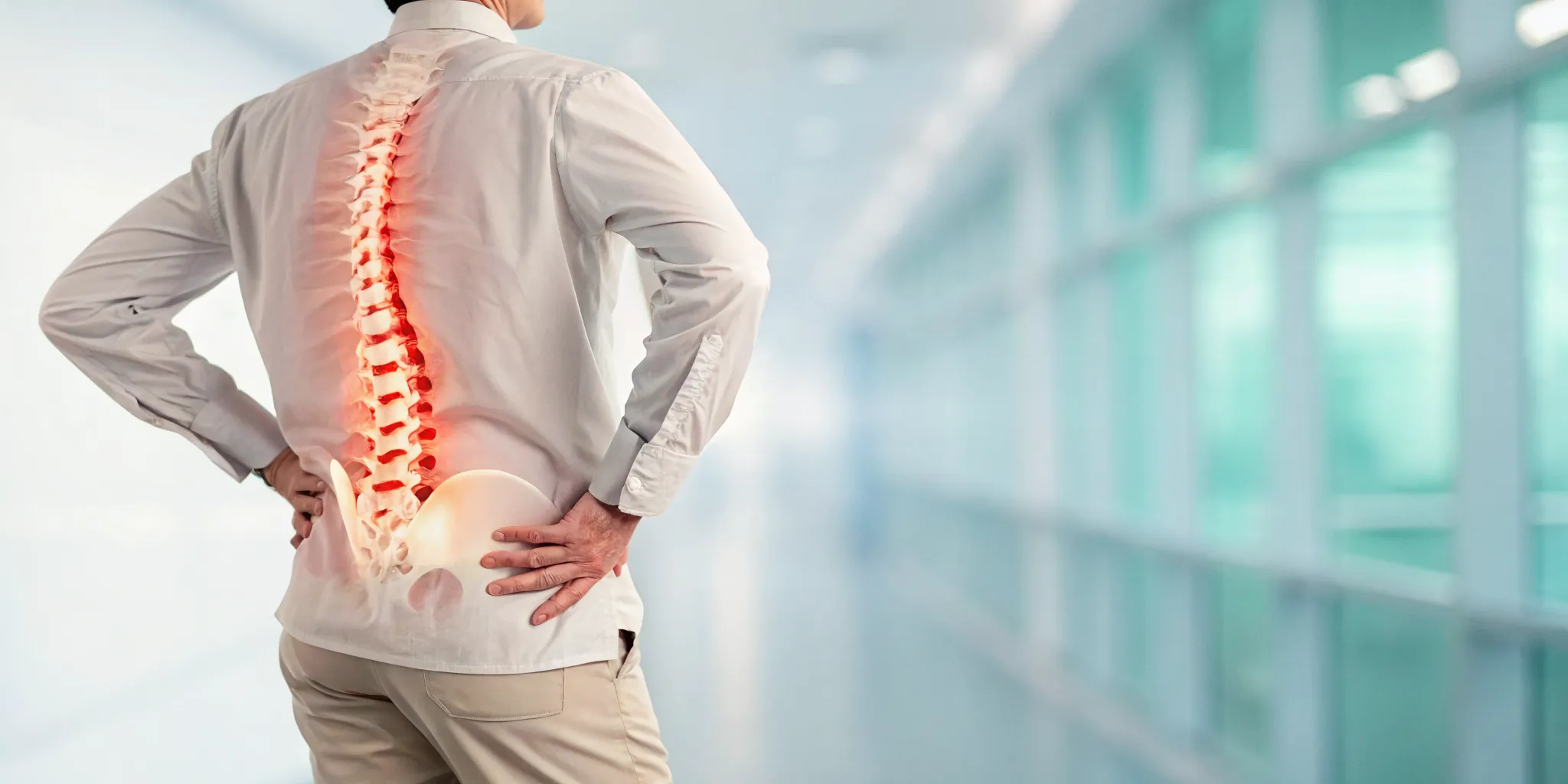
The term "herniated disc" can sound pretty intimidating, but understanding what’s happening in your spine is the first step toward feeling better. Think of the discs between your vertebrae as tiny, durable shock absorbers, a bit like jelly donuts. They have a tough exterior and a soft, gel-like center. A herniated disc happens when that soft inside part pushes out through a small tear in its tougher outer layer. This displaced material can then press on the sensitive nerves that run alongside your spinal column, leading to pain, numbness, or weakness.
While it can happen anywhere along the spine, it’s most common in the lower back (lumbar spine) or the neck (cervical spine). It's a frequent source of back and neck pain, but the good news is that there are effective ways to address it. At Lazar Spinal Care, we focus on identifying the root cause of structural problems like herniated discs. By understanding the underlying imbalance, we can create a care plan that helps your body heal itself, offering a path toward lasting relief instead of just temporarily masking the symptoms.
Your spinal discs are the unsung heroes of your back. These soft, rubbery cushions sit between each of the bones (vertebrae) in your spine, acting as shock absorbers and allowing you to bend and twist. Each disc has a tough, fibrous outer ring and a soft, gel-like center. A healthy disc is pliable and resilient. However, a herniated disc, sometimes called a slipped or ruptured disc, occurs when one of these cushions between your spinal bones moves or changes shape. This change can cause the disc to bulge or break open, and that's when it can start pressing on nearby nerves. Our advanced diagnostic assessments help us see exactly how your spine is aligned and where pressure might be affecting your nerves and discs.
So, what makes a disc herniate in the first place? Most often, it’s the result of gradual wear and tear, a process known as disc degeneration. As we get older, our spinal discs lose some of their water content, making them less flexible and more prone to tearing. Sometimes, a specific event can trigger a herniation, like using your back muscles instead of your legs to lift a heavy object, or a sudden, awkward twist. Traumatic events, such as a fall or an auto accident, can also cause a disc to rupture. While a ruptured disc where the soft center pushes out and presses on nerves is the most frequent cause, other issues like spinal fractures or infections can also lead to similar symptoms.
If you’ve been diagnosed with a herniated disc, you’re far from alone. It’s a surprisingly common condition, affecting about 7 million adults in the U.S. each year. What’s even more interesting is that many people have a herniated disc without even knowing it because they don’t experience any symptoms. While they can occur anywhere in the spine, they show up most often in the lower back. The fact that many cases are asymptomatic or improve over time highlights the body's incredible ability to adapt. However, when symptoms do appear, they serve as important signals that something is out of balance. Understanding these signals is the first step toward seeking the right support to address the underlying issue, rather than waiting for the pain to become a crisis. This proactive approach is central to managing many of the conditions we help with every day.
A herniated disc can feel different for everyone, but most people experience a set of common symptoms. It happens when the soft, gel-like center of a spinal disc pushes through a tear in its tougher exterior, often pressing on a nearby nerve. This pressure is what causes the telltale signs. While the symptoms below are often manageable, they are your body’s way of telling you that something isn’t right with your spinal alignment and function. Understanding these typical feelings is the first step toward knowing when your situation might be more serious.
Many of the conditions we help at our clinic, from sciatica to neck pain, can be traced back to issues like a herniated disc. The pain and discomfort are signals that your body's structure is under stress. The key is to listen to those signals. At Lazar Spinal Care, our goal is to find the root cause of that stress. Through our detailed NeuroBioStructural Analysis, we can pinpoint the source of the problem and determine if it’s something we can fix, often after just one visit.
One of the most common signs of a herniated disc is pain. You might feel it directly at the site of the herniation in your back or neck, but it often doesn’t stop there. Because the disc material can press on spinal nerves, the pain frequently radiates along the path of that nerve. If the herniated disc is in your lower back, you might feel a sharp, shooting pain that travels down your buttock and into your leg. This is often called sciatica. If the problem is in your neck, the pain can spread into your shoulder and down your arm.
The location of the herniated disc—whether in your lower back (lumbar spine) or neck (cervical spine)—determines where you'll feel the symptoms. A lumbar herniation, the most frequent type, often causes pain that radiates from your lower back, through your buttock, and down your leg, sometimes reaching your foot. This is the classic pattern of sciatica. In contrast, a cervical herniation in your neck can produce pain, numbness, or tingling that travels from your neck into your shoulder and down your arm, potentially affecting your hand and fingers. Understanding this distinction helps pinpoint the source of the many conditions we help with.
The pain from a herniated disc is rarely a simple, dull ache. Because the disc material is pressing directly on a nerve, people often describe the sensation as sharp, shooting, or burning. This intense feeling follows the path of the affected nerve, which is why the symptoms are almost always one-sided—you'll feel it in your right leg or your left arm, but usually not both. These distinct symptoms aren't random; they are clear signals that a nerve is being compressed and irritated. Listening to these signals is crucial for getting the right kind of help, which starts with a comprehensive evaluation for all new patients.
Have you ever felt that tingling, "pins and needles" sensation in your arms or legs? That feeling, known as paresthesia, is another classic symptom of a herniated disc. When a disc presses on a nerve, it can disrupt the signals traveling between your brain and your limbs. This interference can cause numbness or a tingling feeling in your hands, arms, feet, or legs. While it can be unsettling, this sensation is a clear indicator of nerve irritation. It’s a symptom we frequently see in patients dealing with nerve-related conditions like neuropathy, and it often points to an underlying structural issue in the spine.
Beyond pain and tingling, a herniated disc can also cause muscle weakness. The nerves that exit your spine control muscle function, so when one is compressed, it can weaken the muscles it serves. You might notice you have trouble gripping objects, or your leg might feel like it could give out when you’re walking or standing up. This weakness can develop gradually, making everyday tasks feel more difficult over time. If you're experiencing unexplained weakness in your limbs, it's a sign that you should get a professional evaluation. We encourage you to come in as a new patient so we can perform a thorough assessment and find out what’s really going on.
A particularly concerning type of muscle weakness is a condition called foot drop. This is when you have difficulty lifting the front part of your foot, which can cause it to drag on the floor as you walk. You might find yourself lifting your thigh higher, as if climbing stairs, just to keep your toes from catching. This happens when the nerve that controls the muscles responsible for lifting your foot is compressed, often by a herniated disc in your lower back. Because the nerve can't send proper signals, the muscles become weak. Foot drop is a clear sign of significant nerve involvement and a major red flag. It’s not just a minor inconvenience; it’s an indicator that the nerve compression is severe enough to impair muscle function, and it definitely warrants a prompt professional evaluation.
If you suspect you have a herniated disc, getting a clear diagnosis is the first step toward relief. A doctor will typically use a combination of methods to understand what’s happening in your spine. This process usually starts with a conversation about your symptoms and medical history, followed by a physical exam. From there, your doctor might recommend more advanced tests to get a precise look at your spinal structures. The goal is to pinpoint the exact location of the herniation and determine how it's affecting your nerves so you can get on the right treatment path.
This diagnostic journey is all about gathering clues to solve the puzzle of your pain. While some tests can seem intimidating, each one provides a valuable piece of information. Understanding what to expect can make the process feel much more manageable. At Lazar Spinal Care, we believe in a thorough and precise diagnostic process because a clear picture of the problem is the foundation for a successful solution. We want to uncover the root cause, not just name the symptom, so we can determine if your problem is something we can help fix.
Your first appointment will likely begin with a detailed conversation about your health. Your doctor will want to know when your pain started, what it feels like, and what activities make it better or worse. Following this discussion, they will perform a physical exam. According to the Mayo Clinic, during this exam, your doctor will check your reflexes, muscle strength, and your ability to feel sensations like a light touch or a pinprick. They may also ask you to perform certain movements, like bending forward or walking on your heels, to assess your pain and mobility. This hands-on evaluation helps them understand how the potential herniation is impacting your nerve function.
If your physical exam suggests a herniated disc, your doctor will likely order imaging tests to confirm it. The most common and effective test for this is an MRI (Magnetic Resonance Imaging). An MRI uses powerful magnets and radio waves to create detailed images of your soft tissues, including your spinal discs and nerves. The American Association of Neurological Surgeons (AANS) notes that an MRI is the best tool for visualizing the disc herniation itself. While X-rays might also be ordered, they are primarily used to see your bones and can help rule out other issues like fractures or tumors, but they won't show the soft disc material.
In some cases, your doctor may recommend an electromyography (EMG) or nerve conduction study to get more information about your nerve health. These tests are particularly useful if you're experiencing significant numbness or weakness. An EMG measures the electrical activity in your muscles, while a nerve conduction study measures how quickly electrical signals travel along your nerves. Together, these tests can help determine if a nerve is damaged and how severe the damage is. This information can be crucial for deciding on the most appropriate course of treatment for your specific situation.
While traditional diagnostics are great at identifying *that* you have a herniated disc, they don't always explain *why* it happened. At Lazar Spinal Care, we go a step further. Our advanced diagnostic assessments, including NeuroBioStructural Analysis, PostureIQ™, and Insight™ neurological scans, are designed to uncover the root structural cause of your problem. We look at your entire spinal alignment to see where imbalances and misalignments are placing undue stress on your discs and nerves. This comprehensive approach allows us to create a precise, tailored plan using our techniques to correct the underlying issue, not just manage the symptoms.
Once you have a diagnosis, the next question is, "What now?" The good news is that most herniated discs can be managed effectively without surgery. The initial focus is almost always on conservative, non-surgical treatments designed to relieve pain, reduce inflammation, and give your body a chance to heal. This approach typically involves a combination of rest, gentle activity, and targeted therapies. The goal is to calm the irritated nerve and strengthen the structures supporting your spine to prevent future issues. It’s about working with your body to restore function and get you back to your life.
These first steps are crucial for managing your symptoms and setting the stage for long-term healing. It’s important to remember that recovery is a process, and finding the right combination of treatments may take some time. While medications can offer temporary relief, our philosophy at Lazar Spinal Care is to focus on treatments that address the structural problem itself. By correcting the underlying imbalances that led to the herniation, we aim to provide a lasting solution that helps your body heal naturally and stay healthy for the long haul.
When you're in pain, your first instinct might be to lie down and not move. While some rest is important, complete bed rest is generally not recommended. Instead, doctors often suggest activity modification. This means taking a break from activities that cause pain, like heavy lifting or high-impact exercise, for a few days or weeks. The key is to listen to your body. You can continue with gentle activities, like walking, as tolerated. This approach helps reduce pressure on the affected nerve and allows inflammation to subside without causing your supporting muscles to weaken from inactivity.
Physical therapy is a cornerstone of non-surgical herniated disc treatment. A physical therapist can guide you through specific exercises designed to help your recovery. According to the Mayo Clinic, these exercises can help strengthen the core muscles that support your spine, improve your flexibility, and promote better posture. A strong core acts like a natural corset for your spine, taking pressure off your discs. Learning proper body mechanics and posture from a physical therapist can also help you avoid re-injury in the future, making it a vital part of both immediate relief and long-term management.
To manage pain and inflammation, your doctor might recommend over-the-counter nonsteroidal anti-inflammatory drugs (NSAIDs) like ibuprofen or naproxen. These can be effective for mild to moderate pain. If your pain is more severe, your doctor may suggest an epidural steroid injection. As the AANS explains, this procedure involves injecting a powerful anti-inflammatory medication directly into the area around the irritated nerve. While these injections don't fix the herniation, they can provide significant pain relief that allows you to participate more effectively in physical therapy and other rehabilitative activities.
Knowing when to wait and when to act can be tricky, especially when you're dealing with back pain. While many herniated disc symptoms can be managed at home initially, there are definite signs that it's time to seek professional help. Ignoring persistent or worsening symptoms can lead to bigger problems down the road. The goal is to be proactive about your health. If your body is sending you consistent signals that something is wrong, it's always best to listen and get it checked out by a professional.
It’s easy to fall into the trap of thinking, "Maybe it will just go away on its own." And sometimes, it does. But when the pain lingers, or new symptoms appear, it's a clear sign that your body needs support. At our clinic, we often see patients who have been struggling for weeks or months, hoping for the best. We encourage you not to wait until the pain becomes unbearable. By seeking a thorough evaluation, you can get a clear diagnosis and a concrete plan. If you're unsure what to do, we invite you to request an appointment so we can help you figure out the next best step.
If you've tried resting, modifying your activities, and using over-the-counter pain relievers, but your symptoms aren't improving after a few weeks, it's time to see a doctor. Persistent pain, numbness, or weakness that doesn't get better is a sign that at-home care isn't enough. A professional evaluation can determine the severity of your herniation and help you explore other treatment options, like physical therapy, chiropractic care, or injections. Don't feel like you have to tough it out alone; persistent symptoms are a valid reason to seek professional help.
While most herniated disc symptoms are not emergencies, there are a few "red flag" symptoms that require immediate medical attention. Experts note you should go to the hospital right away if you experience a sudden loss of bladder or bowel control. Other urgent signs include numbness in your groin or inner thigh area (often called "saddle anesthesia") or severe, progressive weakness in your legs. These symptoms can indicate a rare but serious condition called cauda equina syndrome, which requires urgent surgical intervention to prevent permanent nerve damage.
Most of the time, the pain and discomfort from a herniated disc can be managed with proactive, non-invasive care. However, some symptoms are different. They aren’t just signs of a problem; they are signals of a true medical emergency that requires immediate attention. Ignoring these red flags can lead to permanent nerve damage or other severe complications.
It’s important to know the difference between typical herniated disc pain and a crisis. The symptoms below are your body’s way of sounding a serious alarm. If you experience any of them, your next step shouldn't be to schedule an appointment for next week, it should be to head to the nearest emergency room. We want you to be informed and safe, so let's walk through exactly what to watch for. While our clinic helps people with many conditions related to spinal health, these specific symptoms need a hospital setting first.
This is the most urgent red flag. If you suddenly have trouble controlling your bladder or bowels, or you can’t urinate even when you feel the need to, it’s a sign of a serious problem. This often points to a condition called Cauda Equina Syndrome, where the nerve roots at the bottom of your spinal cord are severely compressed. This is a surgical emergency, and waiting can result in permanent paralysis and loss of function. Don't hesitate or feel embarrassed; get to an ER right away.
We’re not talking about feeling a little shaky. This is a noticeable, progressive weakness in one or both of your legs that makes it difficult to stand up from a chair, lift your foot, or walk without stumbling. If you find that your leg is giving out or you’re tripping over your own feet, it means the nerve compression is significant and worsening. This is a clear signal that the nerves controlling your leg muscles are in jeopardy, and you need an immediate medical evaluation to prevent permanent damage.
Herniated disc pain is uncomfortable, but emergency-level pain is in a different category. This is a severe, sharp, or electric-shock-like pain that shoots down your arm or leg. The key is that it’s not just intense, it’s escalating, and nothing you do brings relief. If the pain is so bad that you can’t find any comfortable position, and it’s making it nearly impossible to move, it indicates extreme nerve irritation. This level of pain is a sign that something is very wrong and needs to be assessed immediately.
Pay close attention to any new numbness in the areas of your body that would touch a saddle if you were riding a horse. This includes your inner thighs, the area around your rectum and genitals, and your buttocks. This symptom, known as "saddle anesthesia," is another classic warning sign of Cauda Equina Syndrome. Even if you don't have loss of bladder control yet, this specific pattern of numbness means the nerves in that region are being severely compressed. It’s a critical symptom that warrants an immediate trip to the hospital.
A herniated disc on its own doesn't cause a fever. If you have significant back pain accompanied by a fever (over 100.4°F or 38°C), chills, or other signs of illness, it could indicate a spinal infection. Conditions like a spinal epidural abscess or discitis are serious and can progress rapidly. An infection near your spinal cord is a medical emergency that requires prompt diagnosis with imaging and blood tests, followed by aggressive treatment, usually with IV antibiotics. Don't dismiss this combination of symptoms as just the flu.
While most herniated disc symptoms are manageable, there is one condition that is a true medical emergency: Cauda Equina Syndrome (CES). This rare but serious issue occurs when a large herniated disc in the lower back compresses a specific bundle of nerve roots. Understanding the signs of CES is critical because immediate action is the only way to prevent permanent damage. Think of it less like typical back pain and more like a stroke or heart attack affecting your spine. If you ever suspect you or someone you know is experiencing these symptoms, there is no time to wait and see if it gets better.
The term "cauda equina" is Latin for "horse's tail," which is a surprisingly accurate description of this structure. It’s not part of the spinal cord itself, but rather a bundle of spinal nerves that extends from the bottom of the spinal cord through the lower back. These nerves are responsible for sending and receiving messages between your brain and your lower body, controlling everything from leg movement to bladder and bowel function. When a large disc herniation puts severe pressure on this entire bundle of nerves, it causes Cauda Equina Syndrome. This widespread compression cuts off communication, leading to a rapid loss of function that requires immediate attention to resolve, unlike many other spinal conditions we address.
The symptoms of Cauda Equina Syndrome are distinct and come on suddenly. They are not the typical aches or radiating pains you might associate with a standard herniated disc. You must go to the emergency room if you experience any of the following:
Sometimes, the signs of Cauda Equina Syndrome start subtly before becoming a full-blown crisis. You might notice a change in sensation when you urinate, or a new feeling of urgency or difficulty starting the stream. The numbness in the saddle region might begin as a faint tingling or a feeling that something is "off" down there. Similarly, the leg weakness could start as a slight stumble or a feeling that one leg is heavier than the other. This is your body's early warning system. These symptoms are a sign that the nerve compression is getting worse. Recognizing these subtle shifts is crucial because they can escalate quickly. If you notice these changes, it's time to pay very close attention, as they are often the prelude to the more severe emergency symptoms.
I cannot stress this enough: Cauda Equina Syndrome is a surgical emergency. Every minute that those nerves remain compressed increases the risk of permanent damage. Waiting even a few hours can be the difference between a full recovery and lifelong problems, including paralysis of the legs, permanent loss of bladder and bowel control, or a loss of sexual function. While our goal is always to help patients avoid surgery by addressing the root cause of their pain, this is the exception. If you have symptoms of CES, your only next step should be the emergency room. Once the emergency is resolved, we can help you focus on long-term recovery and spinal health as a new patient.
It can be tough to know when back pain crosses the line from a major inconvenience to a true medical emergency. A herniated disc happens when the soft, gel-like center of a spinal disc pushes out through a tear in its tougher exterior. This can put pressure on spinal nerves, leading to the pain and other symptoms you might be feeling. While most herniated discs can be managed with proactive care, some situations require immediate attention. Learning to spot the difference is key to protecting your long-term health and getting the right help when you need it most.
One of the most important things to monitor is the progression of your symptoms. Is the pain staying the same, or is it intensifying? If your back pain continues to get worse after several weeks, or if you notice a new or increasing weakness in your arms or legs, it’s time to seek medical attention. This progressive weakness isn't just a minor issue; if you find simple tasks like walking, standing up, or holding objects becoming difficult, your body is sending a serious signal. Don't wait for it to become debilitating. Listening to these early warning signs allows you to get a proper diagnosis and explore the conditions we can help with before the problem escalates.
Let’s quickly review the most critical signs that mean you need to go to the emergency room. If you experience any of the following symptoms, please do not wait to see if they get better on their own.
These symptoms point to a potential emergency like Cauda Equina Syndrome, which requires immediate medical intervention.
Misinformation about herniated discs can cause a lot of unnecessary worry. Let's clear up a couple of common myths. First, the idea that discs can "slip" out of place is inaccurate. Your spinal discs are firmly attached to your vertebrae; they don't slip around. Instead, they can bulge, tear, or herniate, which is when the inner material pushes outward. Another myth is that a herniated disc always causes pain. The truth is, some people have herniated discs without any symptoms at all. The pain only occurs if the herniated material presses on a nerve. Understanding the reality of disc issues is the first step toward finding effective, targeted treatments like Quantum Spinal Mechanics (QSM3).
Knowing what to do when alarming symptoms appear can make all the difference. If you’re experiencing any of the red flags we’ve discussed, it’s time to act quickly and calmly. Having a clear plan helps you get the right care when you need it most. This isn’t about causing panic; it’s about being prepared and empowered to take control of your health in a critical moment. Think of this as your step-by-step guide for handling a potential spinal emergency with confidence.
If you are experiencing certain symptoms, your first and most important step is to seek immediate medical attention at an emergency room. Don’t wait to see if they get better. These signs point to serious nerve compression that requires urgent evaluation.
Go to the hospital right away if you have:
Walking into an emergency room can be overwhelming, so knowing what to expect can help ease some of that stress. Once you arrive, the medical team will prioritize assessing your condition. They will likely start with a physical exam to check your reflexes, muscle strength, and sensation. To get a clear picture of what’s happening with your spine, doctors may order imaging tests like an MRI or a CT scan. These scans help them see the herniated disc and determine the extent of nerve compression. Depending on the diagnosis, immediate treatment could involve medication to reduce swelling or, in serious cases, surgery to relieve the pressure on the affected nerves.
When you’re in pain, it can be hard to think straight. But clearly communicating what you’re feeling is crucial for getting an accurate diagnosis. Before you talk to the doctor, take a moment to organize your thoughts. Be ready to be specific about your pain. Is it sharp, burning, or aching? Does it radiate down your leg? Also, describe any other symptoms you have, like weakness, tingling, or the exact location of any numbness. It’s also very important to tell the medical staff about any recent falls, accidents, or injuries that might have caused the symptoms. The more precise you are when you describe your symptoms, the better they can help you.
While our primary goal is always to help your body heal naturally and avoid invasive procedures, it's important to be informed about all possibilities. Surgery is typically a last resort, reserved for situations where conservative treatments haven't provided relief or when emergency symptoms are present. The decision to have surgery is a serious one, made in consultation with a medical team after a thorough evaluation. The main objective of any surgical intervention for a herniated disc is to take the pressure off the compressed nerve root, which in turn can alleviate pain and restore function. Understanding these options can help you feel more prepared if you find yourself in a conversation about surgery with your doctor.
Surgery for a herniated disc isn't a first-line treatment. It's typically considered only after other, less invasive methods have failed to provide relief over a period of several weeks to months. However, there are specific circumstances where it becomes a more immediate necessity. A doctor might recommend surgery if the pain is so severe that it completely limits your ability to perform daily activities. Another key reason is progressive neurological decline, such as worsening muscle weakness or numbness, which indicates ongoing nerve damage. And, as we've discussed, if you experience the red flag symptoms of Cauda Equina Syndrome, such as loss of bowel or bladder control, surgery is considered an emergency procedure to prevent permanent damage.
If surgery is deemed necessary, there are several common procedures a surgeon might perform. The specific technique chosen depends on the location of the herniated disc, your overall health, and the surgeon's expertise. The most common options include laminotomy, discectomy, artificial disc replacement, and spinal fusion. Each of these procedures has the same fundamental goal: to relieve the pressure that the herniated disc material is putting on the spinal cord or adjacent nerves. Your surgeon will discuss the risks and benefits of each approach to determine the best course of action for your individual situation, helping you make an informed decision about your care.
Two of the most frequently performed surgeries for a herniated disc are the laminotomy and the discectomy, which are often done together. During a laminotomy, the surgeon removes a small portion of the lamina, which is the bony arch of your vertebra. This creates a larger window for the surgeon to access the herniated disc and also helps relieve pressure on the nerve. Following that, a discectomy involves the actual removal of the disc material that has pushed out and is pressing on the nerve. These are often performed as minimally invasive procedures, which can mean smaller incisions and a faster recovery time for the patient.
For some patients, other surgical options may be more appropriate. In an artificial disc replacement, the surgeon removes the entire damaged disc and replaces it with a prosthetic device designed to mimic the natural motion of a healthy disc. This can be a good option for preserving spinal mobility. In contrast, a spinal fusion does the opposite. This procedure involves permanently joining two or more vertebrae together, eliminating motion between them. By removing the damaged disc and fusing the bones with grafts and hardware, the surgeon creates a single, solid bone to stabilize that segment of the spine and prevent painful movement.
While it's crucial to know how to respond to a spinal emergency, the best-case scenario is to prevent one from ever happening. Many factors can contribute to the likelihood of developing a herniated disc, and understanding them is the first step toward proactive spinal care. It’s not always about a single traumatic event; more often, it's the result of gradual wear and tear that compromises the integrity of your spinal discs over time. By focusing on prevention, you can take control of your spinal health and reduce your risk. This approach aligns perfectly with our philosophy at Lazar Spinal Care, where we focus on identifying and correcting the root cause of spinal issues before they become a crisis.
So, what makes a person more susceptible to a herniated disc? Age is a primary factor. As we get older, our spinal discs naturally lose water content in a process called disc degeneration. This makes them less flexible and more prone to tearing. Other factors include excess body weight, which puts added stress on the discs in your lower back, and physically demanding jobs that require repetitive lifting, bending, or twisting. Even a sedentary lifestyle can be a risk, as weak core muscles provide less support for the spine. Genetics can also play a role, meaning if your parents had disc issues, you might be more likely to experience them as well.
The good news is that you can take proactive steps to protect your spine. Regular exercise is key, especially activities that strengthen your core muscles, which act as a natural brace for your back. Maintaining a healthy weight reduces the daily load on your spine. It's also important to practice good posture and use proper body mechanics when lifting heavy objects. However, true prevention goes deeper than just "sitting up straight." It involves ensuring your spine is properly aligned to distribute stress evenly. At Lazar Spinal Care, our specialized techniques focus on correcting underlying structural imbalances. By restoring proper alignment, we help your body function optimally and build resilience against the daily wear and tear that can lead to disc problems.
Knowing the red flags for a herniated disc is essential, but what if you could prevent the situation from becoming an emergency in the first place? Taking a proactive approach to your spinal health is the best way to address underlying issues before they escalate into a crisis. It’s about moving from a reactive state of managing pain to a proactive one of building a strong, stable foundation for your body. By focusing on the root cause of spinal stress, you can often sidestep the severe pain and frightening symptoms that lead to an ER visit.
Many spinal issues don't happen overnight. They are often the result of underlying imbalances that develop over months or even years. The surprising part is that you can have changes in your spinal discs without feeling any pain at all. Waiting until symptoms become severe can make treatment more difficult and may lead to chronic pain or lasting nerve damage. The key is to identify and address these subtle shifts before they become critical. A thorough diagnostic assessment can uncover hidden structural problems, giving you the chance to correct them long before they turn into a painful, debilitating emergency.
Proactive care is about correcting the source of the problem, not just chasing symptoms. At our clinic, we focus on the upper cervical spine, which is the critical area where your head meets your neck. A misalignment here can force the rest of your spine to compensate, creating mechanical stress, muscle tension, and uneven pressure on your discs. Our goal is to restore your body’s natural alignment and function. By using gentle and precise QSM3 techniques, we can address the foundational imbalance that may be contributing to disc irritation, helping your body heal and maintain its structure for the long term.
A spinal correction is the starting point, not the finish line. True long-term health involves creating a strategy to keep your spine stable and resilient. This is a partnership. After we help restore your body’s alignment, we’ll guide you on how to maintain it. This can include specific, gentle movements and exercises designed to support your recovery and strengthen the muscles that hold your spine in place. By combining precise chiropractic care with personalized guidance, you can build a healthier spine and reduce the risk of future problems. This comprehensive approach is how we help people with a wide range of conditions achieve lasting wellness.
How can I tell if my back pain is just a normal ache or something more serious like a herniated disc? A general ache is often localized and feels muscular, while pain from a herniated disc frequently has other characteristics. You might feel a sharp, shooting pain that travels from your back down into your leg or from your neck into your arm. It can also be accompanied by sensations like tingling, numbness, or even muscle weakness in your limbs. The only way to know for certain is to get a professional evaluation, but if your pain is radiating or involves these nerve-related symptoms, it’s a good idea to get it checked out.
If my symptoms aren't an emergency, what's the first step I should take? If you're not experiencing any red flag symptoms, your best first step is to get a comprehensive assessment to find out what is actually causing the pain. Simply managing the discomfort with rest or pain relievers doesn't address the underlying structural issue that is putting pressure on your disc and nerves. Seeking a diagnosis that looks at your body's entire structure can help identify the root cause, which is the key to creating a care plan for lasting relief, not just a temporary fix.
What specific symptoms mean I should go to the ER immediately instead of calling a chiropractor? This is a critical distinction. You should go to the emergency room right away if you experience a sudden loss of bladder or bowel control, or new numbness in your inner thighs and groin area (the "saddle" region). Other urgent signs include a rapidly worsening weakness in your legs that affects your ability to walk, or an intense, escalating pain that doesn't get better with any change in position. These symptoms can indicate a serious condition called Cauda Equina Syndrome, which requires immediate medical intervention.
Can chiropractic care really help prevent a herniated disc from becoming a major emergency? Yes, by focusing on the source of the problem before it becomes a crisis. Often, a herniated disc is a symptom of a bigger structural imbalance in your body. For example, a misalignment at the top of your neck can force your entire spine to compensate, creating uneven pressure and strain on the discs in your lower back. Proactive care aims to correct that foundational imbalance, which can reduce the stress on the disc and help prevent the issue from escalating into an emergency.
You mentioned the upper neck can affect the lower back. How does that work? Think of it like the foundation of a house. If the foundation is off, cracks can appear in walls far away from the initial problem. Your body works in a similar way. Your brain works constantly to keep your eyes level with the horizon, and if the top bone in your neck is misaligned, your entire body will twist and adapt to compensate. This creates a chain reaction of tension and stress all the way down your spine, which can eventually lead to issues like a herniated disc in your lower back. By correcting the primary issue at the top, the rest of the body can return to a more stable and balanced position.