.png?width=150&height=60&name=2026%20LSC%20Logo%20(2).png)

Back Pain

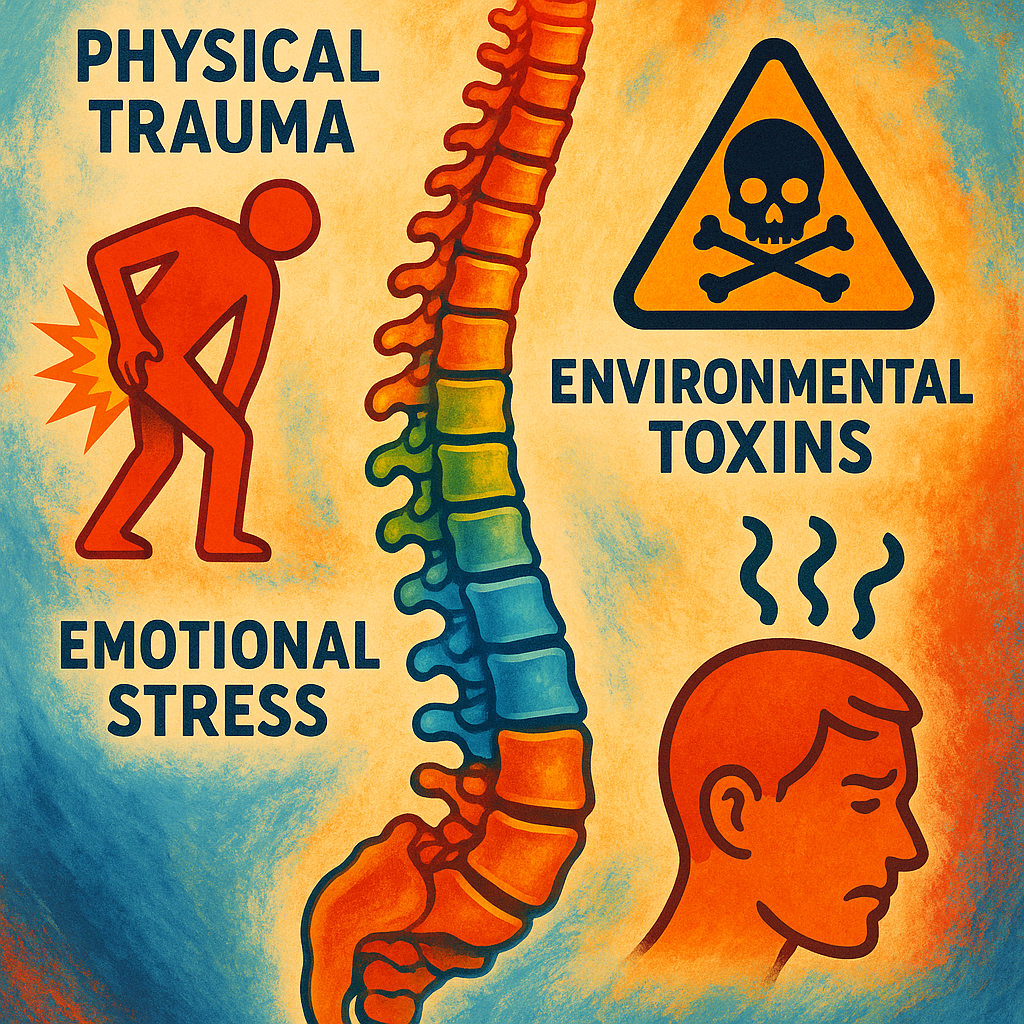
That nagging back pain, the constant fatigue, the tension headache that just won't quit. We often dismiss these as simply part of a busy life. But what if they're all connected? Your body is under constant pressure from three main sources: physical strain, chemical exposure, and emotional stress. In chiropractic, we call this the 'Three T's' framework of Trauma, Toxins, and Thoughts. These aren't just abstract ideas; they cause real, physical changes to your spine and nervous system. Learning to recognize them is the first step toward finding relief and restoring your body's natural balance.
At the core of modern chiropractic philosophy lies the 3T model: Trauma, Toxins, and Thoughts. These three pillars coined by D.D. Palmer (the creator of Chiropractic), help us understand how subluxations—misalignments or dysfunctions in the spine—can develop and quietly disrupt the body’s natural ability to heal and function. Rather than viewing spinal health as a matter of chance or isolated injury, the 3T model reveals that our daily experiences and environments play a crucial role in the health of our nervous system.
This perspective empowers individuals and families by highlighting the root causes of discomfort, dysfunction, and even chronic conditions. With this understanding, we can move beyond simply managing symptoms and instead focus on restoring balance, resilience, and long-term wellness. At Lazar Spinal Care, this philosophy is woven into every aspect of our patient care, guiding us to address not just where you hurt, but why.
The concept of the "Three T's" isn't a new wellness trend; it actually dates back to 1910. D.D. Palmer, the founder of chiropractic, identified them as the three primary causes of vertebral subluxations, which are misalignments in the spine. He categorized these stressors as Trauma (physical stress), Toxins (chemical stress), and Thoughts (emotional stress). This framework helps us see how pressure on our nervous system comes from all angles—a fender bender, inflammatory foods, or a high-stakes work project can all contribute to spinal misalignments. By understanding how these different factors impact our bodies, we can start addressing the root causes of many common health conditions instead of just chasing the symptoms they create.
When your brain perceives a threat from any of the "Three T's," it instinctively shifts your body into a survival state often called "fight-or-flight." Think of it as "protection mode." In this state, your body prioritizes immediate survival over long-term health, diverting energy away from essential functions like digestion, immune response, and cellular repair. Your muscles tighten, your posture changes to brace for impact, and your entire system stays on high alert. When you're constantly under stress, your body never gets the all-clear signal to switch off this mode, which prevents it from healing properly. Our goal is to help your body exit this protective state. Specialized techniques like Quantum Spinal Mechanics (QSM3) work to restore balance, signaling to your nervous system that it can finally stand down and focus on recovery.
Physical trauma is often the most apparent of the three Ts. It includes everything from car accidents and sports injuries to repetitive microtraumas like poor posture, carrying children, or even the birthing process. While some traumas are dramatic and obvious, many are subtle and accumulate over time, leading to gradual shifts in spinal alignment and function.
These misalignments, or subluxations, interfere with the communication pathways between your brain and body. Even minor traumas can create compensations that affect your movement, cause chronic pain, or contribute to conditions like migraines, sciatica, and TMJ dysfunction. Recognizing the impact of trauma—both big and small—is the first step to restoring spinal and neurological health.
When we think of physical trauma, our minds often jump to major events like car accidents or a bad fall. While those are certainly significant, the reality is that trauma is often much more subtle. It’s the accumulation of smaller, seemingly minor events that can create lasting issues in your spine. Think about the bumps and tumbles from learning to walk, a difficult birth process, or even years of poor posture at a desk. These experiences, which many of us dismiss as just part of life, can cause misalignments that interfere with the critical communication between your brain and your body. Over time, this disruption can become the underlying cause of many common health challenges, from persistent neck pain to recurring headaches.
Your body is incredibly smart and is hardwired for survival. When it senses danger—whether from a sudden injury or the slow grind of repetitive strain—it shifts into a protective "fight-or-flight" mode. In this state, your body’s priority is immediate protection, not long-term healing or growth. This response can cause muscles to tighten and your posture to shift into compensatory patterns that, while helpful in the short term, can lead to chronic pain and dysfunction if left unaddressed. At Lazar Spinal Care, we use advanced techniques like Quantum Spinal Mechanics (QSM3) to gently unwind these deep-seated stress patterns, helping your body move out of protection mode and back into a state of healing and balance.
Our bodies are constantly exposed to toxins—whether from processed foods, environmental pollutants, household chemicals, or even certain medications. These chemical stressors challenge our body’s ability to detoxify and maintain cellular health. Over time, toxins can lead to inflammation, oxidative stress, and tissue breakdown, weakening the structures that support spinal alignment.
Chemical stress doesn’t always announce itself with immediate symptoms. Instead, it can silently contribute to subluxations by disrupting your body’s internal balance and resilience. By identifying and reducing exposure to these toxins—and supporting the body’s natural detoxification processes—chiropractic care helps create an environment where true healing is possible.
It’s easy to think of "toxins" as something far-removed from our daily lives, but they’re often hiding in plain sight. Our bodies are constantly exposed to them—whether from processed foods, environmental pollutants, the household chemicals under our sinks, or even certain medications. These chemical stressors challenge our body’s ability to detoxify and maintain its health. Recognizing these sources is the first step toward reducing your body's toxic load. By making more conscious choices about what you consume, breathe, and put on your skin, you can significantly lessen the chemical stress placed on your nervous system and support your overall wellness.
So, how does exposure to a cleaning product or processed food lead to back pain? Your nervous system perceives these chemical inputs as threats. In response, it triggers a protective mechanism, telling muscles to tighten and brace the body for defense. This chronic tension can pull vertebrae out of their proper alignment, creating spinal misalignments. This chemical stress doesn't always cause immediate pain; instead, it can silently disrupt your body's internal balance. Over time, this constant state of defense can contribute to a wide range of health conditions that might seem completely unrelated to your environment.
Emotional stress—our thoughts, worries, and mental habits—can be just as powerful as physical trauma or chemical exposure when it comes to spinal health. Chronic stress activates the body’s fight-or-flight response, increasing muscle tension and altering breathing patterns. Over time, this sustained tension can pull the spine out of alignment and contribute to nervous system dysfunction.
This is why it’s so important to address the whole person, not just the spine. Integrating mental wellness practices—such as mindfulness, deep breathing, and supportive community—into a chiropractic care plan can make a profound difference in both physical outcomes and overall well-being. At Lazar Spinal Care, we believe that true healing is possible when the mind and body are both given the support they need.
It’s easy to think of stress as something that just happens in our heads, but our bodies keep the score. When you’re dealing with constant worry or emotional strain, your body enters a prolonged "fight-or-flight" mode. This isn't just a fleeting feeling; it triggers a cascade of physical reactions. Your muscles, especially in the neck and shoulders, tighten up as if bracing for impact. Your breathing becomes shallow, and your heart rate might increase. Over time, this sustained tension can physically pull your spine out of its proper alignment, creating subluxations that interfere with your nervous system. This is how emotional weight becomes a very real, physical burden that can contribute to issues like chronic headaches and persistent neck pain.
Going a level deeper, significant emotional trauma can physically alter the structure and function of your brain. It’s not just about feeling "on edge"; trauma can rewire how your brain perceives threats, regulates emotions, and processes memories. The brain's primary job is to keep you safe, and after a traumatic experience, it can become hyper-vigilant, constantly scanning for danger even when none exists. This state of high alert is exhausting and can disrupt the delicate balance of your nervous system. At Lazar Spinal Care, we focus on restoring that balance through precise upper cervical care, helping your body shift out of survival mode and back into a state of healing and rest. Our specialized techniques aim to address the root neurological imbalances that trauma can create.
The good news is that your brain is not permanently stuck in this state. Thanks to something called neuroplasticity, your brain has a remarkable ability to change, adapt, and form new connections throughout your life. This means it can essentially "rewire" itself to heal from trauma. By creating new, healthier neural pathways, you can move beyond the patterns established by past experiences. Gentle, precise chiropractic care supports this process by removing interference in the nervous system, which allows your brain and body to communicate more effectively. This creates the ideal environment for your brain to begin its natural healing process, fostering resilience and paving the way for lasting wellness.
To understand how trauma affects us, it helps to know which parts of the brain are most impacted. The amygdala, your brain's "smoke detector," can become overactive, leading to heightened fear and anxiety. Meanwhile, the hippocampus, which is crucial for memory and learning, can actually shrink, making it difficult to process memories correctly. Finally, the prefrontal cortex—your brain's command center for decision-making and impulse control—can become less active. This combination explains why it can be so hard to feel calm, think clearly, or regulate emotions after a traumatic event. Addressing the neurological stress caused by spinal misalignments can help restore proper function to these vital brain regions.
Beyond the physical and neurological changes, trauma profoundly impacts how we see ourselves and the world. It can shatter your sense of safety, leaving you feeling vulnerable and constantly on guard. Many people who have experienced trauma internalize feelings of being "broken" or fundamentally damaged, which can lead to a sense of hopelessness about the future. These psychological wounds are just as real as physical ones and require compassionate support to heal. Our approach at Lazar Spinal Care is built on understanding and empathy, recognizing that your emotional well-being is deeply connected to your physical health. We strive to create a safe space where you feel heard and supported on your journey to recovery.
One of the most challenging aspects of trauma is how it can intrude on the present moment. You might experience sudden, unwanted memories or thoughts related to the event, which can trigger intense emotional and physical reactions. It can feel as though the trauma is happening all over again, right here and now. These responses aren't a sign of weakness; they are a normal reaction of a nervous system that is stuck in a state of high alert. By calming the nervous system through targeted chiropractic adjustments, we can help reduce the frequency and intensity of these triggers, giving you more space to feel grounded and in control of your present experience.
There is a strong, well-documented connection between unresolved trauma, especially from childhood, and the development of long-term health problems. When your body is in a constant state of stress, it can lead to chronic inflammation and disrupt normal bodily functions. This can manifest as a wide range of conditions, including persistent digestive issues, sleep disorders, fibromyalgia, and even heart conditions. Addressing the underlying nervous system dysfunction is a critical step in breaking this cycle. If you're struggling with a chronic condition that hasn't responded to other treatments, it may be time to explore how our unique approach to spinal care can help you find lasting relief and get to the root cause of your health challenges.
At Lazar Spinal Care, we specialize in uncovering and correcting the root causes behind subluxations using The Lazar Method™. Our approach fuses advanced diagnostics—like Posture IQ 3D assessments, Insight CLA neural scanning, and DDR motion X-rays—with gentle, precise correction techniques such as QSM3. Every care plan is uniquely tailored to the individual, ensuring rapid, measurable results—even in the most complex cases.
Beyond spinal adjustments, we offer innovative therapies like SoftWave TRT, High-Intensity Laser Therapy, and BEMER Therapy to accelerate healing, reduce inflammation, and restore optimal function at the cellular level. Our patient education and compliance systems empower you to make proactive choices for your health, helping you and your family achieve lasting relief, resilience, and generational wellness.

While precise chiropractic adjustments are foundational, supporting your body with healthy lifestyle habits can amplify your results. Creating strategies to manage stress, process emotions, and reduce your toxic load helps your body hold its alignment and build resilience. This holistic approach is where lasting wellness truly begins, empowering you to take an active role in your health journey.
Your thoughts and worries have a real, physical impact. When you're chronically stressed, your body enters a constant 'fight-or-flight' mode, tensing your muscles and changing how you breathe. Over time, this sustained tension can physically pull your spine out of alignment, creating interference in your nervous system. Incorporating simple practices like daily mindfulness, deep breathing exercises, or even journaling can help shift your body out of this high-alert state. By consciously managing your mental and emotional well-being, you're not just calming your mind—you're actively supporting your spinal health and creating an internal environment that's ready to heal.
Sometimes, emotional stress is rooted in deeper trauma that requires more specialized support. Significant emotional events can change how your brain processes danger and stores memories, sometimes leading to conditions like PTSD. For this, professional therapies can be incredibly effective partners to your chiropractic care. For example, Eye Movement Desensitization and Reprocessing (EMDR) is a well-regarded therapy that helps the brain properly process traumatic memories and emotions. Addressing these underlying neurological patterns can be a crucial step in releasing the chronic physical tension that contributes to spinal misalignments and helps your body fully embrace the healing process.
This is where specialized chiropractic care becomes so vital. By addressing misalignments caused by thoughts, traumas, and toxins, we can help restore the proper function of your central nervous system. At Lazar Spinal Care, our focus on upper cervical chiropractic care is particularly important because the top of your spine is the gateway between your brain and the rest of your body. Gentle, precise adjustments in this area can have a profound effect on your entire system. When your brain and body can communicate without interference, your ability to adapt to all kinds of stress—whether physical, chemical, or emotional—improves dramatically.
Your body has two primary operating modes: 'protection' (fight-or-flight) and 'growth and repair.' It simply cannot be in both at the same time. When your nervous system is under constant stress from misalignments, it gets stuck in protection mode, prioritizing survival over healing. Our goal is to shift you back into the 'growth and repair' state. By gently correcting spinal misalignments, we help calm the nervous system, signaling to your body that it's safe to focus on healing, rebuilding, and restoring function. This fundamental shift is what allows for true, lasting wellness, moving you beyond just managing symptoms. If you're ready to see if your body is stuck in protection mode, we invite you to become a new patient.
How can my thoughts or stress actually cause physical pain? When you're stressed, your body doesn't know the difference between a looming deadline and a physical threat. It reacts by shifting into a protective "fight-or-flight" mode, causing muscles in your neck, shoulders, and back to tighten as if bracing for impact. If you live in a state of chronic stress, this constant tension can physically pull your vertebrae out of their natural alignment, leading to nerve irritation that shows up as headaches, neck pain, or other persistent issues.
I haven't had a major accident. Could I still have spinal misalignments from physical trauma? Absolutely. Physical trauma isn't limited to big events like car accidents or falls. It's often the result of small, repetitive stresses that accumulate over years. Think about the posture you hold while working at a computer, the way you carry your children, or even the bumps and tumbles you took as a toddler. These seemingly minor events can create subtle shifts in your spine that, over time, lead to significant health challenges.
Is this type of care only for back and neck pain, or can it help with other health issues? While many people seek our care for back and neck pain, our focus is on the health of the entire nervous system. Your spine is the protective armor for the communication highway between your brain and body. When misalignments interfere with that communication, it can lead to a wide range of symptoms that might seem unrelated, including migraines, digestive issues, vertigo, and fatigue. By restoring proper alignment, we aim to improve your body's overall function.
How does adjusting my spine help my body deal with toxins? Our goal isn't to directly remove toxins, but to improve your body's ability to manage and process them. When your nervous system is stressed and stuck in "protection mode," essential functions like detoxification can become sluggish. By correcting spinal misalignments, we help calm the nervous system and shift your body back into a "growth and repair" state. This allows your body to more efficiently handle the chemical stressors you encounter every day.
What makes your approach different from a typical chiropractic adjustment? Many people associate chiropractic care with general twisting or popping of the spine. Our approach is quite different. We focus specifically on the upper cervical spine—the critical junction between your head and neck—using a gentle and precise technique called QSM3. By restoring balance to this area, we can influence the entire body's alignment and nervous system function. We use advanced diagnostics to get to the root of the problem, which allows for targeted corrections without any forceful manipulation.